MERN stack development services for SaaS, portals and real-time apps
Our MERN stack development services are for startups and growing businesses that want a web application built in JavaScript from database to browser, on MongoDB, Express, React and Node.js. You can give us a fixed-scope project, hire MERN stack developers who work only on your product, or add engineers to your existing team. In every case you own the software.
MERN stack development is building web applications with MongoDB, Express, React and Node.js, so one JavaScript or TypeScript codebase runs from database to browser. MERN stack development services cover data modeling, APIs, React interfaces, testing, cloud deployment and maintenance.
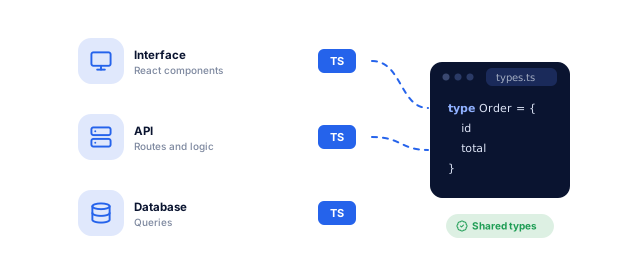
One language end to end: JavaScript or TypeScript in the queries, the API and the interface.
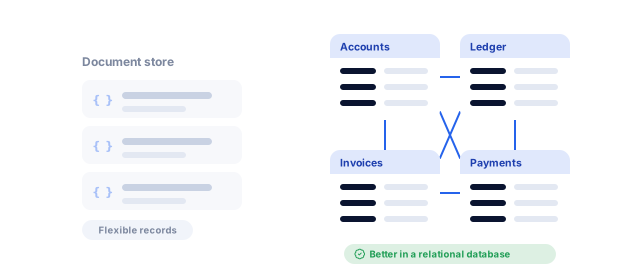
MongoDB suits flexible, document-shaped data; for heavily relational ledgers we keep React and Node.js and use PostgreSQL.
A plain React app needs server rendering, often through Next.js, when organic search matters.
Choose the engagement model by how settled your scope is: fixed scope, dedicated developers or team extension.
Best for
SaaS products, marketplaces, dashboards, customer portals and real-time apps where speed of iteration matters
What you get
Architecture and data model, React frontend, Node.js and Express API, automated tests, CI/CD, documentation, code in your repository
Typical timeline
Discovery in 1 to 2 weeks. A focused MVP usually takes 8 to 12 weeks; larger platforms ship in phases. Dedicated developers start after a shortlist and interview.
Pricing
Driven by scope, integrations, compliance and team size. Published vendor pricing we reviewed started at about $22 an hour for India-based MERN developers, with focused MVPs at roughly $15,000 to $40,000. Our development projects run from under $1,000 to $30,000+, depending on scope. We quote after a free scoping call.
What our MERN stack development services include
Dedicated developers and extended teams plug into the workstreams you need.
We design MongoDB collections around how the app reads data: embed what is read together, reference what grows without limit, and index for the queries that run most. Mongoose schemas or MongoDB's $jsonSchema validation keep documents consistent, and multi-document transactions cover payment and stock steps. Our cloud database management team runs Atlas or self-hosted clusters.
Node.js and Express API development
Express 5 on a Node.js LTS release forms the API layer. Express 5 forwards rejected promises from async handlers to your error middleware, which removes a common cause of requests that hang without an error. We build REST or GraphQL endpoints with validation, rate limiting and versioning, documented in OpenAPI, as in our API development services.
React frontend development
Interfaces are built in React 19 with TypeScript, a shared component library and accessible markup. Dashboards and logged-in tools use Vite; pages that must rank or load fast on the first visit use Next.js server rendering. Frontend-only work sits with our React development team.
Real-time features and integrations
Chat, live dashboards, notifications and collaborative editing run over WebSockets with Socket.IO, while MongoDB change streams push updates the moment data changes. We connect payment gateways such as Stripe and Razorpay, CRMs, email providers and identity providers through OAuth 2.0 and OpenID Connect, and keep every secret out of the codebase.
Testing, security and DevOps
Every pull request runs linting, unit tests in Jest or Vitest, API tests with Supertest and end-to-end tests in Playwright through GitHub Actions. We check against the OWASP Top 10 and review new npm packages. Apps ship in Docker containers to AWS, Azure or Google Cloud through our CI/CD services.
Migration, upgrades and support
We move PHP, jQuery or older AngularJS apps to MERN in stages, upgrade Express 4 apps to Express 5 and Node.js to a supported LTS line, and take over codebases other teams started. After launch, website maintenance covers security patches, dependency updates, uptime monitoring and small features on a monthly plan.
Why teams choose MERN stack web development, and where it fits best
These are the problems MERN solves well, and what we build alongside it when one part suits another stack better.
JavaScript, or TypeScript on top of it, runs in the MongoDB queries, the Express API and the React interface. Types can be shared between client and server, so a renamed field breaks the build instead of production. It also widens your hiring pool: in the 2025 Stack Overflow Developer Survey, Node.js (48.7%) and React (44.7%) were the two most used web technologies.
Faster releases while the product is still changing
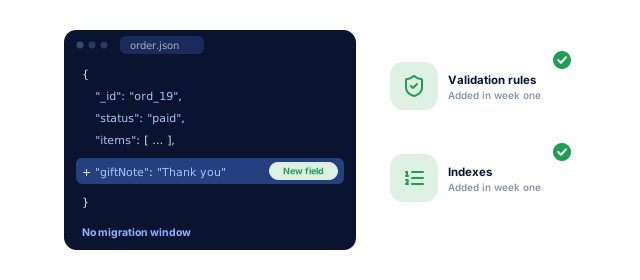
Document data lets you add a field without a migration window, and React components are reused across screens. For an early product whose requirements change every sprint, that means less time on plumbing. The trade-off is discipline: without validation and indexes, flexible data turns messy, so we add both in the first week.
Real-time features without a second stack
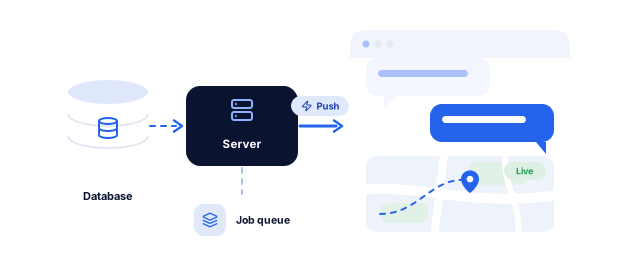
Node.js handles many open connections on its event loop, which suits chat, notifications, live tracking and dashboards that update as data changes. WebSockets and change streams push updates to React without polling. CPU-heavy jobs such as video processing or model training move to worker queues or a Python service, so they never block user requests.
A simple path to scale
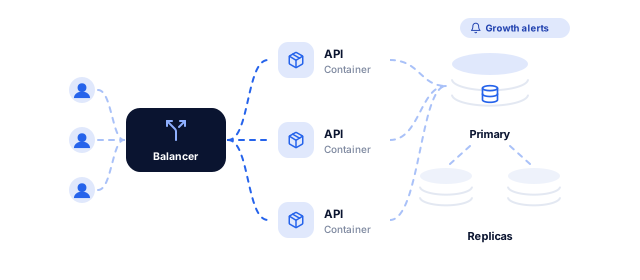
Express APIs are stateless, so they scale horizontally behind a load balancer, and MongoDB Atlas adds replica sets and sharding as data grows. Containers behave the same on a laptop, in staging and in production. We size infrastructure for today's traffic and set alerts for growth.
Fewer surprises hiding in your dependencies
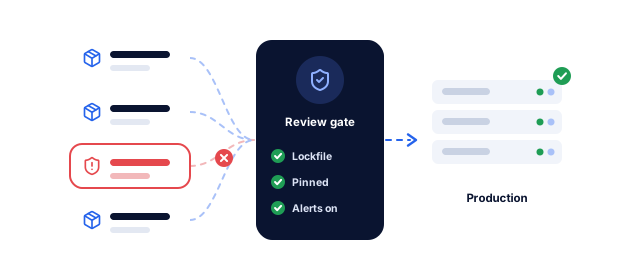
A MERN app pulls in hundreds of npm packages, and that is a real risk. In September 2025, CISA warned that a self-replicating worm had compromised over 500 npm packages. We commit lockfiles, pin versions, turn on Dependabot alerts and review every new package, so an update never reaches production unchecked.
Where MERN fits best, and what we use when it does not
MERN fits best when data is document-shaped and the product changes every sprint. For a web of relations, such as double-entry accounting or reporting across dozens of linked tables, we keep React and Express on PostgreSQL, or build the back end with our Python team. Content-led marketing sites cost less on WordPress or a headless CMS, which we also build, and Angular teams get the MEAN stack.
Not sure whether to hire developers or outsource the whole project?
Tell us what you need. We look at your product and roadmap, and recommend in writing whether to add developers to your team or hand us the project, with a price range and timeline.
Your free project planFor what you need
1What we would buildYour product, codebase and roadmap
2A price range and timelineFor the budget you pick, with the options that fit
3The stack we would useAnd how your team runs it after launch
A specialist walks you through it on a call
Our MERN development process, from discovery to support
We map users, core journeys, integrations and non-functional needs such as data residency, uptime and expected load. Existing code is reviewed first. Then we agree the engagement model and the first release.
Scope and user stories
Integration and risk list
Engagement model and estimate
An agreed first release and budget
Architecture and data model
We choose Vite or Next.js for rendering, design MongoDB collections and indexes around real queries, and plan authentication, roles and audit logging. Repos, environments and CI are set up before feature work.
Architecture decision records
Schema and index plan
Repos, environments and CI
Foundations that will not need rework
UX design and prototypes
Designers turn the key journeys into clickable prototypes and a Figma component library through our app UI/UX design service. Developers review every screen early, so nothing is designed that is expensive to build.
Clickable prototype
Design system and components
Screens approved before code
Sprints and demos
We build in two-week sprints, each ending with a demo on a staging URL; you can see the board, pull requests and test results. Scope changes are estimated openly in the backlog, never slipped in.
Working build every two weeks
Sprint demo and notes
Test coverage report
Progress you can click through
QA, security and launch
Before launch we run end-to-end tests, load tests on the busiest API routes, an OWASP Top 10 review and an npm dependency audit, then release with monitoring and a tested rollback.
Test and security report
Production deployment
Runbook and rollback plan
A launch without surprises
Support and growth
After launch we watch errors, performance and usage, keep Node.js and dependencies on supported versions, and plan the next features from usage data. Dedicated developers can stay on as your product team.
Monthly report
Patch and upgrade schedule
Next-release roadmap
A product that keeps improving
What our MERN stack developers build
The stack stays the same; the priorities change with the product.
01 / 05
SaaS platforms
Multi-tenant SaaS needs tenant isolation in every query, role-based access, subscription billing and an admin panel your team can actually use. We design the tenant model in MongoDB first, then add Stripe billing and audit logs. Our SaaS application development team covers onboarding, pricing pages and product analytics for SaaS companies.
Marketplaces need listings with flexible attributes, search, vendor dashboards, payouts and reviews, which suits MongoDB's document model and Atlas Search. Checkout steps that touch stock and money run in transactions. A standard online store is faster and cheaper on a platform, so our ecommerce website development team builds it on Shopify or WooCommerce, with custom MERN code only for what the platform cannot do.
Chat, delivery tracking, live auctions, booking calendars and collaborative tools depend on updates that arrive in under a second. We use Socket.IO with its Redis adapter so messages reach users connected to any server, and MongoDB change streams to push updates when data changes. Load tests simulate your expected concurrent users before launch. See our Node.js development practice.
Customer portals, partner dashboards and internal tools replace spreadsheets and long email threads. We connect them to your CRM, ERP or accounting system, add single sign-on with Microsoft Entra ID or Google Workspace, and build the reports managers open. In our AkosMD case study, automated reminders in custom hospital software lifted patient follow-ups 31% month over month. Reporting-heavy tools go to our custom dashboard development team.
An MVP should prove one thing quickly. We cut scope to the journey that tests your riskiest assumption, ship it in weeks rather than quarters, and add product analytics so the next decision rests on data. The codebase is built to keep, with tests and CI from day one. See our wider web app development service for non-MERN options.
Scope is clear and stable, such as an MVP or a defined module
The product will keep evolving for months
You have a tech lead and need more capacity or a missing skill
Who manages the work
Our project manager, with your sign-off at each milestone
You set priorities; we handle hiring, HR and continuity
Your team, in your sprints, tools and code review
How you pay
An agreed price per milestone after discovery
A monthly fee per developer on a rolling agreement
A monthly fee per engineer on a rolling agreement
Scope changes
Estimated and approved as change requests
Reprioritized at any sprint planning
Handled in your own backlog
Main risk
A fixed price can make changes slow and costly
Needs your time each sprint to set priorities
Works only if your processes and documentation are clear
Whichever model you choose, the code and cloud accounts belong to you.
Your MERN stack project, week by week
A typical 12-week MVP: two weeks of discovery, then about 10 weeks to launch. Smaller first releases need fewer sprints; larger platforms ship in phases.
Your MERN developers sit next to designers, cloud engineers and SEO and marketing specialists in our New Delhi office. When a React app needs server rendering to rank, or a launch needs analytics and campaigns, the same team handles it. That is 25+ in-house specialists, not a network of freelancers.
02
Clear terms and clear reporting
We work on rolling agreements and send a transparent monthly report: what shipped, what is next, hours or milestones used and open risks. Clients stay with us for 1.6 years on average and rate us 4.9 on Clutch from 221 reviews.
03
You own everything we build
Code lives in your GitHub, GitLab or Bitbucket organization from the first commit, and cloud accounts, domains and databases are registered to you. If you move the work in house later, you keep the documentation, CI pipelines and full history. Our case studies show how we measure and report results.
Results we can put numbers on
These numbers come from our wider website and software work rather than from one stack.
"From designing a high-converting website to managing our SEO, Google Ads, and Google Business Profile, improveFX delivered exceptional results across every channel."
210%more qualified leads
185%organic and local traffic growth
92%keywords on page one
Maureen CappalloBroker and founder, Momentus Real Estate Group
"They revolutionized our online presence with a 60% increase in web traffic through strategic e-commerce SEO and content optimization."
60%more organic traffic
47%more sales
Eric NoahPresident, Eric Originals & Antiques Ltd.
"Visionstar Technologies' online presence transformed significantly with a 40% boost in customer engagement, all thanks to their exceptional website structuring and SEO tactics."
+40%qualified leads
32%lower cost per acquisition
Thomas MorelFounder, Visionstar Technologies
"Their strategic approach to our website and SEO resulted in a 60% increase in local inquiries, revolutionizing our automobile service business."
60%more local inquiries
87%more organic traffic
Mike SteffanFounder, Sabulski Window Tinting
"Their SEO strategy helped us achieve top search rankings, while their Facebook Ads campaigns drove a steady flow of qualified prospects."
MERN stack development services include architecture and MongoDB data modeling, Node.js and Express APIs, React frontends, integrations, testing, deployment and ongoing maintenance.
The exact scope depends on whether you need a full product, one module, or developers for an existing team. Most projects start with a one to two week discovery that fixes the first release, the data model and the engagement model before anyone writes code.
How much does it cost to hire a MERN stack developer?
It depends on seniority, location and how long you need them. Published vendor pricing we reviewed started at about $22 an hour for India-based MERN developers.
Fixed-scope projects are priced per milestone instead. The same published pricing put a focused MVP at roughly $15,000 to $40,000 and a production SaaS platform at about $35,000 to $80,000. Each extra user role, integration or real-time feature adds cost, as do compliance needs such as audit logs, so a first release cut to one journey costs least. We quote after a free scoping call, with the cost of each phase shown separately.
How long does a MERN stack project take?
A focused MVP usually takes 8 to 12 weeks after a one to two week discovery. Larger platforms with billing, roles and several integrations ship in phases over several months.
Timelines depend most on how settled the scope is, how many third-party systems are involved and how quickly feedback comes back. Two-week sprints with demos keep progress visible, and a staged release gets real users on sooner.
Should I hire dedicated MERN stack developers or outsource a fixed-scope project?
Choose a fixed-scope project when requirements are clear and stable. Hire dedicated MERN stack developers when the product will keep changing and you want to set priorities every sprint.
Team extension is a third option if you already have a tech lead and need extra capacity or a specific skill. Many clients start with a fixed-scope MVP, then keep one or two of the same developers on a dedicated basis.
What should I look for when hiring a MERN stack developer?
Look for production experience across all four layers, not only React: MongoDB schema and index design, Express error handling, authentication, testing and deployment.
Ask candidates when they would embed or reference data, how Express 5 handles async errors, how they keep secrets out of the repository and how they would render a page that must rank. We share profiles and you interview every developer before they start.
Is a MERN app good for SEO?
It can be, but a plain React single-page app sends little HTML on first load, and Google has to queue it for rendering before it sees the content.
Google's JavaScript SEO guidance still calls server-side or pre-rendering a great idea. For pages that must rank, we render with Next.js or prerender static pages, with metadata, structured data and Core Web Vitals checks. Logged-in areas can stay client-side. Our technical SEO team checks crawling and indexing before launch.
What is the difference between MERN and MEAN?
Only the frontend differs: MERN uses React and MEAN uses Angular. Both use MongoDB, Express and Node.js on the backend.
React is a library, so teams choose their own router, state and form tools; Angular is a full framework with those built in and TypeScript by default. React has the larger talent pool, 44.7% usage against Angular's 18.2% in the 2025 Stack Overflow survey, while Angular suits large teams that want one prescribed structure. Our MEAN stack development page compares them in detail.
Which versions of React, Node.js, Express and MongoDB do you use?
New projects start on the current React 19 release, the active Node.js LTS line, Express 5 and a supported MongoDB release, 8.0 or later.
In October 2026 that means React 19.3 and Node.js 26, which enters Active LTS on October 28, 2026 per the Node.js release schedule, or Node.js 24, now in maintenance. Express 5 needs Node.js 18 or newer. MongoDB 9.0 was released in September 2026; we adopt new major versions after testing them against your workload.
Can you take over or modernize an existing MERN app?
Yes. We start with a code and infrastructure audit, then fix whatever blocks safe releases before adding features.
Common findings are Node.js versions past end of life, Express 4 apps that need the Express 5 upgrade, frontends still on Create React App, missing indexes, secrets committed to the repository and no automated tests. You get a prioritized list with estimates and decide what to fix first. Older non-JavaScript systems go through our legacy system modernization process.
Can I hire remote MERN stack developers who work in my time zone?
Our developers work from New Delhi (UTC+5:30), and we agree daily overlap hours at the start of every engagement.
Overlap is easiest with the UK, Europe and Australia, where several working hours coincide. For North American teams we schedule a daily window in your morning and our evening, backed by written updates on the board, so questions do not wait a day for an answer.
Who owns the code and the cloud accounts?
You do. Code, repositories, cloud accounts, domains and databases belong to you from the first commit.
We work inside your GitHub, GitLab or Bitbucket organization, or transfer repositories on day one if we create them. Documentation and CI pipelines live with the code, so another team, in house or at another vendor, could pick the project up without starting over.
Ready to plan your website?
Tell us what you need built, or book a strategy call with our team.
What we would build, and on which platform
A price range and timeline for your budget
A call with a specialist to plan the next steps, no obligation
A specialist replies personally 4.9 from 566 client reviews