API development services for secure, well-documented integrations
Our API development services are for businesses whose website, mobile app, CRM, ERP or partners need to exchange data reliably, from one third-party integration to a public API. We build new REST and GraphQL APIs, send and receive webhooks, and connect third-party platforms such as Stripe, Salesforce and HubSpot. Every API is designed contract-first in OpenAPI, tested against the OWASP API Security Top 10, versioned so changes do not break existing clients, and monitored after launch.
API development is designing, building, securing and maintaining application programming interfaces, the contracts that let software systems exchange data. API development services cover REST and GraphQL design, third-party integrations, webhooks, authentication, OpenAPI documentation, versioning, testing and monitoring.
Agree the contract first: an OpenAPI file lets web, mobile and partner teams start before the code is finished.
Most serious API flaws are authorization mistakes, such as one customer reading another customer's records.
Version from day one, and announce retirements with Deprecation and Sunset headers.
Webhooks can arrive late, twice or out of order, so handlers must cope with all three.
Best for
Businesses connecting apps, SaaS tools and partners, or opening their data to customers and mobile apps
What you get
API design and OpenAPI contract, tested code, a security review, documentation, CI/CD, monitoring and handover
Typical timeline
A single third-party integration in about 2 to 6 weeks. A new API for a product in about 8 to 16 weeks to first release.
Pricing
Driven by the number of systems and endpoints, data rules, security needs and the engagement model. Published agency pricing we reviewed runs from about $15,000 to $100,000+. Our development projects run from under $1,000 to $30,000+, depending on scope. We quote after a free scoping call.
What our API development services include
Security, documentation and monitoring are part of every build, not extras added at the end.
Most custom API development starts with REST: resources over HTTPS, JSON payloads, consistent naming, pagination, filtering and clear error responses. We add idempotency keys to operations that must never run twice, such as payments and orders. Our REST API development services are built in Node.js or Python, chosen to match your team and existing systems.
GraphQL APIs
GraphQL suits apps and dashboards that need many related objects in one request, because the client asks for exactly the fields it needs. That flexibility needs guardrails, so we add query depth and cost limits, batch database lookups to avoid the N+1 problem, and check authorization on each field rather than only at the front door.
Third-party API integration
We connect payment gateways such as Stripe, Razorpay and PayPal, CRMs such as Salesforce and HubSpot, accounting tools such as QuickBooks and Xero, and messaging providers such as Twilio. Each vendor sits behind its own adapter, so when a provider changes its API, the fix touches one module. Calls respect the vendor's rate limits and retry with backoff instead of failing silently.
Webhooks and event-driven integration
Webhooks push events between systems as they happen, and fail in predictable ways: Stripe's webhook documentation says it retries failed deliveries for up to three days in live mode and does not guarantee event order. Our handlers verify signatures, reject stale timestamps, record event IDs to skip duplicates, and queue the work after a fast 2xx reply.
API security and access control
We implement OAuth 2.0 and OpenID Connect following RFC 9700, the IETF's 2025 security best practice: authorization code with PKCE, no password grant and exact redirect matching. Every endpoint checks that the caller may touch that specific record, and we test against the OWASP API Security Top 10 before release, alongside rate limits, input validation and secrets kept in a vault.
Documentation, versioning and monitoring
Each API ships with an OpenAPI contract, reference docs, a Postman collection and a changelog. Breaking changes go into a new version, and retiring versions announce dates through the Deprecation header defined in RFC 9745 and the Sunset header. OpenTelemetry traces, error-rate and latency dashboards and alerts show problems before your users report them.
What well-built APIs change for your business
Good web API development services show up in fewer manual tasks, faster partner launches and fewer late-night incidents.
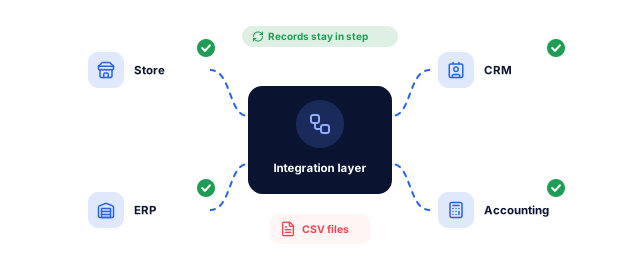
When the store, CRM, ERP and accounting system each hold their own copy of a customer or order, staff end up exporting CSV files and fixing mismatches by hand. An integration layer with clear ownership rules for each field keeps records in step automatically. For processes that span several tools, our workflow automation team builds the steps around those APIs.
Partners and developers integrate faster
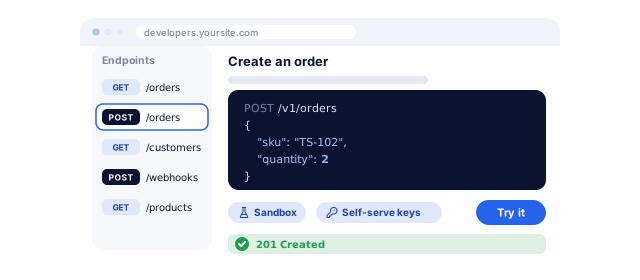
Integration speed depends on documentation more than code. In the Postman 2025 State of the API Report, 55% of respondents said they struggle with inconsistent documentation. An accurate OpenAPI contract, working examples, a sandbox and self-serve keys let partners test on their own instead of waiting on your developers.
Changes that do not break existing clients
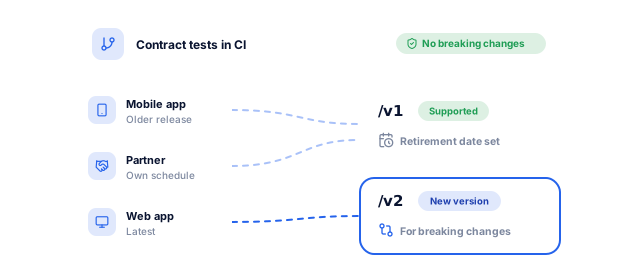
Mobile apps stay installed for months after a new release, and partners update on their own schedule. Contract tests in CI catch accidental breaking changes before they merge, new fields are added without removing old ones, and real breaking changes go into a new version with a published retirement date.
A smaller attack surface you can see
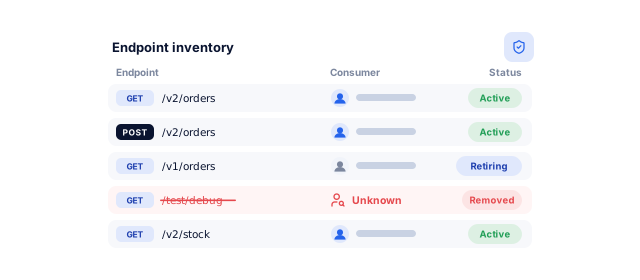
Old versions, test endpoints and forgotten integrations are common entry points. Cloudflare's 2024 API Security and Management Report found one-third more API endpoints through machine learning than customers had reported themselves. We keep a live inventory of every endpoint, version and consumer, which is also the OWASP risk called improper inventory management.
New channels and revenue from your data
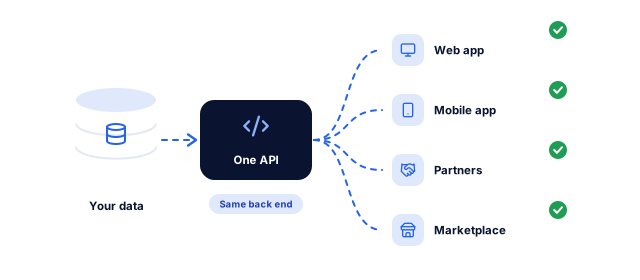
The same Postman report found that 82% of organizations have adopted some level of an API-first approach, and 65% generate revenue from their APIs. A well-designed API lets you add a mobile app, a partner integration or a marketplace listing without building the back end again.
Clear limits instead of mystery errors
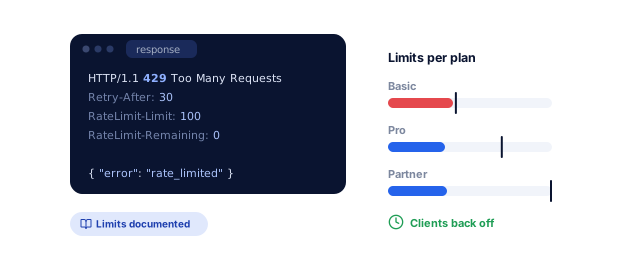
Rate limits protect your servers and your costs, but badly explained limits frustrate integrators. In the same Cloudflare data, 429 Too Many Requests made up 51.6% of API errors. We set limits per key and per plan, return a Retry-After value, and document the limits, so client developers can back off properly rather than hammering the API.
Not sure whether to build a new API or fix the one you have?
Tell us what you need. We look at your product, current API and the systems it has to talk to, and send a written plan with a price range, a timeline and the stack we would use.
Your free project planFor what you need
1What we would buildYour product, codebase and roadmap
2A price range and timelineFor the budget you pick, with the options that fit
3The stack we would useAnd how your team runs it after launch
A specialist walks you through it on a call
Our API development process, from contract to production
We list every system involved, who will call the API, what data moves in each direction and which system owns each field. Existing endpoints, credentials and vendor limits are documented, along with data protection rules such as GDPR or HIPAA where they apply.
System and data flow map
Endpoint and credential inventory
Risks and open questions
Everyone agrees what the API must do
Contract-first design
We write the OpenAPI contract or GraphQL schema before the code, covering resources, errors, pagination, authentication and versioning rules. Your web, mobile and partner teams review it, and a mock server lets them start building straight away.
OpenAPI contract or GraphQL schema
Mock server
Authentication and versioning plan
Consumers can build in parallel
Build in two-week sprints
Endpoints are built behind the agreed contract with unit tests, contract tests and code review on every pull request. Each sprint ends with working endpoints on staging that your team can call themselves.
Working endpoints on staging
Automated test suite in CI
Sprint demo and notes
Progress you can test yourself
Security and load testing
Before release we test authorization for every role and object, run checks mapped to the OWASP API Security Top 10, scan dependencies, and load test the busiest endpoints with a tool such as k6 at your expected peak traffic plus headroom.
Authorization test matrix
Security findings and fixes
Load test report
Known limits, no open critical findings
Launch with docs and monitoring
We publish the reference docs and Postman collection, issue keys or OAuth clients to consumers, and switch on dashboards and alerts for latency, error rates and failed webhooks. Releases roll out gradually where possible, with a rollback plan written down beforehand.
Developer documentation
Dashboards and alerts
Runbook and rollback plan
A live API you can see into
Versioning, support and improvement
After launch we fix issues against agreed response times, keep dependencies patched, review usage and error trends monthly, and manage new versions with published deprecation dates. Ongoing care can sit inside our website maintenance plans.
Monthly usage and error report
Changelog and deprecation notices
Patched dependencies
An API that stays current
API development for the systems you run
The details change with what the API connects and who calls it.
01 / 05
SaaS products and partner APIs
A public API turns a SaaS product into a platform customers can build on. That means API keys or OAuth clients per customer account, rate limits that follow each pricing plan, outgoing webhooks so customers can react to events, and a developer portal with clear docs. Tenant isolation is tested on every endpoint. We build these as part of SaaS application development or add them to an existing product.
API integration and back-end development usually go together for apps: sign-in, profiles, payments, push notifications, file uploads and offline sync. We version carefully, because older app versions stay in use for months, and sometimes add a small back end for each front end to keep payloads lean. Our mobile app development team builds the iOS and Android clients on the same contract.
Online stores depend on stock, prices, orders and refunds staying in step across the storefront, payment provider, warehouse and accounting system. We build those syncs with idempotent order handling so a retried request never creates a second order, nightly reconciliation reports that flag mismatches, and webhook handlers that survive retries. For the storefront itself, see our ecommerce website development service.
Booking engines, patient portals and clinic tools exchange sensitive data with calendars, SMS providers, payment gateways and sometimes hospital or lab systems using standards such as HL7 FHIR. We apply role-based access, audit logs of who viewed or changed each record, and encryption in transit and at rest. See our work for healthcare businesses and the custom hospital software in our AkosMD case study.
Many businesses run on older systems that only expose SOAP services, file drops or direct database access. Rather than a risky rewrite, we put a modern REST API in front of the old system, move consumers onto it, then replace the parts behind it one at a time. Our legacy system modernization team plans the larger move when the time comes.
Your apps, CRM, ERP or partners need to share data reliably
You want the contract agreed and documented before code is written
You need security tested against the OWASP API Security Top 10
You want the code, keys and cloud accounts in your name
We can also help when
You need something live within weeks: a single third-party integration takes about 2 to 6 weeks, and a new API can release its first endpoints in phases
A no-code tool could do the job: our workflow automation team sets up Zapier, Make or n8n, with custom code only where volume or logic outgrow them
Nobody has mapped which system owns each record: our discovery phase produces that data flow map before any code is written
You need only a few endpoints for one website: we build them as Route Handlers inside a Next.js site, with no separate server
Why choose improveFX as your API development company
Our 25+ in-house specialists in New Delhi also build the web apps, mobile apps, CRMs and cloud setups on either side, so one team owns a request from the screen to the database. Nothing is passed to freelancers, and the engineers who design the contract are the ones who build it.
02
Your code, keys and accounts
Repositories live in your GitHub or GitLab organization, secrets in your own vault, and API gateways and cloud resources in your AWS, Azure or Google Cloud account. We work on rolling agreements with transparent monthly reporting, and our cloud security and compliance team can review the setup independently.
03
A record you can check
We have delivered 170+ projects for 120+ clients in the US, UK, Canada, Australia, Europe and India. Clients rate us 4.9 on Clutch from 221 reviews and 4.8 on Google from 189, and stay with us 1.6 years on average.
Results we can put numbers on
Web and software results from client reviews and case studies, with the full story behind each number.
"From designing a high-converting website to managing our SEO, Google Ads, and Google Business Profile, improveFX delivered exceptional results across every channel."
210%more qualified leads
185%organic and local traffic growth
92%keywords on page one
Maureen CappalloBroker and founder, Momentus Real Estate Group
"They revolutionized our online presence with a 60% increase in web traffic through strategic e-commerce SEO and content optimization."
60%more organic traffic
47%more sales
Eric NoahPresident, Eric Originals & Antiques Ltd.
"Visionstar Technologies' online presence transformed significantly with a 40% boost in customer engagement, all thanks to their exceptional website structuring and SEO tactics."
+40%qualified leads
32%lower cost per acquisition
Thomas MorelFounder, Visionstar Technologies
"Their strategic approach to our website and SEO resulted in a 60% increase in local inquiries, revolutionizing our automobile service business."
60%more local inquiries
87%more organic traffic
Mike SteffanFounder, Sabulski Window Tinting
"Their SEO strategy helped us achieve top search rankings, while their Facebook Ads campaigns drove a steady flow of qualified prospects."
Our development projects run from under $1,000 to $30,000+, depending on scope, and a single third-party integration sits at the low end. Published agency pricing we reviewed runs from about $15,000 for a focused API to $100,000+ for larger platforms.
Cost depends on the number of systems and endpoints, the state of your existing data, security and compliance requirements, and the engagement model. Dedicated developers and team extension are billed monthly per engineer. We send a written estimate, broken down by phase, after a free scoping call.
How long does it take to build an API?
A single third-party integration usually takes about 2 to 6 weeks; a new API for a product about 8 to 16 weeks to first release.
Older systems with poor documentation, unclear data ownership and security reviews add time. An agreed contract and quick decisions save it. Because we design the contract first, your front-end and partner teams can start building against a mock server in the first weeks.
What do custom API development services include?
Custom API development services include discovery, contract design, the build, automated tests, security and load testing, documentation, deployment and monitoring.
With us, that also covers an inventory of your existing endpoints and credentials, a versioning and deprecation policy, Postman collections for consumers, CI/CD pipelines, and a handover session for your developers. Support and improvements after launch are available on a rolling monthly basis.
Should we use REST or GraphQL?
Use REST for public and partner APIs and most integrations. Consider GraphQL when your own apps need many related objects per screen and you control the clients.
REST is easier to cache, document and secure, and almost every partner knows it. GraphQL reduces round trips for complex screens, but needs query cost limits and field-level authorization. Many products run both: REST for partners and GraphQL for their own web and mobile apps.
How do you secure an API?
We use OAuth 2.0 or scoped API keys, authorization checks on every object, rate limits, input validation, encrypted transport and secrets kept in a vault.
We test against the OWASP API Security Top 10, where broken object level authorization is the number one risk: a user changing an ID in the URL and seeing someone else's data. We also follow RFC 9700 for OAuth flows, log security events, and patch dependencies on a schedule.
Can you integrate our systems with Stripe, Salesforce or HubSpot?
Yes. Our API development and integration services cover payment, CRM, accounting, ecommerce, messaging and Google APIs.
We build an adapter for each provider so a change on their side stays contained. If Zapier, Make or n8n can do the job reliably at your volume, our workflow automation team sets that up instead; custom integration makes sense when data volume, logic or security outgrow those tools.
How do you change an API without breaking existing apps?
We add fields without removing old ones, run contract tests in CI, and put real breaking changes into a new version with a published retirement date.
Retiring versions return the Deprecation header defined in RFC 9745 and a Sunset header with the shutdown date, and we email known consumers. Usage logs show who still calls the old version, so nobody is cut off by surprise.
Do you write API documentation?
Yes. Every API ships with an OpenAPI contract, generated reference docs, authentication guides, example requests and a Postman collection.
For partner and public APIs we add getting-started guides, a sandbox, error code explanations and a changelog. Documentation lives in your repository next to the code and is checked in CI, so it does not drift from what the API actually does.
Can you take over or modernize our existing API?
Yes. We start with a code, security and documentation review, then fix the highest risks first rather than rewriting everything.
Typical early work: removing exposed test endpoints, adding authorization checks, documenting the API in OpenAPI, adding monitoring and tests. For older SOAP or database-bound systems, API modernization means putting a modern REST layer in front and replacing the system behind it step by step.
Can we hire dedicated API developers or extend our own team?
Yes. You can hire a dedicated team that works only on your product, add our engineers to your existing team, or commission a fixed-scope project at an agreed price.
Fixed scope suits a well-defined integration. A dedicated team suits a product API that keeps evolving. Team extension suits companies with their own tech lead who need extra capacity. All our engineers are in-house employees.
Who owns the API code, keys and documentation?
You do. Code, documentation, API keys, OAuth clients and cloud resources are created in your accounts from the start.
We work in your GitHub or GitLab organization and your cloud account, and keep secrets in your own vault. When an engagement ends, we remove our access and hand over runbooks, so another team can carry on without us. If you want to check fit first, request a scoping call.
Ready to plan your website?
Tell us what you need built, or book a strategy call with our team.
What we would build, and on which platform
A price range and timeline for your budget
A call with a specialist to plan the next steps, no obligation
A specialist replies personally 4.9 from 566 client reviews