Search engines have to crawl, render, and index a page before it can rank for anything. When that chain breaks, your rankings stall no matter how much you publish. improveFX is a technical SEO agency that starts with a comprehensive technical SEO audit of your crawl paths, render output, index coverage, and Core Web Vitals, then fixes what’s broken in order of revenue impact, not checklist order. Our technical SEO experts work daily across ecommerce catalogs, SaaS platforms, WordPress, and Shopify builds.
Companies that chose us for their digital transformation













Most founders we speak to have already paid for technical SEO services once. They have the SEO audit spreadsheet sitting in a folder. What they don’t have is a site that ranks any better, because nobody prioritized the findings, nobody sat with the dev team, and nobody connected the fixes back to revenue. That’s the gap. improveFX is a technical SEO company built around closing it, so the work reaches production and shows up in your traffic instead of your Google Drive.

Our technical SEO audit services come with tickets, not just findings. Crawl blocks, render failures, canonical conflicts, and index bloat get written up the way your developers actually work, then tracked until they're live.

A red flag on a page nobody visits is not urgent for your business. We map every issue of your site to the URLs carrying your traffic and pipeline, then fix it in that order, so month one moves the numbers you care about.

Our technical SEO specialists join your sprint board, write the acceptance criteria, and QA the deploy. If you have no dev resource, we implement directly on WordPress, Shopify, Webflow, or your custom build.

You get one monthly report for your website in plain English showing what we fixed, what moved in crawl and index coverage, and what it did to rankings and revenue. No 200-slide dashboards you'll never open.
Rankings are a means, not the point. The founders and marketing leads we work with are measuring pipeline, cost per acquisition, and whether growth holds when the budget flattens. Technical SEO earns its place in that conversation because it changes the economics underneath every other channel you run. Treat it as a checklist, and you get a tidy report. Treat it as infrastructure, and you get a site that compounds the growth number. Here’s what technical SEO optimization changes across five business lines.

When crawl paths are clean and your commercial pages index fully, search engines can finally match your best pages to the queries that convert. That’s a different visitor than the one who lands on a blog post and leaves. Fixing indexation on category, product, and solution pages puts your revenue pages in front of people already deciding, which is why technical SEO work often lifts conversion rate before it lifts traffic volume.
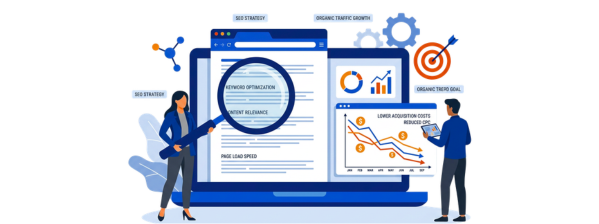
Paid traffic stops the day the card gets declined. A technically sound site continues to earn after the invoice clears. As indexation improves and page experience gets faster, organic targeted traffic on your product and services pages starts absorbing demand you were renting from ads. Most teams see the shift show up first in branded and long-tail queries, then in the head terms, and the blended cost per acquisition drops without anyone touching the media budget.

Sites that get hit hardest by core updates are usually the ones with weak foundations propped up by content volume. Clean rendering, correct canonicals, fast Core Web Vitals, and a crawl budget spent on pages that matter give search engines fewer reasons to demote you. Stable positions do something quieter too. Buyers who see you consistently in results start treating you as the established option, all thanks to technical SEO optimization.
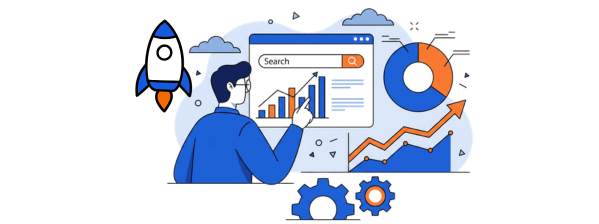
Technical SEO optimization services are not a one-time repair. Every crawl trap you close frees budget for pages that earn. Every internal linking fix pushes authority somewhere useful for your website. Every render issue resolved makes the next content investment pay out faster. Twelve months in, the same publishing effort produces noticeably more, because the ground it lands on has improved.
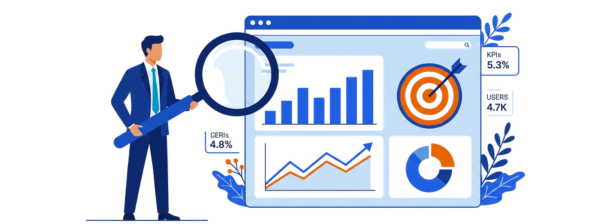
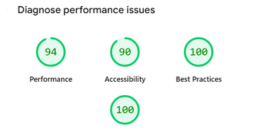
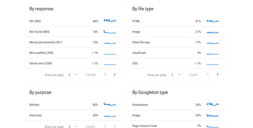
A proper technical SEO analysis tells you things no keyword tool will. Which templates Googlebot ignores. Where users abandon before the page finishes loading. Which URL patterns that are eating crawl budget for nothing. We pull it from log files, Search Console, and field performance data, then hand you the read in plain language. Most clients end up using it for roadmap and UX calls, not just SEO ones.
Get a free proposal with real numbers, honest timelines, and no lock-in. Judge us on that.
Technical work goes wrong when it’s improvised. A tool spits out 400 warnings, someone picks a few at random, and three months later nobody can say what changed or why. improveFX runs the same six-step technical SEO process on every engagement, with a defined output at each stage so you always know what we’re doing, what’s shipping next, and what it’s supposed to move. You’ll see the first findings before you commit to anything.

We crawl your full site, pull twelve months of Search Console data, and read your server logs to see how Googlebot actually behaves on your domain, not how a tool assumes it does. We benchmark against the competitors currently outranking you and flag what's structurally different about their setup.

Findings get sorted by business impact, not by the severity color a tool assigned them. We separate the fixes that unlock revenue pages from the ones that are technically true but commercially irrelevant, then agree the sequence with you before a single ticket opens.

This is where most of the movement happens. We clear crawl traps, resolve render-blocking JavaScript, fix canonical and pagination conflicts, and work Core Web Vitals toward passing thresholds. Fixes go to staging first, then production, with our technical SEO experts writing the tickets and QA'ing each deploy.

A fast site pointed at the wrong pages still underperforms. We restructure internal linking so authority flows to pages that can convert, tighten URL and category logic, and rebuild metadata and schema so each template signals the right intent to search engines and AI systems.
Search engines reward sites that are consistent and safe to serve. We lock down HTTPS and redirect chains, standardise canonical logic across templates, clean up entity and business markup, and remove the low-quality patterns that quietly suppress otherwise strong pages.

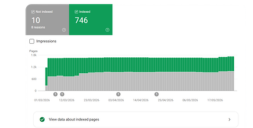
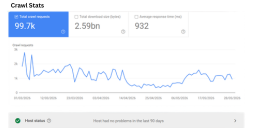
We re-crawl on a schedule and watch index coverage, crawl stats, and field performance data so regressions get caught in days rather than quarters. Every month you get one report tying what we fixed to what moved in rankings, traffic, and revenue.
A crawl trap on an ecommerce site looks nothing like a crawl trap on a SaaS platform. Faceted navigation, JavaScript-rendered docs, duplicated location pages, and thin provider profiles each fail in their own way, and each needs a different fix. improveFX has run technical SEO services across these environments long enough to know where to look first, which means less time discovering your problems and more time fixing them.

Every filter combination on your store spawns a crawlable URL. Googlebot spends its budget on color and size permutations, while your category pages get crawled once a month. We fix parameter handling, point crawl paths at the pages that convert, and make sure price, availability, and review markup render on every product. More of your catalogue reaches people who are already ready to buy.

React and Next builds often serve as an empty shell to crawlers, so your comparison and alternative pages sit unindexed while competitors own those queries. Documentation on a separate subdomain contributes nothing back. Our technical SEO specialists fix rendering, consolidate architecture across your marketing site and docs, and get evaluation content indexed. You show up while buyers are still shortlisting, not after they’ve decided.

Fifty location pages built from one template with the city name swapped read as near-duplicates, so Google indexes six of them. Store locators built in JavaScript are frequently uncrawlable, which means your branches don’t exist as far as search is concerned. We rebuild location pages so each earns indexation, implement LocalBusiness schema correctly, and tighten mobile performance. Our local SEO strategies help nearby searches start reaching the location that can serve them.

Templated provider and service pages read as thin to Google, and YMYL scrutiny punishes weak trust signals harder in healthcare than anywhere else. Booking flows built in iframes stay invisible to crawlers. We restructure provider, location, and treatment pages so each earns its own ranking, implement Physician and MedicalBusiness schema, and clear the technical gaps sitting between a symptom search and a booked appointment.

WordPress accumulates plugin bloat, page builder markup that triples DOM size, and tag and author archives, creating index bloat nobody asked for. Shopify forces URL structures that duplicate across collections. Headless builds push the entire rendering burden onto the crawler. A WordPress technical SEO service from us starts with the issues specific to that stack, so you aren’t paying for a generic audit that misses them.

Startups lose months to problems that take an hour to fix. A noindex tag left on after launch. No sitemap submitted. A migration that dropped every redirect. Early on, the highest-return technical SEO work is not sophisticated; it is simply done. We prioritize what gets you crawled and indexed properly now, so your content investment starts compounding this quarter instead of next year.
improveFX is a technical SEO services company built on straightforward and practical usecase strategies. Most sites don’t need more tactics; they need someone who can find the actual constraint and remove it. That takes engineers as much as strategists, which is why we hire both. It’s also why our audits go deeper than a tool export and why clients usually stay well past the point where the original problem was solved.
Most engagements open with a tool report and a list of warnings. We start by watching how search engines and real users move through your site, which templates get crawled, where visitors abandon, and which URLs carry the pipeline. Only then do we decide what changes. Fewer changes, better chosen, and nothing that has to be reversed in month three.
Most technical SEO services stop at the point where someone hands a ticket to a developer and hopes. improveFX puts SEO strategists, developers, performance engineers, and infrastructure specialists on the same team. When the constraint sits in server response time, a rendering pipeline, or a CDN configuration, we have people who can read the code and fix it rather than describe it and wait.
Every change follows Google’s documented guidance, so nothing on your site turns into a liability at the next core update. You get a written record of what changed, why it changed, and what it moved. And if we ever part ways, your team inherits a documented site instead of a black box nobody can maintain.
Technical SEO clears the path. What travels down it is content, authority, and the right pages built for the right markets. Most of our clients start with a technical engagement because it’s the constraint holding everything else back, then expand once the foundation holds. Here’s what pairs with it, and what each one adds once your site is crawling and indexing properly.
We’ve inherited plenty of sites where one agency built content, another handled links, and a developer shipped a redesign, and none of them spoke. Pages get written that the architecture buries. Redirects get dropped in a migration nobody flagged. Speed work gets undone by the next plugin. Running technical SEO services alongside the rest under one team means the sequence is deliberate, and nothing you paid for last quarter gets quietly reversed this one.
A technically clean site still needs something worth ranking. Our organic SEO services cover keyword strategy, content built around real search intent, and the authority signals that move competitive terms. Technical work removes the ceiling, organic SEO fills the space above it.
Selling across borders multiplies every technical decision. Hreflang conflicts, subfolder versus ccTLD choices, and geo-targeting errors routinely send the wrong page to the wrong country. Our international SEO services get the right version of your site in front of each market.
Once your catalogue crawls properly, the next gain is in how category and product pages compete. Our ecommerce SEO services cover category targeting, product page optimisation, and the content layer that helps stores win commercial queries against marketplaces.
WordPress gives you flexibility and a hundred ways to undermine your own rankings. Our WordPress SEO services handle plugin configuration, theme and template optimisation, taxonomy control, and the on-page work that turns a fixed install into a growing one.
Shopify decides a lot for you, including URL structure and how collections duplicate. Our Shopify SEO services work with those constraints instead of against them, covering collection strategy, product content, app-driven bloat, and the optimisations the platform doesn't handle on its own.
Google indexes the mobile version of your site, so mobile is not a secondary experience, it's the one being ranked. Our mobile SEO services cover mobile-first indexing readiness, mobile Core Web Vitals, and the usability gaps that quietly cost you conversions on phones.
Most people arrive with the same handful of questions, usually after an audit that went nowhere or a ranking drop nobody could explain. Here are straight answers, including the one about cost that most agencies avoid putting in writing. If yours isn’t here, ask us directly, and we’ll answer it the same way.