Our Meta Ads management services have driven a 5x return on ad spend for brands running ads at every budget level. That number comes from our own campaign data, not industry averages. Every account we manage is built on what we have already seen work across ecommerce, SaaS, healthcare, legal, real estate, and service businesses nationwide.
Companies that chose us for their digital transformation


















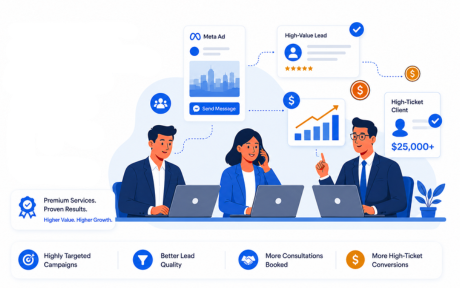
A 5x ROAS means something very different for a DTC brand than it does for a law firm. So our Meta Ads account manager doesn’t run one playbook across four business models. Our Facebook ads management services and Instagram ads management services are built around the metric that actually decides whether a campaign worked, whether that is contribution margin, cost per qualified lead, or cost per booked appointment.

We manage to contribution margin, not blended ROAS. Catalog feeds, Advantage+ Shopping, and creative testing tuned to your AOV and repeat purchase rate.

Cost per qualified lead decides everything here. We feed CRM stage data back to Meta so it optimizes toward pipeline, not raw form fills.

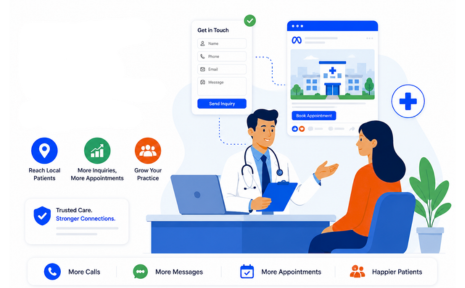
Special Ad Category rules and HIPAA-safe tracking limit targeting in both. We build compliant campaigns that still reach a workable cost per booked appointment.

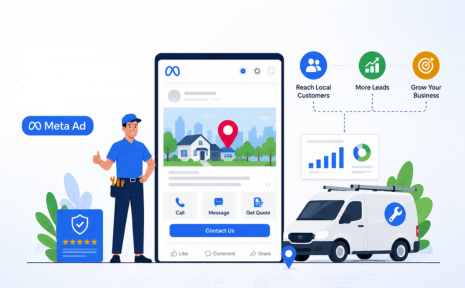
Radius targeting, location-level budgets, and call tracking. We report cost per booked job by location, so you know which markets deserve more spend.
Meta rebuilt how delivery works, and most of the accounts we inherit are still structured under the old rules. Consolidation replaced segmentation. Creative became a targeting input. Signal quality started deciding who wins auctions. None of this is hidden, but almost nobody restructured for it. Here is what we find in the Meta Business Ads Manager account after the account, and what we change first.
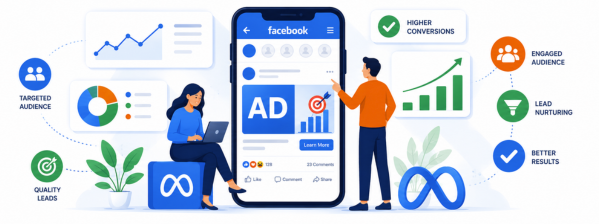
The instinct is to segment, separate campaigns per audience, per placement, and per creative angle. That structure made sense when targeting drove delivery. It doesn’t now. Split budgets keep every ad set stuck in the learning phase, so none of them ever gather enough conversions to optimize properly. The first thing we usually do is collapse a fragmented account into fewer, better-fed campaigns. Performance often improves before we touch creative.
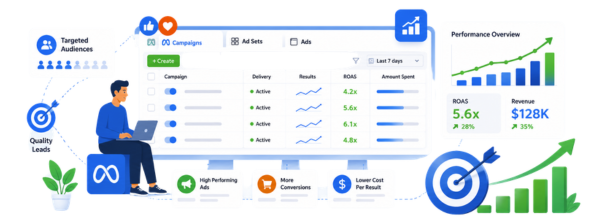
Meta’s delivery system reads your creative to decide who should see it. Which means a library of five near-identical ads gives the algorithm nothing to work with, no matter how good those five ads are. We build for variety on purpose: different hooks, formats, lengths, and angles. Not because more is better, but because diversity is the input the system needs to find pockets of demand you never targeted.
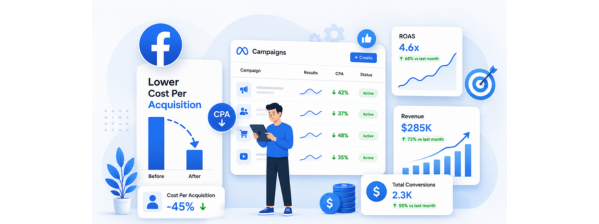
Every time you edit a budget, swap a creative, or change an optimization event, the ad set re-enters learning. We see accounts where someone tinkers daily, which means delivery never stabilizes and cost per result stays permanently inflated. Discipline matters more than cleverness here. We batch changes, hold budgets steady long enough for the system to settle, and make edits on a schedule rather than on impulse.
Browser tracking alone now misses a meaningful share of conversions. The algorithm optimizes against whatever data reaches it, so an incomplete signal produces confidently wrong decisions. We check event match quality before anything else, then implement the server-side Conversions API with proper deduplication so events aren’t double-counted. Clean signal in, better delivery out. It’s unglamorous work, and it changes results more reliably than any bidding tweak.
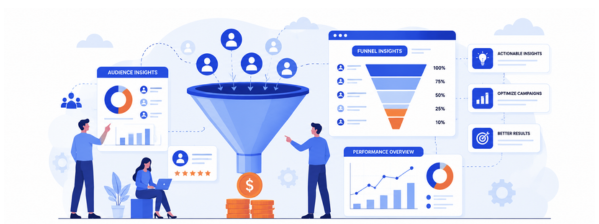
When several ad sets chase the same people, they bid against each other, and you pay a premium to reach an audience you already own. It’s invisible unless you look for it. We audit overlap early, then build suppression and exclusion logic so prospecting campaigns stop spending on existing customers and retargeting stops competing with cold acquisition. The savings usually show up within the first month.
Ads Manager is built to report on Meta’s contribution to a sale, using Meta’s attribution windows. Your finance team measures something different. Neither is lying, but if you plan budgets from the platform number alone, you will eventually overspend. We reconcile platform reporting against backend revenue every month, and we tell you where the two diverge rather than quietly picking whichever looks better.
Get a free proposal with real numbers, honest timelines, and no lock-in. Judge us on that.
Every engagement follows the same six stages, with the timeframes we work to and the deliverable you receive at each one. You will know exactly what happens in week one, what goes live by day thirty, and what we optimize toward after that. No vague onboarding, no quiet first month.

Days 1–2. We review your campaign structure, creative library, audience setup, and tracking in Meta Ads Manager. You receive a written audit naming every issue found and what each one is costing you.

Day 3. Server-side Conversions API, event deduplication, and event match quality fixes. Nothing else works properly until the data does, so we complete this before restructuring a single campaign or changing a bid.

Day 4–5. We consolidate fragmented campaigns, rebuild audience architecture with proper exclusions, and set optimization events that match your real business goal. You approve the full plan before anything goes live.

Day 6–10. We brief and produce creative built for variety, not volume: multiple hooks, formats, and angles. Campaigns go live by day thirty, with a documented testing plan for the first sixty.

Day 21 Onward. We hold budgets steady through the learning phase, batch changes rather than tinker, and rotate creative on fatigue data. You get weekly reporting against your target cost per acquisition, not vanity metrics.

Day 30 Onward. Budgets increase only at the pace your return holds. We reconcile platform reporting against your backend revenue every month, so growth is measured in profit rather than impressions or reach.
These are the questions that come up on almost every call, so we would rather answer them here than make you ask. Some answers are more direct than agencies usually give, including the ones where the honest response is that the problem might not be your ads. Nothing here is designed to be reassuring.
Campaigns are live by day thirty, but live is not the same as proven. The first meaningful read comes around day sixty, once ad sets have cleared the learning phase and creative testing has produced a winner or two. Ninety days is where we expect a fair judgment on the account. Anyone promising a turnaround in three weeks is describing luck, not method.
We tell you early, and we tell you why. If an account is not responding, the cause is usually offer, margin, or landing page rather than media buying, and we will say that even though it is not the answer anyone wants from their ad agency. Where the problem is ours, we fix it. Where it isn’t, you still get a straight diagnosis.
3 months to start, then month-to-month. The initial term exists for a practical reason, not a commercial one: tracking repair, account rebuild, and creative testing take about ninety days to produce a fair read. You own your ad account, pixel, audiences, and creative throughout, and you keep all of it if you leave, with a documented handover rather than a scramble.
In-house wins when you have consistent spend, a dedicated buyer, and a creative team producing volume. A Meta advertising management agency wins on pattern recognition, because we see across dozens of accounts what one team sees in one. If you are hiring your first media buyer, expect a ramp of several months before they are productive. If you have that person, you may need creative support more than management.
Yes, but the requirements changed. Pixel-only accounts are guessing, and the advertisers struggling most are the ones who never updated their measurement setup after iOS privacy changes. With the server-side Conversions API and clean event data, Meta remains the most efficient audience-finding system in paid media at this scale. The channel didn’t get worse. The cost of running it carelessly got higher.
Yes, with realistic expectations. Housing, credit, and employment advertisers fall under Meta’s Special Ad Categories, which removes most demographic and detailed targeting. Healthcare requires tracking configured so no health-related data reaches Meta. Both are workable, but they change what good performance looks like, and any agency promising you the same targeting precision as an ecommerce account has not run one.
Most agency sites tell you what they do but not who does it. That matters, because on Meta the difference between a good account and an expensive one is usually judgment, not tooling. Here is who runs your campaigns, what they have actually done, and the kind of client we are not the right fit for.
No handoff from the person who won the work to a junior who inherits it. The senior buyer who reviews your account in week one owns it every week after, joins your calls, and writes your reports. You will know their name, their background, and where to reach them. Accountability is difficult to fake when there is only one person to ask.

Our Meta Ads manager experts have over 8 years of experience. What matters more is range: 130+ accounts managed across ecommerce, SaaS, healthcare, legal, real estate, and local services, through every major change Meta has made to delivery and measurement. That breadth is why we recognize a failing account structure quickly and why a problem that is new to you is rarely new to us. We have usually fixed it before in another vertical.
If you want someone to execute without questioning the setup, we are the wrong choice, because tracking repair is not optional for us. If you want guaranteed results, no honest agency can give you that. And if creative testing is off the table, Meta will limit what any buyer can achieve. We would rather establish this now than three months in.
Meta rarely performs in isolation. What happens before the click and after it decides whether a good campaign becomes a profitable one. These are the services our Meta clients most often add, and the specific reason each one moves the numbers. Take what applies to your situation and ignore the rest. We will tell you which one matters most.
It depends on where the leak is. If your ads perform but revenue doesn’t follow, start with conversion rate optimization. If creative fatigue keeps resetting your gains, start with production. If cost per acquisition is fine but volume is capped, add a second channel.
Meta creates demand, Google captures it. As Meta spend rises, branded search volume follows, and paid search is usually where that intent converts most cheaply.
An ad can only earn the click. If your landing page converts at two percent instead of four, you are paying twice as much for every customer.
Creative is now a targeting signal, so volume and variety directly affect delivery. Most accounts stall because production can't keep pace with testing, not because the strategy failed.
Higher customer lifetime value lets you bid more than competitors and still profit. Retention work is often the cheapest way to make an expensive Meta account viable again.
Paid social is rented reach. Organic search compounds instead, and clients with both spend less on Meta over time because they are not buying every visit.
For B2B, Meta finds volume and LinkedIn finds precision. Running both lets you test cheaply on Meta, then target the accounts worth paying a premium to reach.
These are the questions we hear most from businesses evaluating Meta ads, answered without the sales pitch. Some are about the platform, some about working with an agency. If yours isn’t here, ask on the call, and we will answer it the same way.