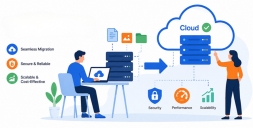
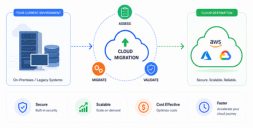
Our cloud migration consulting services start with a straight assessment of what you’re running today, what it costs, and what it would cost on AWS, Azure, or Google Cloud. Then we move it in stages, with your team involved throughout, so nobody is betting the quarter on one long weekend. You’ll see the full plan before we touch anything.
Companies that chose us for their digital transformation



















Signing off on a cloud migration means committing real budget to something you can’t see yet. We know that takes trust, so we’ve built our cloud migration services around four commitments that hold from the first assessment through your first year of running. They go in the proposal, they go in the contract, and we report against them every month.

Before any contract, you get a cost model covering the migration itself and twelve months of running it, built from your actual usage.

We migrate in waves scheduled around your calendar, so revenue keeps coming in and your team keeps working through the entire project.

Every application, database, and integration gets mapped and tested in a staging environment first. Surprises get found there, not on cutover night.

Your cloud accounts, your repositories, your documentation. We train your team as we go, so staying with us is a choice, not a dependency.
Our cloud migration services aren’t tied to a reseller agreement, so the recommendation you get comes from your workloads rather than our margins. Sometimes the right answer is obvious within an afternoon of looking at your stack. Sometimes it’s a split, with databases in one place and applications in another. Here’s how we read each platform and where each one genuinely earns the move.
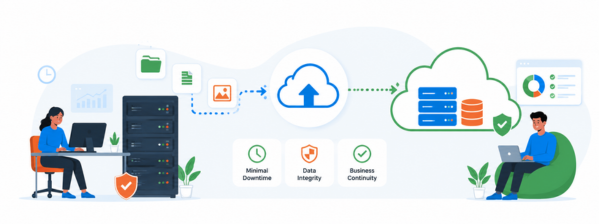
AWS has the deepest service catalog of the four, which makes it the safe default for variable workloads and anything data-heavy. We use Application Migration Service for lift-and-shift and Database Migration Service for the data layer. The catch is cost sprawl: it’s easy to land on instances twice the size you need and pay for egress you didn’t plan. We right-size before cutover, not after the first invoice.
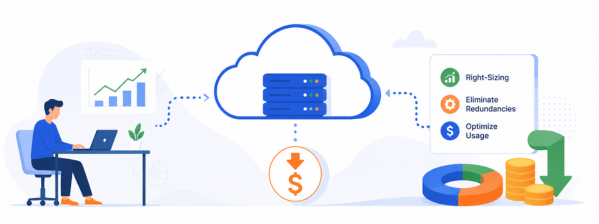
If you already run Windows Server, SQL Server, Active Directory, and Microsoft 365, Azure usually wins on identity and licensing alone. Azure Hybrid Benefit lets you carry eligible Windows and SQL licenses across instead of buying them again, and we’ve seen teams miss that entirely. We audit your entitlements before we scope anything, because it often changes what the migration costs by a wide margin.
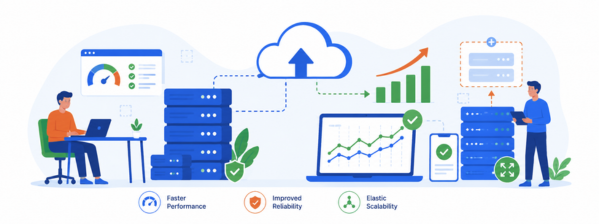
Google Cloud earns its place when the reason you’re moving is data. BigQuery handles warehouse workloads that would need constant tuning elsewhere, and GKE is still the most mature managed Kubernetes if you’re heading toward containers. We migrate warehouses with Database Migration Service and Storage Transfer, and we’ll say so if your workload is ordinary enough that another platform serves it just as well.
If your estate runs on Oracle Database or E-Business Suite, the licensing math usually decides this one. Oracle’s policy for licensing its software on other vendors’ clouds counts processors differently than it does on-premises, which can quietly inflate what you owe. OCI avoids that, and Oracle Database@Azure exists if your applications need to sit in Azure. We model the license cost both ways before recommending either.
Not every migration starts on-premises. We move workloads between providers when contracts change, when an acquisition leaves you running two clouds, or when one platform stopped making financial sense. These projects are less about servers and more about untangling identity, networking, and data gravity. We map the dependencies first and move in the order that keeps both environments working while the switch happens.
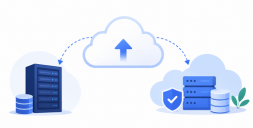
Most of our work still starts in a server room or a colocation contract that’s coming up for renewal. Applications, databases, file shares, and warehouses each move differently, and treating them as one project is where timelines slip. We migrate applications and data on separate tracks with their own testing, so a slow database doesn’t hold your whole cutover hostage.
Get a free proposal with real numbers, honest timelines, and no lock-in. Judge us on that.
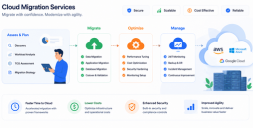
Every stage of a cloud migration should end with something in your hands, not just a status update. You read the assessment, approve the architecture, and watch a pilot run before the bulk of the budget is committed. If the numbers don’t work at stage two, you stop there and keep everything we produced.
We inventory every server, application, database, and integration, then trace what talks to what. You get a dependency map and a workload inventory scored by migration difficulty and business risk.
We model migration cost and twelve months of run cost against the price of staying put. You approve, revise, or walk away at this stage, and the full analysis is yours either way.
We design the landing zone, network, identity, and access controls before anything moves. You get architecture diagrams, a security model mapped to your compliance obligations, and infrastructure defined as code.
One real workload moves first, chosen because it's representative rather than easy. It proves the architecture, calibrates the timeline, and surfaces problems while the stakes are still small. Nothing else moves until it passes.

Workloads move in scheduled waves, each one tested and reversible. You get a cutover runbook per wave, a named window, and a rollback we've already rehearsed. Progress is visible to your team throughout.

We stay on for thirty days after the final wave, tuning performance and cost. You finish with runbooks, a trained team, and a documented spend baseline to measure against. After that, ongoing management is optional.
Almost nobody wakes up wanting to run a cloud migration. Something forces it: a renewal, a deadline, an outage, or an auditor with questions. The trigger matters, because it sets your timeline and decides which workloads move first. Find yours below, along with what we’d actually do about it and where we’d start.
Since Broadcom restructured VMware licensing, renewal quotes have arrived at multiples of what teams expected, and it has become one of the most common reasons companies start looking at the cloud. We model three options against your renewal date: absorb the increase, move to an alternative hypervisor, or migrate the workloads to AWS, Azure, or Google Cloud. Sometimes staying and renegotiating wins. You’ll see the numbers for all three.
January 12, 2027, is the hard date, and SQL Server 2016 already passed its own end-of-support date in July. After that, you’re paying for extended security updates or running unpatched. Migrating to Azure is often cheaper than buying those updates, because Microsoft includes them at no additional charge for eligible workloads running there. We’ll check your entitlements and show you both paths.
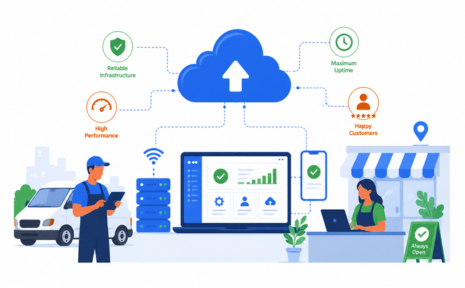
This is one of the most common reasons companies come to us, and it’s rarely mysterious. Lift-and-shift without right-sizing leaves you paying cloud rates for data center-sized machines, plus egress and storage tiers nobody configured. We audit the account, find the waste, and usually return the first meaningful savings within a few weeks. Then we fix the architecture underneath so it doesn’t come back.
Half the estate moved, the momentum went, and now you’re paying for two environments and running both. Usually the internal team got pulled onto something urgent, or the previous partner finished their statement of work and left. We pick up from wherever it stopped, document what’s actually running where, and finish it. No requirement to start over, and no lecture about how it was done.
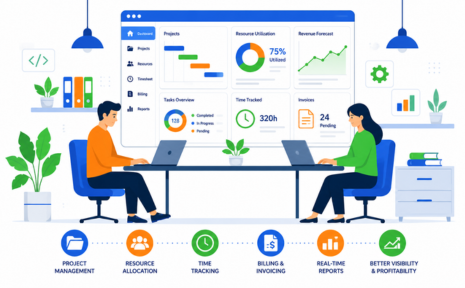
An enterprise prospect sent a security questionnaire, or a SOC 2 audit surfaced gaps you can’t close on your current infrastructure. Cloud platforms give you encryption, access logging, and audit trails as configuration rather than projects. We design the target environment against the specific framework you’re being held to, and you finish with the documentation and evidence the auditor actually asks for.
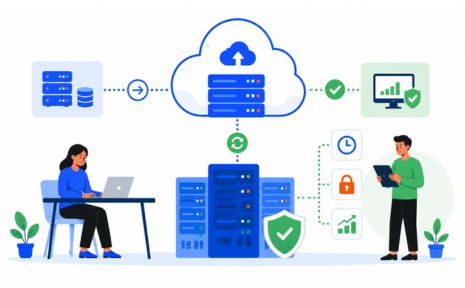
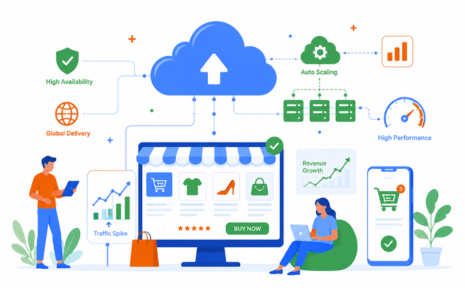
Traffic spikes during a campaign, a sale, or month-end close, and the system that handles a normal Tuesday can’t cope. Fixed servers can’t flex, so you either overpay year-round for peak capacity or accept the outages. We move the workloads that need elasticity, add autoscaling and caching, and load-test against your actual peak before it arrives rather than after. You’ll know the ceiling before your customers do.
When the last wave lands, you can hand the environment to your team, hand it to us, or split it between you. Our cloud migration and management services cover monitoring, incident response, cost governance, and continued optimization for as long as you need them, with the arrangement written into an SLA rather than assumed.
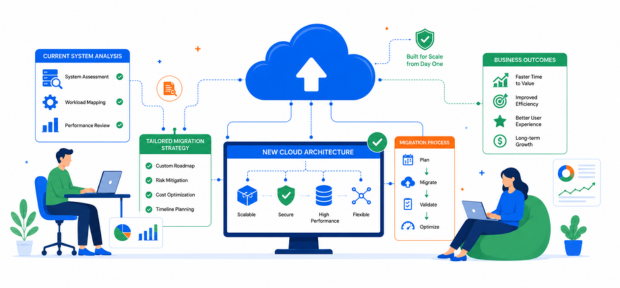
Monitoring, patching, incident response, backup verification, and disaster recovery testing all need an owner from day one. Some teams want that entirely off their plate. Others have capable engineers who just need escalation cover at 2 a.m. We work either way, under a written SLA with response times you pick rather than tiers we invented. You can change the arrangement as your team grows.
We review spending monthly against the baseline set at handover and flag anomalies as they appear, which is usually a test environment somebody spun up and forgot. Once your usage patterns are predictable, we move you onto reserved capacity or savings plans. You see the same dashboard we do, and anything we cut stays cut, because the guardrails live in your account rather than a spreadsheet we keep.
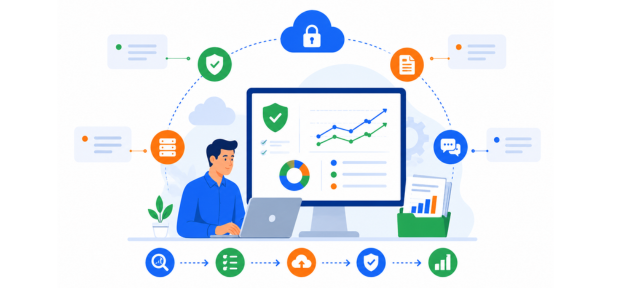
Every migration defers something. A monolith gets rehosted because the lease was up; a database moves as-is because there wasn’t time. We keep that list with a price against each item and bring it back when the business case is strongest rather than when we need the work. Some items never become worth doing, and we’ll say so. That roadmap is part of the handover pack, not a separate engagement.
A migration rarely arrives on its own. Cost optimization usually follows within the first quarter; multi-cloud management arrives when a second provider does, and the modernization work you deferred needs an owner eventually. These are the services that most often sit alongside migration work, and every one of them can run under the same team and contract.
Adding a service doesn’t mean a new discovery phase or another set of introductions. The engineers already have your architecture diagrams, your cost baseline, and your access. Scope gets added to the existing agreement, and you keep the same point of contact throughout.
Right-sizing, commitment planning, and waste removal for accounts already running in the cloud. The first audit usually surfaces savings before any architecture changes are made.
One control plane for workloads spread across AWS, Azure, and Google Cloud. Unified monitoring, consolidated billing, and consistent security policy instead of three separate consoles.
Rebuilding the applications a migration exposed as the real bottleneck. We take them one at a time, with a business case for each, once the platform underneath is stable.
Integration work for systems that now live in different places. Retained on-premises applications, new cloud services, and third-party tools connected properly rather than through overnight file drops.
Once your warehouse is on the cloud, the analytics you couldn't run before become practical. Forecasting, churn modeling, and reporting built on the data you just finished moving.
Manual processes that survived on the old infrastructure because nobody had time to fix them. Cloud-native services make most of them automatable without a full application rebuild.
These come up on almost every first call. If yours isn’t here, ask it directly, and you’ll get a straight answer rather than a callback. Nothing below is a sales pitch, and where the honest answer is “it depends,” we’ve said what it depends on.