There’s a difference between an app that runs on iPhone and one that feels like it was made for it. Our team of iOS app developers builds the second kind: our custom iOS app development is in native Swift and SwiftUI, tuned to Apple’s frameworks, and tested on real devices. Our iOS developers take it from the first architecture call through App Store approval, then stay on after launch.
Companies that chose us for their digital transformation

















Teams arrive at different points in the product lifecycle, so the right engagement looks different each time. Some need a complete first version. Others need to modernize what’s already live, expand into the rest of the Apple ecosystem, or simply add experienced iOS capacity to an existing team. We shape the work around the situation rather than forcing every project into the same mold.

You have a product idea and no code yet. We take it from discovery and architecture through design and the first App Store release as one continuous engagement.

Your app works, but the codebase is fighting you. We migrate Objective-C to Swift incrementally so releases keep shipping while the foundation is replaced underneath.

Your iPhone app is performing well, and users want more. We extend it to iPad, Apple Watch, CarPlay, and Vision Pro without forking the codebase.

You have a clear roadmap but not enough people. Hire iOS app developers who join your startups, use your tools, and report to your leads.
Most of what separates a good iOS build from a mediocre one is invisible on launch day. It surfaces later, as crash rates, review rejections, battery complaints, and a codebase nobody wants to touch. Here’s how we handle the decisions a technical reviewer should be asking any iOS native app development agency about, and what we’d tell you if you asked us directly.
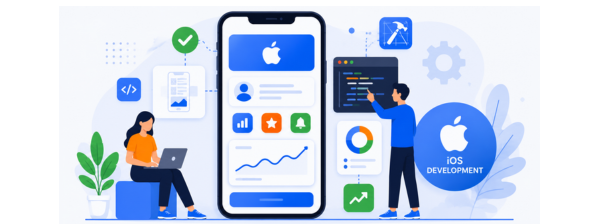
SwiftUI is the right default for new work, but it isn’t the answer for everything yet. Complex collection views, precise scroll behavior, and older deployment targets still favor UIKit. We usually build SwiftUI-first and drop into UIKit through UIViewRepresentable, where it earns its place. The architecture underneath is typically MVVM with clear boundaries, so screens can be tested without a simulator.
A full rewrite is the most expensive way to modernize an app and the riskiest. We work through the bridging header instead, converting one module at a time behind existing tests, so every release stays shippable. Objective-C and Swift coexist fine when the interfaces are clean. The goal is a codebase your team can hire against again, reached without a feature freeze.
Credentials belong in Keychain, not UserDefaults, and that decision gets made on day one rather than during a security audit. We implement certificate pinning where the threat model calls for it, keep the privacy manifest accurate as SDKs change, and make sure App Tracking Transparency prompts fire in the right order. Most App Store rejections we see elsewhere trace back to privacy disclosures nobody kept current.
The simulator will not tell you that your app quietly drains a battery in twenty minutes. We profile physical hardware with instruments, watching main thread hitches, memory growth, and energy impact under real network conditions. Older devices stay in the test matrix because a meaningful share of active iPhones are several generations behind whatever your team carries. It is the single most common blind spot we inherit.
Connectivity is not binary, and apps that assume it is fail in ways users describe as “buggy” without knowing why. We design the local store first, usually SwiftData or Core Data, then define how conflicts resolve when the same record changes in two places. Queued writes, optimistic UI, and a sync status that tells the truth beat a spinner that never resolves.
Accessibility is cheap during development and expensive afterward. We set Dynamic Type, VoiceOver labels, contrast ratios, and focus order as acceptance criteria on the tickets themselves, so nothing ships without them. Apple’s Accessibility Inspector runs in QA alongside functional tests. Beyond the compliance case, it’s also just good engineering: apps that work well with VoiceOver tend to have cleaner view hierarchies.
Get a free proposal with real numbers, honest timelines, and no lock-in. Judge us on that.
Our iOS app development services run through these six stages: discovery, architecture, design, native build, QA, and release with ongoing OS support. What makes a process auditable is not the stage names, which every agency shares, but the artifact each one produces and the person who signs it off. Both are listed below. Nothing moves forward without your approval.

We map requirements, technical constraints, and Apple's platform rules. You get a fixed technical scope and a real cost figure. You decide whether to proceed before any code is written.

Our iOS lead proposes the app architecture, data model, and API contracts, documented as decision records. Your technical stakeholder signs off. Changing this later is expensive, so we settle it now.

You get a clickable prototype following Apple's Human Interface Guidelines, not static mockups. You approve every screen before development starts, which is where scope disputes get prevented rather than argued.

We build in two-week sprints. Every sprint ends with a TestFlight build on your device, not a status email. You accept or reject each increment, so progress is never a claim.
Testing runs on physical hardware across the device and iOS version matrix. You get a written test report and a crash-free baseline. QA holds release authority, not the delivery manager.
We handle submission, metadata, and privacy disclosures. Then every June, we test your app against the new iOS beta and send you a written readiness report weeks before Apple ships it publicly.
iOS app development cost is driven by four things: feature count, backend complexity, design originality, and the hourly rate of wherever your team sits. Everything below is what we’d tell you on a call. If a number depends on your specifics, we say what it depends on rather than stopping at “it depends.”
Four variables move the number: how many features ship in version one, whether you need custom backend work, how much of the design is original versus standard iOS patterns, and your team’s hourly rate. Budget separately for year two. Maintenance, OS updates, and Apple’s $99 annual developer fee typically run 15 to 20 percent of the original build cost each year.
A focused first version with a handful of core features usually takes three to four months from kickoff to App Store approval. Add a custom backend, payments, or real-time features, and you’re closer to six to nine. Apple’s review itself is typically 24 to 48 hours now, so the timeline risk sits in scope decisions, not in waiting for review.
Flutter and React Native are reasonable choices for content-driven apps that need to ship on both platforms fast. Native Swift wins when performance, battery, hardware access, or same-day support for new Apple APIs matter. The practical test: if your iOS app is the product rather than a companion to a website, build it natively. If it’s a catalog with a login, cross-platform is fine.
Apple’s Guideline 2.1, App Completeness, accounts for over 40 percent of rejections, and it usually means something simply didn’t work during review: a broken login, placeholder text, or a backend that was down. Design issues drove 378,300 rejections in Apple’s 2024 Transparency Report. Privacy disclosures that drifted out of sync with your SDKs are the third recurring cause. None of these are bad luck. All three are preventable.
You do, throughout. Your source code lives in your repository from the first commit, not transferred at the end of the engagement. The Apple Developer Program account is registered to your company, and the signing certificates stay with you. If our relationship ends, you keep everything needed to hand the app to another team, including architecture documentation. We put that in the contract, not just on this page.
When you compare iOS app development companies, rates vary by roughly 400 percent across regions. An iOS app development company in the USA typically bills $100 to $250 an hour; an iOS app development company in India, $20 to $45. Neither number tells you about quality. What matters is who reviews the architecture, whether QA is dedicated, and how much of your day overlaps with theirs.
Apple’s been shipping a language model right on the device since iOS 26, and any app can call it. That shifts what an iOS app can do offline, how much it costs to run, and even how users discover your features. Most agencies are still treating this like some future roadmap item. It already shipped.
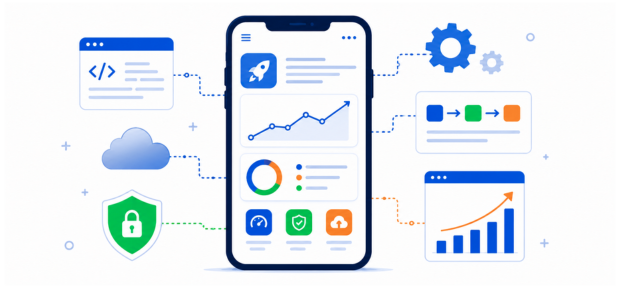
With Apple’s Foundation Models framework, your app gets direct access to the roughly three-billion-parameter model that powers Apple Intelligence. It runs entirely on-device, so you avoid API bills, cut latency, and keep user data on the phone. As of WWDC 2026, the same code can also route to a cloud or open-source model, giving you flexibility without locking into one provider. Our iOS app development services help teams ship this cleanly from day one.
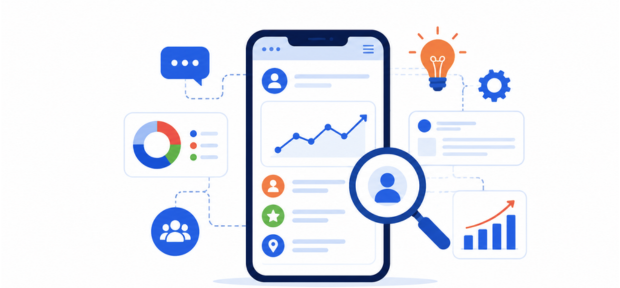
App Intents let Siri and Apple Intelligence reach inside your app and act on features through natural language. Adopting the schemas makes those features addressable in the way the App Store search once made your listing visible. Teams building this now are claiming space in a discovery surface that still has no auction. As an iOS app development company, we include the schema layer in every standard build, not as a paid add-on, so your custom iOS app development stays lean and future-ready.
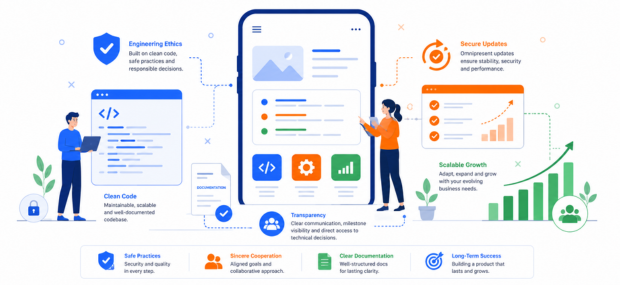
The on-device model is about three billion parameters. It handles summarizing, classifying, extracting structure, and calling tools well, but it is not a general-knowledge chatbot and lacks meaningful long-context support. We help you decide which features actually suit it and which need a server-side model or no model at all. Most apps need fewer AI features than they are sold. Our iOS mobile app development approach keeps the scope honest and the results useful.
An iOS build rarely travels alone. Most teams who come to us for iOS mobile app development services also need Android apps, a design system, or someone to keep the thing running once it ships. Each service below links to a page written the same way this one was, with real numbers and no vague answers.
Sometimes it isn’t. If your users are mostly on Android, or you need both platforms on a startup budget, we’ll say so on the first call. We’d rather route you to the right build than sell you the one you asked for.
Your users aren’t all on iPhone. We build native Kotlin apps with the same architecture standards, so both platforms stay in sync instead of drifting apart.
When one codebase actually serves you better, we build in Flutter or React Native. We’ll tell you which side of that line your product sits on.
Design before development, or design to fix what shipped without it. Prototypes you can tap through, built on Apple’s and Google’s interface guidelines rather than a template.
An app that works but can’t be changed anymore. We modernize the codebase in place, module by module, so releases keep going out during the work.
Dedicated QA engineers, physical device labs, and automated regression suites. Available as a standalone engagement if your build team has no testing capacity of its own.
Someone built your app and moved on. We take over existing codebases, document what we find, and keep them current through each OS release cycle.
These are the questions that actually come up on first calls, answered the way we’d answer them on the phone. If yours isn’t here, ask it. We’d rather have an awkward conversation now than a misaligned expectation in month three.