


















Shopify SEO services that work with Shopify's limits, not against them

Our Shopify SEO services are for merchants whose store looks good but does not earn enough sales from search. Shopify fixes some things for you and locks others, so we work where the gains are: duplicate product URLs, collection structure, theme code, app weight, structured data and Shopify Markets for selling abroad.

  • 170+projects delivered
  • 4.9
    221 reviews
  • 1.6 yrsaverage client relationship
full grain leather bifold wallet men
AI overview: Kestwick makes full grain leather bifold wallets by hand and ships them free, with a five-year warranty.
KLKestwick Leather4.9 rating · 1,204 reviews · Free shipping#1
DGDunmore Goods4.5 rating · From $49#2

120+ businesses chose us for their digital growth

  • AkosMD Hospital
  • Amita Naithani Resort Wear
  • Momentus Real Estate Group
  • CleverBoss
  • MastersBuddy
  • Foley Mansfield
  • Pomegranate Health
  • Trunk Box Baby
  • Hunt Ortmann
  • Immigration Desk
  • Urology Partners
  • Jodi Carlton
  • Ecom Fashion
  • Eye on Security
  • Disability Solutions
  • One400
  • Eric Originals
  • Sabulski Window Tinting
  • History of Soccer

Shopify SEO at a glance

Shopify SEO is the practice of making a Shopify store's collections, products and content rank in search and AI shopping results. Shopify SEO services work within the platform's fixed URL structure to remove duplicate URLs, improve theme code and speed, add complete product markup, configure Shopify Markets and build content and links that bring buyers.

  • The /products/ and /collections/ prefixes cannot be removed, and rarely need to be.
  • Most Shopify duplicate content comes from theme links, variants and tag pages, and is fixable in theme code.
  • Every app you install can add scripts to every page. Speed work starts with the app list.
  • Shopify Markets adds hreflang for you, but the redirect and content choices are still yours.
Best for
Shopify and Shopify Plus stores, including stores moving to Shopify from Wix, WooCommerce, BigCommerce or Magento
What you get
Shopify audit, collection plan, theme and schema fixes, app and speed cleanup, Markets setup, content, links, revenue reporting
Typical timeline
Audit and theme fixes in 3 to 6 weeks. Collection rankings usually move in 3 to 6 months, with sales growth building over 6 to 12 months.
Pricing
Driven by catalog size, theme condition, markets and content needed. Published Shopify SEO retainers we reviewed ran from about £1,300 to £2,500 a month. We quote after a free audit.

What our Shopify SEO services include

Six workstreams built around how Shopify actually behaves. Most fixes happen in theme code, not through another app.

Get a free proposal

Collection structure without native subcategories

Shopify collections are flat, with no built-in parent and child structure, so hierarchy comes from collections, nested menus, breadcrumbs and internal links. We use keyword research to map searches to collections, decide which tag or filter views deserve their own collection, and plan handles before they go live. Collection pages get useful copy held in metafields, so it shows above or below products where your theme design allows.
Duplicate URL cleanup

Shopify's own Liquid documentation warns that collection-scoped product URLs carry the same content as the main product URL. We change theme snippets so internal links point to /products/ URLs, review ?variant= links, tag pages and /collections/all, and check that canonical tags agree with every internal link and sitemap entry.

Theme code and structured data

We edit Liquid and Online Store 2.0 templates directly to fix heading order, on-page SEO fallbacks for titles and meta descriptions, image alt text and lazy loading. Product JSON-LD is completed with brand, GTIN, offers, shipping and return details and review data, then tested in Google's Rich Results Test. All work happens on a duplicate theme first, so nothing changes live until you approve it.

App audit and Shopify speed

Shopify SEO optimization often starts by removing things. We trace every script to the app that loads it, remove code left behind by uninstalled apps, limit the rest to the templates that need them, and rebuild simple features such as size charts or FAQs natively. Progress is checked against Google's Core Web Vitals thresholds using field data, not lab scores alone.

Shopify Markets and international setup

For stores selling abroad, we choose between subfolders, subdomains and separate domains in Shopify Markets, check the hreflang Shopify generates, and localize titles, prices and content per market. We review automatic redirection settings carefully, because redirecting visitors by location can stop crawlers from reaching each version. Larger rollouts follow our international SEO process.

Content, links and AI shopping

We write collection copy, product descriptions and buying guides on Shopify's blog engine, built from the questions buyers ask. Links come from gift guides, press, makers and stockists, not bought packages. We also check how your products appear in ChatGPT, Perplexity and Google AI Mode, and make sure product data in your Google and YouTube app feed matches the store. See our AI SEO service for more.

Common problems with SEO for Shopify, and what fixing them changes

Most SEO services for Shopify find the same handful of issues. These are the ones we check first, because they block everything else.

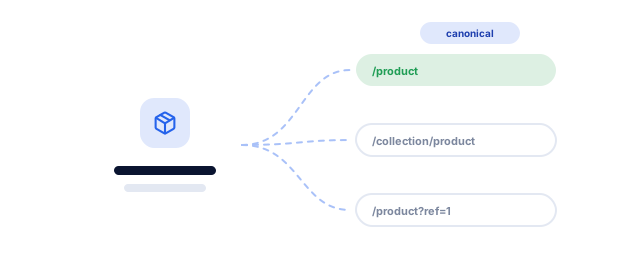
One product reachable at several URLs, pulled together by a canonical tag

The same product indexed under several URLs

Many themes link to products through collection paths, so one product can be reached at /products/linen-shirt and at a different /collections/ URL for every collection it belongs to. Google then has to choose which to show and where links count. Pointing every internal link at one URL concentrates signals on a single page and cleans up Search Console reports.

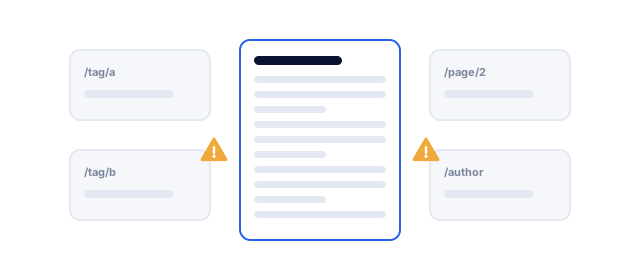
Thin tag and archive pages crowding out the real content in search

Tag and filter pages crowding the index

Tag views and filtered collections can create thousands of thin URLs. Shopify lets you change crawl rules through robots.txt.liquid, but its help center warns that incorrect use can result in loss of all traffic. We test every rule against real URLs first, and keep the filter views with real search demand open as proper landing pages.

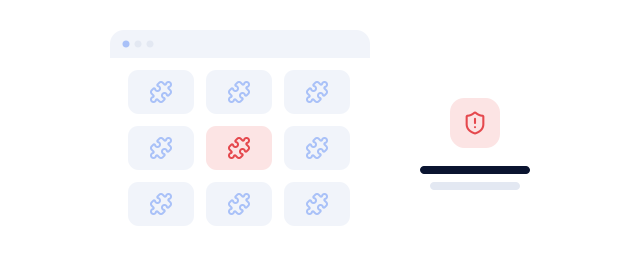
Apps piling up on a store, slowing it down, with one flagged

A store slowed down by years of apps

Review widgets, pop-ups, upsell tools and tracking scripts each add weight, and older apps can leave code behind after removal. Google's Core Web Vitals guidance sets good thresholds of LCP within 2.5 seconds, INP under 200 milliseconds and CLS under 0.1. We work toward those numbers on your collection and product templates, where shoppers actually land.

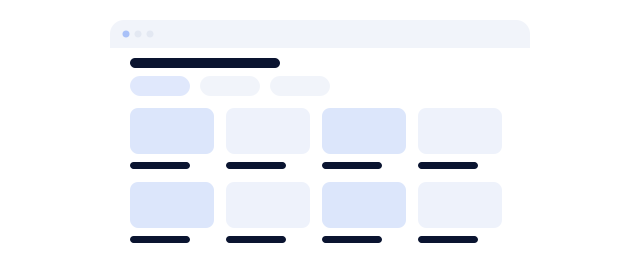
A category page with filters and a product grid built to rank for the category search

Collections that rank for nothing

A collection named "New In" or "Summer Edit" rarely matches a search anyone makes. We rename or add collections that match how people shop, such as "linen shirts for men", give them a clear title, a short helpful intro and links from menus and related collections. This is usually where a store gains its most valuable non-brand traffic.

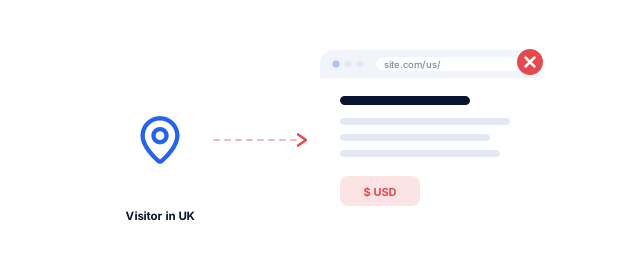
A visitor in one country being shown the page meant for another country

International visitors seeing the wrong market

Shopify's international domains guide says hreflang tags are created automatically for every international domain or subfolder, and recommends subfolders for most first setups. Problems start when markets share identical content or redirect visitors by location. We check each market's hreflang, sitemap and redirect behavior so the right version ranks in each country.

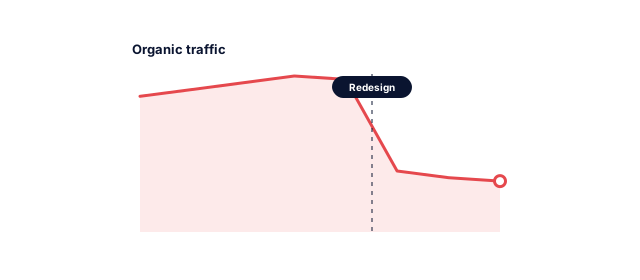
Rankings falling sharply after a redesign or site change

Rankings lost after a theme change

A new theme can quietly drop structured data, change heading tags, remove collection copy or add new duplicate links. We compare the old and new theme before you publish: titles, headings, schema, internal links and page speed on key templates. If something regresses, it gets fixed on the unpublished theme, not after traffic has already fallen. Our technical SEO team runs the same checks after every major release.

Wondering if your store is held back by Shopify itself?

Usually it is not. Send us your store URL and we will show you which problems come from your theme, apps and setup, and which are true platform limits, in a short written audit you can use with or without us.

Free, with no obligation. Rather talk? Book a 30-minute call

Our Shopify SEO process, from audit to published theme

  1. Shopify SEO audit

    A Shopify SEO specialist crawls the store, compares it with what Search Console reports as indexed, and reviews theme code, installed apps, sitemaps, robots rules, structured data and Core Web Vitals field data. We also check Markets settings and the Google and YouTube app feed in Merchant Center.

    • Duplicate URL and indexation report
    • App and script inventory
    • Revenue baseline by collection
    A ranked list of what is holding sales back
  2. Collection map and strategy

    Keyword research becomes a collection map: which collections to keep, rename, merge or create, which tag views to open or close, and which products need their own targeted pages. You approve the plan and priorities before any theme or content work begins.

    • Keyword-to-collection map
    • Handle and redirect plan
    • 12-month roadmap
    A structure that matches how buyers search
  3. Theme and technical fixes

    Our Shopify developers work on a duplicate theme: internal link fixes, structured data, heading and meta templates, app cleanup, image and script loading, and robots.txt.liquid rules where needed. You preview everything before we publish, and we recrawl after release.

    • Updated theme with change log
    • Validated product schema
    • Speed report before and after
    A cleaner, faster store with no surprises
  4. Collection and product content

    We write collection intros, FAQs and buying guides, and rewrite descriptions for best sellers first. For large catalogs, we set metafield-driven title and description patterns so new products launch with sensible defaults instead of blank fields.

    • Collection copy in metafields
    • Rewritten top product pages
    • Title and meta patterns
    Pages that answer buying questions
  5. Authority and digital PR

    We earn links to the collections and guides that sell, through gift guides, product reviews, maker and stockist pages and niche publications. Link targets follow the collection map, so authority lands on pages that bring orders.

    • Prospect list by collection
    • Outreach and PR
    • Internal link updates
    Stronger rankings for money pages
  6. Reporting and next steps

    Each month you get organic revenue, orders and rankings by collection, every theme change we shipped, and issues found in Search Console. Each quarter we review new products, seasons and app changes, since one new app can undo speed work.

    • Monthly revenue report
    • Theme change log
    • Quarterly roadmap review
    Clear decisions, month by month

Shopify SEO for your kind of store

The work changes with where your store is in its life and how you sell.

01 / 05

Stores moving to Shopify

Migrations from Wix, WooCommerce, BigCommerce or Magento are where rankings are most often lost. We crawl the old store, map every URL to its Shopify equivalent, import 301 redirects in bulk, carry over titles, content and schema, and watch Search Console daily after launch. That is the approach behind the Eric Originals case study, where a Wix to Shopify move became the base for 1,900% organic traffic growth.

02 / 05

Stores selling internationally

Shopify Markets lets one store serve several countries with local currency, language and domains or subfolders. We decide the structure, localize the collections that drive revenue, and check that hreflang, sitemaps and redirects behave as intended in each market. Same-language markets such as the US, UK, Canada and Australia still need local spelling, pricing and delivery details to rank on their own.

03 / 05

Shopify Plus and large catalogs

High-volume stores with thousands of products need rules, not page-by-page edits: metafield-driven templates, sitemap monitoring, and release checks so a theme deploy or new app does not break schema across the catalog. We also check that expansion stores for other regions do not compete with each other in search. When several brands, stores or teams are involved, our enterprise SEO services add governance and change control on top.

04 / 05

Headless stores on Hydrogen

Hydrogen and other headless front ends remove theme limits but hand you new SEO jobs: server-side rendering, canonical tags, sitemaps, redirects and structured data all have to be built rather than inherited from a theme. We review rendering in the URL Inspection tool and work with your developers, or ours, so the custom front end is as crawlable as a standard theme.

05 / 05

Fashion, beauty and jewelry stores

Variant-heavy catalogs raise one recurring question: should each color or shade be its own product? We split variants only when people search for them separately, such as a specific shade name, and keep the rest as variants to avoid thin pages. Image SEO, size guides and review content matter more here than in most categories. See our work for beauty and lifestyle brands.

Shopify's SEO limits, and how we handle each one

Shopify SEO best practices start with knowing which limits are real and which are just defaults. This is what we see most often in audits.

Shopify behaviorWhat it causesHow we handle it
Fixed /products/, /collections/ and /pages/ prefixesLonger URLs; no custom folder structureLeave them. Focus on handles, breadcrumbs and internal links, which matter far more
Collection-scoped product URLs from theme linksSeveral URLs with the same product contentEdit theme snippets to link to /products/ URLs and keep canonicals consistent
Tag pages and filter parametersThin, near-duplicate collection viewsOpen the few with search demand as real collections; restrict the rest with tested rules
Default robots.txtFine for most stores, but no control over store-specific crawl wasteCustomize robots.txt.liquid only where an audit shows the need, then monitor crawling
Apps inject their own scriptsSlower pages and weaker Core Web VitalsAudit, remove leftovers, load scripts only where needed, rebuild simple features natively
Theme-dependent structured dataMissing GTIN, brand, shipping or review fieldsComplete JSON-LD in the theme and validate it against Merchant Center data
Automatic sitemap.xmlIncludes every published page, wanted or notUnpublish or redirect pages that should not rank, and watch sitemap coverage in Search Console

Based on Shopify's help center and developer documentation, including the sitemap guide, and our own Shopify work, October 2026. Shopify changes features often, so we confirm current behavior in every audit.

Why merchants choose improveFX as their Shopify SEO company

01

A Shopify Partner with developers in house

Most Shopify SEO fixes are code changes in Liquid templates, snippets and metafields. As a Shopify Partner with marketing and engineering under one roof, we make those changes ourselves instead of sending you a list for a separate developer. When a store needs a new theme or rebuild, our Shopify website development team does it with SEO built in.

02

Proof on Shopify

For Eric Originals, we migrated a jewelry store from Wix to Shopify with one-to-one redirects, restructured the catalog, added structured data and built links. Organic traffic grew by 1,900% and sales by 76%. Read the full case study to see what we changed, in what order and why it worked.

03

Changes you can see and keep

Every theme change is made on a duplicate theme, previewed by you and logged with the reason behind it. You own the store, theme code, content, Search Console and GA4. We work on rolling agreements with transparent monthly reporting, and clients stay with us 1.6 years on average. See how we approach ecommerce SEO beyond Shopify.

Results we can put numbers on

SEO results from our case studies and client reviews, led by a Shopify store.

See all case studies
Eric OriginalsJewelry ecommerce

+1,900%

organic traffic

A struggling jewelry website became a steady source of buyers

Read the case study
MastersBuddyStudy abroad consulting

160+

keywords in Google's top 10

A new consultancy broke into one of India's most competitive markets

Read the case study
Momentus Real Estate GroupReal estate

210%

more qualified leads

Website, SEO, Google Ads and Business Profile working as one

Read the review

What our SEO clients say

"Their SEO strategy helped us achieve top search rankings, while their Facebook Ads campaigns drove a steady flow of qualified prospects."
55%more organic traffic
4.7xreturn on ad spend
75%keywords on page one
Amita NaithaniCo-founder, Amita Naithani Resort Wear
"From designing a high-converting website to managing our SEO, Google Ads, and Google Business Profile, improveFX delivered exceptional results across every channel."
210%more qualified leads
185%organic and local traffic growth
92%keywords on page one
Maureen CappalloBroker and founder, Momentus Real Estate Group
"We now rank for highly competitive keywords while our PPC campaigns deliver qualified leads at a lower cost."
80%keywords on page one
620%return on investment
52%lower cost per lead
Divyanshi HirparaFounder, Trunkboxbaby
"Our marketing reach expanded by 50% after implementing their innovative SEO and content writing services. They truly understand the e-commerce landscape."
43.6%more sales
621%return on investment
63%keywords on page one
Allen RayFounder, Ecom Fashion
"They revolutionized our online presence with a 60% increase in web traffic through strategic e-commerce SEO and content optimization."
60%more organic traffic
47%more sales
Eric NoahPresident, Eric Originals & Antiques Ltd.

Shopify SEO questions, answered

Not seeing yours? Ask us directly and a specialist will reply personally.

What do Shopify SEO services include?

Shopify SEO services include an audit, a collection and keyword plan, theme fixes for duplicate URLs and structured data, app and speed cleanup, Shopify Markets setup, content, link building and monthly reporting.

The weighting depends on your store. A new store with few products usually needs content and links. An older store with many apps and collections often gains most from technical cleanup first. We scope after a free audit.

How much do Shopify SEO services cost?

Cost depends on catalog size, theme condition, number of markets and content needed. Published Shopify SEO retainers we reviewed ran from about £1,300 to £2,500 a month, and broader ecommerce SEO plans start around $2,500.

One-off audits and migrations are usually priced as projects. We quote after a free audit, with theme work, content and links shown as separate lines so you can start with what matters most.

Is Shopify good for SEO?

Yes. Shopify handles hosting, SSL and sitemaps for you, and its limits are manageable. Most SEO problems on Shopify stores come from theme choices, apps and content, not the platform.

Shopify is used by 5.3% of all websites, according to W3Techs in October 2026, so plenty of stores in every niche rank well on it. Where Shopify is weaker is URL flexibility and crawl control, which we cover in the table above.

Can you change Shopify's /products/ and /collections/ URLs?

No. Those prefixes are fixed on standard Shopify themes, and removing them is not worth a workaround.

What you can change is the handle after the prefix, which should be short and descriptive. Breadcrumbs, menus and internal links create the hierarchy search engines read, so a store with fixed prefixes can still show a clear structure. Headless builds on Hydrogen can use custom paths, at the cost of building SEO basics yourself.

How do you fix duplicate content on Shopify?

We fix it at the source: theme links, variant URLs, tag pages and copied product descriptions.

That means editing product card snippets so they link to /products/ URLs, checking canonical tags, deciding which tag views to keep, and rewriting manufacturer descriptions for important products. Shopify's own Liquid documentation warns that collection-context product URLs duplicate the product page, so this is one of the first things we check.

Do Shopify SEO apps work, and which is the best SEO app for Shopify?

Some help with bulk edits, image compression or schema, but no app replaces strategy, content or theme fixes. The best SEO for Shopify comes from a clean theme, not a stack of apps.

Every app adds code, and several SEO apps can conflict, for example by outputting duplicate structured data. We keep apps where they save real time, remove the rest, and build simple features into the theme.

How long does Shopify SEO take to show results?

Theme and indexing fixes usually show in Search Console within 4 to 8 weeks. Collection rankings typically move in 3 to 6 months, and sales growth builds over 6 to 12 months.

Stores with existing traffic and clear technical issues move faster than new stores in crowded niches. We share early indicators monthly, but we do not guarantee rankings, because results depend on competition, products, pricing and budget.

How can I improve SEO on Shopify myself?

Start with collection titles and descriptions, unique product descriptions for best sellers, descriptive image alt text, and removing apps you no longer use.

Then check Search Console for pages that are not indexed and for duplicate URLs. Theme code, structured data, robots.txt.liquid and Markets need more care. Many merchants hire a Shopify SEO consultant for an SEO audit and roadmap, then handle the simpler fixes in house.

How do I choose a Shopify SEO agency or expert?

Ask how they would fix duplicate product URLs on your theme and who makes the code changes. Clear, specific answers matter more than a ranking in a list of the best Shopify SEO agencies.

Also ask for a Shopify case study with revenue, how they test theme changes before publishing, whether they are a Shopify Partner, and whether you keep ownership of every account and theme. Be wary of fixed ranking promises.

Does Shopify SEO help my products appear in AI shopping answers?

Yes, to a degree. AI assistants rely on clear product data, reviews and pages that explain products well, so complete schema, accurate feeds and helpful content improve your chances.

Adobe reported that traffic from generative AI tools to US retail sites rose 693.4% year over year in the 2025 holiday season, per its January 2026 release. We test buying questions in ChatGPT, Perplexity and Google AI Mode, and our GEO services track AI visibility over time.

Ready to grow online?

Get a free analysis of your website's performance, SEO and user experience, or book a strategy call with our team.

  • A review of your site's speed, SEO and user experience
  • Fixes ranked by impact, with the effort each one takes
  • A call with a specialist to plan the next steps, no obligation
Vikash Kumar PalRoshan Kumar JhaAbhishek Kumar Jha A specialist replies personally 4.9 from 566 client reviews
What do you need help with?

Pick all that apply.

Next, a few details about your business on our contact page. It takes about a minute.

Prefer to talk now? Book a strategy call