Web app development services for portals, tools and platforms
Our web app development services are for businesses that need software people use in a browser: customer portals, internal tools, dashboards, booking systems and progressive web apps. We plan the architecture around your users, roles and data, build with React and Node.js or your team's stack, and treat security, performance and scaling as part of the build.
Web app development is designing and building interactive software that runs in a web browser, such as customer portals, internal tools, dashboards and progressive web apps. Web app development services cover discovery, UX design, front-end and back-end development, integrations, security, testing, cloud deployment and support, so the app works on any device without an install.
A web app is software, not a brochure: plan users, roles, data and permissions before screens.
Most web apps do not need microservices on day one.
Broken access control is the top risk in the OWASP Top 10:2025, so we test permissions on every screen and API.
A progressive web app can be installed and send push notifications, including on iPhone since iOS 16.4.
Best for
Businesses replacing spreadsheets and manual work, launching customer portals, or building a software product
What you get
Discovery, UX and UI design, front end, back end and APIs, tests, cloud deployment, documentation and support
Typical timeline
A focused internal tool or MVP in about 2 to 4 months. A larger portal or platform in about 4 to 9 months to first release.
Pricing
Driven by user roles, features, integrations, data and compliance needs. Published agency pricing we reviewed puts simple apps at about $15,000 to $40,000 and complex platforms at $90,000 to $200,000+. Our software projects run from under $5,000 to $100,000+, depending on scope. We quote after a free scoping call.
What our web app development services include
Six workstreams, each starting from who uses the app and what each role may see and do.
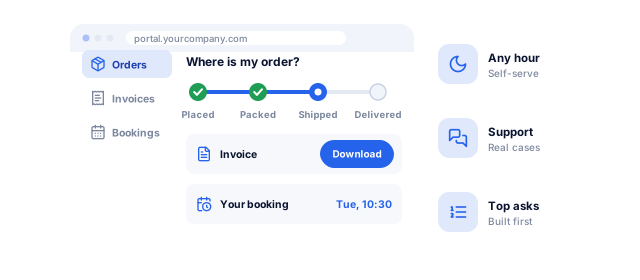
Customer portal development gives clients one place for orders, invoices, documents, bookings and support tickets. We connect it to the systems holding that data, add single sign-on and multi-factor authentication where needed, and design screens around the questions customers now email or call about.
Internal tools and dashboards
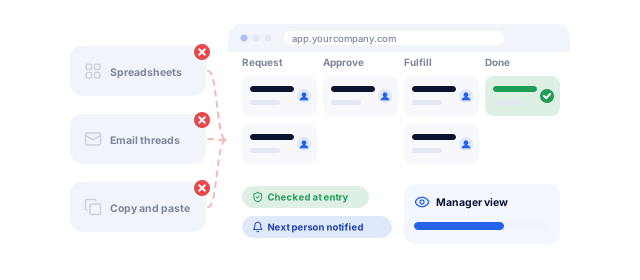
Admin panels, approval flows, scheduling tools and dashboards replace spreadsheets and email chains, with screens for each role, audit logs, bulk actions, saved filters and exports as standard. For reporting-heavy projects, see our custom dashboard development service.
Progressive web app development
A progressive web app installs to the home screen, works offline and sends push notifications, on iPhone too since iOS and iPadOS 16.4, per WebKit. For an App Store listing or deeper device access, our hybrid app development team takes it further.
Front-end development with React
We build interfaces in React and Next.js with TypeScript and accessible, tested components, aiming for the Core Web Vitals good thresholds: Largest Contentful Paint within 2.5 seconds, Interaction to Next Paint within 200 milliseconds and Cumulative Layout Shift under 0.1, delivered by our React development services team.
Back end, APIs and integrations
Behind the screens sit business rules, the database, background jobs and connections to your CRM, payment gateway, email and accounting tools, usually built in Node.js or Python with PostgreSQL and Redis, behind a documented API a future mobile app can reuse.
Security, hosting and scaling
Access control is the top risk in the OWASP Top 10:2025, so we test permissions for every role, encrypt data, keep audit logs and scan dependencies. Apps run on AWS, Azure or Google Cloud with backups, a CDN and autoscaling, deployed through CI/CD pipelines in your account.
What a well-built web app changes for your business
Good web application development services are judged by the work they remove and the problems they prevent.
Key processes often run on spreadsheets, email threads and copy-paste between systems. A web app gives each step one home, with validation that stops bad data at entry and notifications that move work on, so managers see where every job stands.
Customers who can serve themselves
"Where is my order" or "can I get that invoice again" can be answered by a portal at any hour, leaving your team the conversations that need a person. Your most common support requests show which portal features will save the most time.
One app on every device, with no install
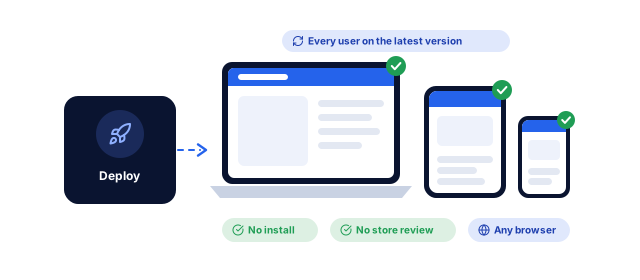
A web app runs in any modern browser on desktop, tablet and phone. Updates reach every user the moment you deploy, with no app store review or old versions to support, and a mobile app can follow on the same API.
Data you can trust and report on
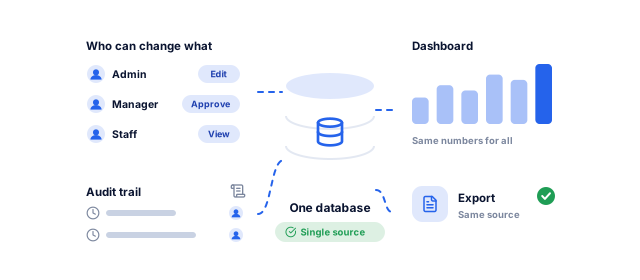
When information lives in one database with clear roles and an audit trail, reports stop contradicting each other. We design the data model early and build exports and dashboards on that same source.
Security that keeps up with attackers
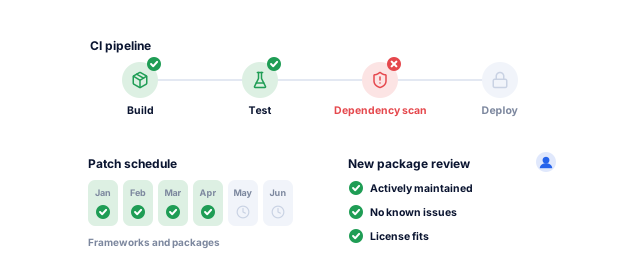
Verizon's 2026 Data Breach Investigations Report found that 31% of breaches start with an exploited software vulnerability, overtaking stolen passwords. We patch frameworks and dependencies on a schedule, scan for known vulnerabilities in CI and review third-party packages before adding them.
Room to grow without a rewrite
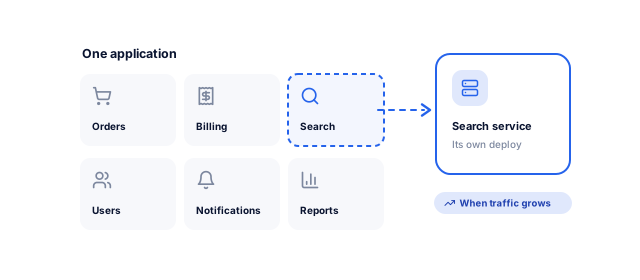
A scalable web application does not need a dozen microservices on day one. We start with one well-structured application, add caching and background jobs where load tests show the need, and split out services only when a measured bottleneck justifies the cost.
Still running key processes on spreadsheets and email?
Tell us what you need. We look at how the work flows today, and send a phased plan with what the first release should do, a price range and a timeline, so you can start small and expand.
Your free app planFor what you need
1What we would build firstYour users, workflows and the systems it connects to
2A price range and timelineFor the budget you pick, with an MVP option
3The stack we would useAnd how your team runs it after launch
We interview future users, map the current process and list every role, permission and data source, checking integrations and compliance early because they shape cost more than screens do.
Process map and user roles
Prioritized feature list
Estimate and phased plan
A scope you can sign off
UX design and clickable prototype
Designers turn the main journeys into wireframes, then a clickable prototype real users try before any code. Changing a prototype costs hours; changing a finished app costs weeks.
Wireframes
Clickable prototype tested with users
Design system
Screens users understand
Architecture and technical plan
We choose the stack, data model, hosting and authentication, write the API contract, and record each decision and its reason for future developers.
Architecture and data model
API contract
Hosting and security plan
Foundations that will not need redoing
Build in two-week sprints
Each sprint ends with working features on a staging site you can log into, with code reviewed, tested automatically and deployed by CI/CD.
Working features on staging
Automated tests
Sprint demo and notes
Progress you can click through
Testing, security and performance
We test every role's permissions, run OWASP Top 10 security checks, load test busy pages and APIs, measure Core Web Vitals on real devices and check accessibility against WCAG.
Permission test matrix
Security and load test reports
Accessibility fixes
No open critical issues at launch
Launch, hosting and support
We migrate data, train your team, launch in stages where possible and monitor closely, then fix issues, patch dependencies and add features from a shared roadmap, reported monthly.
Data migration and training
Monitoring and alerts
Monthly support report
An app that keeps improving
Web apps for the way your business works
Our web app development services adapt to who uses the app and what it replaces.
01 / 05
Customer and partner portals
Portals for customers, dealers, suppliers or agents need clear roles, secure document sharing, notifications and account data from your CRM or ERP. We design around the top reasons people contact you and add single sign-on for business customers. Our custom CRM development team can extend the system behind it.
Operations teams often outgrow spreadsheets before their processes. We build tools for scheduling, approvals, stock, field jobs and quality checks, connected to the systems you keep so nobody types data twice. When stock is the core problem, our inventory management system work goes deeper.
If the web app is the product you sell, it needs separate customer accounts, subscriptions, onboarding, usage analytics and an admin console, planned from the first sprint because retrofitting tenant separation into a live product costs far more. Our SaaS application development service covers the full journey.
Booking systems, patient portals and clinic tools need strict access control, audit trails and careful handling of health data under rules such as HIPAA or GDPR, with reminders kept free of sensitive details. See our work for healthcare businesses and the custom hospital software in our AkosMD case study.
Course platforms and student portals combine video, assessments, progress tracking, certificates and payments. Some need a custom build; others save months on an existing learning platform, and our Moodle development team handles projects where Moodle is the right base. See our work for education businesses.
Quick to start; per-user fees, and you adapt to its workflow
API integrations, plus custom screens where it falls short
Custom single-page app (SPA)
Tools, dashboards and portals behind a login
App-like speed after the first load; weaker for public pages that must rank
React and TypeScript on a documented API
Custom server-rendered app
Platforms whose public pages must rank in search
Fast first load and search-friendly; more server work
Next.js, rendering pages on the server or at build time
Progressive web app (PWA)
Phone users who need an install, offline use or push, without an app store
Less device access than native, and no App Store listing on its own
A service worker and manifest added to the React or Next.js app
Native or cross-platform mobile app
Daily phone use, store presence or deep device features
Higher cost, and store review before each release
A mobile app on the same API, with the back end built once
Many projects combine them: a custom app for the core workflow, off-the-shelf tools for payments and accounting, and a PWA or mobile app on the same API.
Your web app project, week by week
A focused internal tool or MVP takes about 2 to 4 months; larger portals add sprints to the middle phase.
Our 25+ in-house specialists include UX designers, React and Node.js developers, testers and cloud engineers, so the people who design a screen work beside those who build its API and host it. Nothing goes to freelancers, and marketing sits in the same building for launch.
02
Your code, cloud and data
Repositories live in your GitHub or GitLab organization, hosting in your own AWS, Azure or Google Cloud account, and data in databases you control. Our access is added to yours and removed when work ends, on rolling agreements with monthly reporting on what shipped and what it cost.
03
A record you can check
We have delivered 170+ projects for 120+ clients in the US, UK, Canada, Australia, Europe and India. Clients rate us 4.9 on Clutch from 221 reviews and 4.8 on Google from 189, and stay 1.6 years on average. Our AkosMD case study includes the custom hospital software we built.
Results we can put numbers on
Results from client reviews and case studies, with the full story behind each number.
"From designing a high-converting website to managing our SEO, Google Ads, and Google Business Profile, improveFX delivered exceptional results across every channel."
210%more qualified leads
185%organic and local traffic growth
92%keywords on page one
Maureen CappalloBroker and founder, Momentus Real Estate Group
"They revolutionized our online presence with a 60% increase in web traffic through strategic e-commerce SEO and content optimization."
60%more organic traffic
47%more sales
Eric NoahPresident, Eric Originals & Antiques Ltd.
"Visionstar Technologies' online presence transformed significantly with a 40% boost in customer engagement, all thanks to their exceptional website structuring and SEO tactics."
+40%qualified leads
32%lower cost per acquisition
Thomas MorelFounder, Visionstar Technologies
"Their strategic approach to our website and SEO resulted in a 60% increase in local inquiries, revolutionizing our automobile service business."
60%more local inquiries
87%more organic traffic
Mike SteffanFounder, Sabulski Window Tinting
"Their SEO strategy helped us achieve top search rankings, while their Facebook Ads campaigns drove a steady flow of qualified prospects."
Our software projects run from under $5,000 to $100,000+, depending on scope. Published agency pricing we reviewed puts simple web apps and MVPs at about $15,000 to $40,000, and complex platforms at about $90,000 to $200,000 or more.
One process, a few user roles and no data migration sit at the low end; many roles, integrations with older systems, data migration and compliance push it higher. After launch, budget for hosting and third-party services. We send a phased written estimate after a free scoping call.
How long does it take to build a web app?
A focused internal tool or MVP usually takes about 2 to 4 months; a larger portal or platform about 4 to 9 months to first release.
Discovery and design take the first few weeks, then features ship in two-week sprints you can test on staging. Integrations with older systems, data migration and compliance reviews add time; clear priorities and quick feedback save it.
What is the difference between a website and a web app?
A website mainly presents information; a web app lets signed-in users do work, such as placing orders, managing bookings or approving requests.
Web apps have accounts, roles, permissions, databases and business rules, which makes them software rather than a marketing site. Many businesses need both: a public site built by our custom website development team, and a web app behind the login.
Should we build a web app, a mobile app or a PWA?
Start with a web app or PWA when users work mostly on computers or occasionally on phones. Choose a mobile app when daily phone use, app store presence or deep device features matter.
A PWA installs, works offline and sends notifications, including on iPhone since iOS 16.4; a mobile app adds store listings, better background behavior and fuller device access. One API lets you add the other later without rebuilding the back end.
Which technology stack do you use for web apps?
Most of our custom web application development uses React or Next.js with TypeScript on the front end, Node.js or Python on the back end, and PostgreSQL as the database.
We pick the stack for the job and the people who will maintain it, and can work in PHP, .NET or another stack your team runs. Hosting is usually AWS, Azure or Google Cloud in your own account.
How do you keep a web app secure?
We test access control for every role, use proven authentication with multi-factor options, encrypt data in transit and at rest, and patch dependencies on a schedule.
Checks follow the OWASP Top 10:2025, where broken access control and software supply chain failures both rank in the top three. We also keep audit logs, back up data automatically and review security before every major release.
Can the web app scale as our business grows?
Yes. We design for your expected users and data from the start, then load test to confirm the app handles peak traffic with headroom.
Scaling usually comes from caching, background jobs, database indexing and more servers behind a load balancer, not a rewrite. We split out separate services only when a measured bottleneck needs it, so hosting costs stay in proportion to your growth.
Can you take over or rebuild our existing web application?
Yes. We start with a code, security and hosting review, then recommend whether to improve the app in place, rebuild parts of it, or replace it in phases.
Most apps are worth improving rather than rewriting. Where a rebuild makes sense, we move users and data across in stages so the business keeps running, and our legacy system modernization team plans larger moves from very old systems.
Can we hire dedicated web app developers?
Yes. You can commission a fixed-scope project, hire a dedicated team that works only on your app, or add our developers to your existing team.
Fixed-scope projects are paid by milestone, with changes priced before work starts. Dedicated teams and team extension are billed monthly per person on rolling agreements; many clients start fixed-scope, then move to a dedicated team. Every developer is an in-house improveFX employee working in your repositories and tools.
Who owns the code and the data?
You do. Code, designs, documentation, domains, cloud and analytics accounts, and all data belong to you from the start.
We work in your repositories and cloud accounts with access you control and can remove at any time. When an engagement ends, we hand over documentation, credentials and deployment instructions, so your own team or another partner can carry on without depending on us.
Do you provide support after launch?
Yes. After launch we monitor errors and performance, fix issues, patch frameworks and dependencies, and add features from a shared roadmap.
Support runs on rolling monthly agreements with agreed response times and a monthly report on what changed, or a smaller block of hours each month if you need occasional help. To talk through your app, book a strategy call.
Ready to plan your app?
Tell us what you want to build, or book a strategy call with our team.
What we would build first, and on which platforms
A price range and timeline for your budget
A call with a specialist to plan the next steps, no obligation
A specialist replies personally 4.9 from 566 client reviews