SaaS application development services from MVP to scale
Our SaaS application development services are for founders and software companies building subscription products: B2B platforms, vertical SaaS or an existing tool becoming a cloud product. We design the multi-tenant architecture, Stripe billing, onboarding and the security controls enterprise buyers ask about, then help the product grow from its first paying customers to thousands.
SaaS application development is building software that customers use online through a subscription, with one codebase serving many customer accounts. SaaS application development services cover discovery, multi-tenant architecture, subscription billing, onboarding, security and compliance controls, cloud hosting and ongoing releases, so the product grows from first customers to thousands without a rebuild.
Decide how tenants are isolated early: shared, dedicated or a mix. Changing it later is expensive.
Billing is product logic: trials, plan changes, proration, failed payments and tax all need design.
SOC 2 reports come from an independent CPA firm; engineers build the controls and evidence it examines.
Launch a narrow MVP to paying users, then scale the features they actually use.
Best for
Founders, software companies and businesses turning a service or internal tool into a subscription product
What you get
Discovery, UX design, the multi-tenant app, billing, onboarding, admin console, cloud setup, security controls and support
Typical timeline
An MVP in about 3 to 6 months. The platform then grows in phases, usually with a dedicated team.
Pricing
Driven by features, integrations, tenant isolation, compliance scope and the engagement model. Published agency pricing we reviewed runs from about $35,000 to $250,000+. Our software projects run from under $5,000 to $100,000+, depending on scope. We quote after a free scoping call.
What our SaaS application development services include
Six workstreams that turn an idea into a product people pay for monthly, with tenancy, billing and compliance planned from the first sprint.
We define who pays, the job your product does for them, the pricing model to test and the smallest feature set worth paying for, then a release plan and the metrics that prove it works: sign-ups, activation and paid conversion.
Multi-tenant architecture
Every SaaS product must keep each customer's data apart. The AWS Well-Architected SaaS Lens describes three patterns: pool (shared), silo (dedicated) and bridge (a mix). Most products start pooled, with a tenant ID on every record and PostgreSQL row-level security forced on as a second safeguard, even for the table owner.
Subscriptions and billing with Stripe
Stripe Billing supports flat-rate, per-seat, tiered and usage-based pricing; we build your model with trials, proration, invoices, tax and webhooks that keep access in step with payment. Failed renewals use Smart Retries, where Stripe recommends 8 tries within 2 weeks, plus reminder emails.
Onboarding, roles and admin console
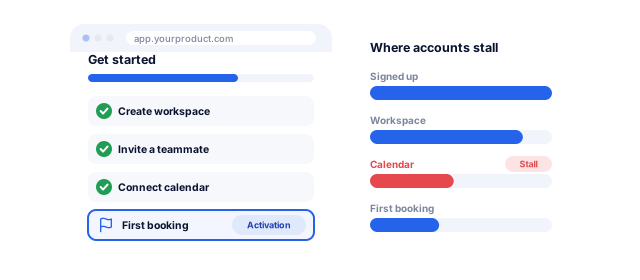
New accounts should reach a useful result in their first session, so we design sign-up, invitations, sample data and checklists, roles inside each account, and SAML or OpenID Connect single sign-on for enterprise customers. Your team gets an admin console with every action logged.
Security and compliance readiness
Enterprise buyers ask for SOC 2 reports, data processing agreements and security questionnaires. We build the controls those reviews check: least-privilege access, change management, encryption, audit logs, backups, monitoring and incident runbooks, and our cloud security and compliance team prepares the evidence.
Cloud infrastructure and scaling
We run SaaS products on AWS, Azure or Google Cloud as infrastructure as code, deployed through CI/CD. Per-tenant metrics show usage and cost by customer, rate limits stop one busy tenant slowing the rest, and Kubernetes and container management supports growth.
What a solid SaaS foundation does for your business
Good SaaS development pays off in revenue kept, deals closed and margins protected.
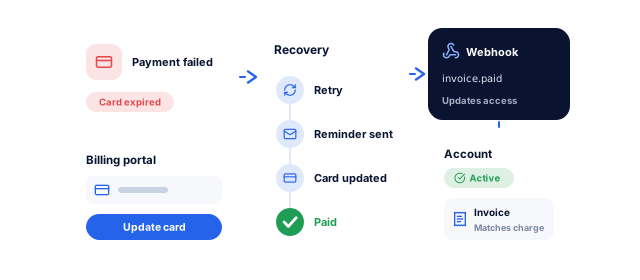
Expired cards, failed renewals and plan changes are where subscription revenue leaks. Retries, reminder emails, a self-service billing portal and webhooks that update access mean fewer customers churn over a payment problem, and invoices match what customers were charged.
Faster sales to larger customers
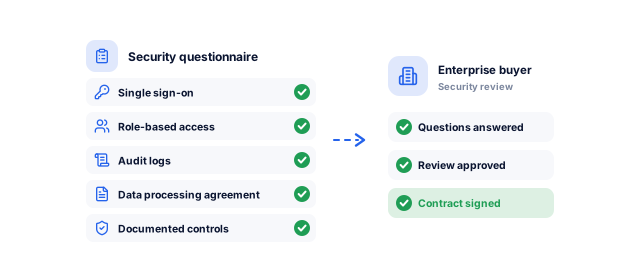
Mid-size and enterprise buyers rarely sign without a security review. Single sign-on, role-based access, audit logs, a data processing agreement and documented controls let you answer questionnaires with evidence, which shortens sales cycles.
Buyers who scrutinize every seat
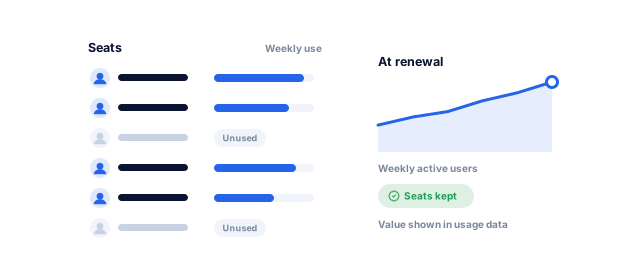
SaaS is a large market: in November 2024 Gartner forecast worldwide SaaS spending of $299.1 billion for 2025. Buyers are also stricter: for Australia, Gartner expects SaaS growth to slow to 13.8% in 2026 as organizations prioritize license optimization and slower seat growth. Products that prove their value in usage data keep their seats.
New customers reach value sooner
Trial users who see no result in the first days rarely convert. We define your activation moment, such as the first report sent, design onboarding toward it, and use product analytics to show where new accounts stall.
Lower cost per customer as you grow
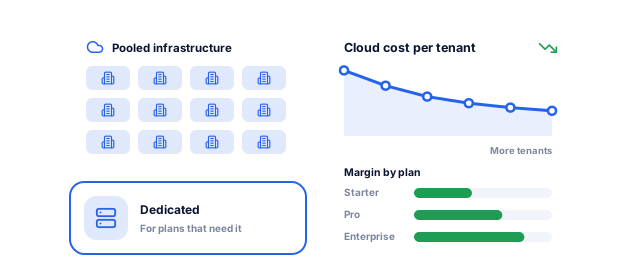
Pooled infrastructure means each new customer adds little hosting cost, while dedicated resources stay available for customers who pay for them. We track cloud cost per tenant and plan, so pricing rests on real margins, and our cloud cost optimization reviews catch waste.
Releases without downtime or drama
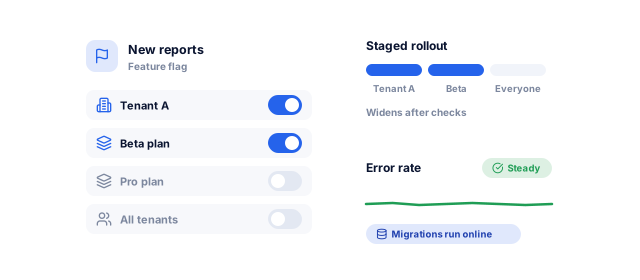
Every customer runs the same codebase, so a release reaches all of them at once. Feature flags switch features on for one tenant or plan first, staged rollouts catch problems early, and database changes run without downtime.
Not sure what your SaaS MVP should include?
Tell us what you need. We look at your idea or your current product, and send a written plan with the MVP scope, the tenancy and billing approach we would use, a price range and a timeline.
Your free app planFor what you need
1What we would build firstYour product, users and the systems it connects to
2A price range and timelineFor the budget you pick, with an MVP option
3The stack we would useAnd how your team runs it after launch
We interview you and, where possible, target customers, then define the problem, buyer, pricing hypothesis and MVP feature set against what competitors already offer.
Customer and problem definition
MVP feature list and pricing hypothesis
Estimate and release plan
A product worth building first
UX design and prototype
Designers map sign-up, onboarding and the core workflow into a clickable prototype that target users try before any code.
User journeys and wireframes
Clickable prototype
Design system
Onboarding that works on paper first
Tenancy, billing and architecture design
We choose the tenant isolation model, data model, authentication and roles, map plans, trials, seats and usage to Stripe prices, and document hosting, security controls and the path to a dedicated enterprise tier.
Architecture and tenancy model
Billing and plan design
Security and hosting plan
Foundations that will not need a rebuild
Build the MVP in sprints
Features ship in two-week sprints to a staging environment you can use, with billing tested end to end in Stripe test mode, tenant separation covered by automated tests and CI/CD deploying every change.
Working product on staging
Automated tests including tenant isolation
Sprint demos
A product you can try every two weeks
Security review, beta and launch
We test permissions across tenants and roles, review security against the OWASP Top 10, load test, and set up monitoring and backups. A private beta with real customers comes before the public launch.
Security and load test reports
Beta feedback log
Launch checklist and monitoring
Paying customers on a stable product
Measure, scale and improve
We track activation, retention, revenue and cost per tenant to plan releases, add enterprise features such as SSO and audit exports, prepare SOC 2 evidence and scale infrastructure with usage.
Product and revenue dashboard
Quarterly roadmap
Compliance evidence
Growth backed by data
SaaS products we build
Our SaaS application development services cover new products and existing software moving to subscriptions.
01 / 05
B2B workflow and vertical SaaS
Vertical SaaS serves one industry deeply, such as scheduling for service firms or compliance for clinics. It must fit the industry's workflow, connect to tools customers already use and price by the unit they think in: locations, seats or jobs. We test that with real prospects before the build. See our work for SaaS businesses.
Healthcare software adds patient privacy, audit trails, role-based access for doctors and front-desk staff, and lab and payment integrations. Our own Nabhaya Clinic runs in the browser on subscription plans, so we plan billing, onboarding, data import and support for clinics from experience. See our work for healthcare businesses.
Software installed separately for each customer, or an internal tool other firms would pay for, needs tenancy, self-service sign-up, billing and central upgrades to become SaaS. We plan the move in phases so existing customers keep running, and our legacy system modernization team restructures older code first where needed.
Platforms that pay sellers need identity checks, split payments, payouts and refunds. Stripe Connect handles much of this, but fees, holds, disputes, seller dashboards and reporting are your rules, designed with your finance team. Our API development team builds the partner integrations.
Assistants, summaries, search and predictions need tenant-safe data access, so one customer's data never reaches another's prompts, plus usage limits by plan and per-tenant cost tracking, because model costs can erase a cheap plan's margin. Our chatbot development and churn prediction teams build them.
Tenant ID on every row, enforced in code and by row-level security
Most new SaaS products and self-serve plans
Lowest cost; isolation depends on careful code and tests; noisy neighbors need limits
Pool: schema per tenant
Shared database server, separate schema for each tenant
Moderate tenant counts that want stronger separation
Migrations must run across every schema; harder at thousands of tenants
Silo: database per tenant
Shared application, dedicated database for each tenant
Enterprise or regulated customers, data residency requests
Higher hosting and operations cost; more databases to back up and upgrade
Silo: full stack per tenant
Dedicated infrastructure per tenant, managed and deployed centrally
Large customers with strict security or performance terms
Highest cost; must be priced into the plan
Bridge: mixed
Some services or data pooled, others siloed
Products with both self-serve and enterprise tiers
More moving parts; needs clear rules for which tenants go where
Pool, silo and bridge as defined in the AWS Well-Architected SaaS Lens. We usually start pooled with row-level security and design a path to a silo tier for customers who need it.
Your SaaS MVP project, week by week
A SaaS MVP takes about 3 to 6 months; this plan shows the full six, and a tighter feature list moves every date earlier.
Customers still have to find the product. Our 25+ in-house specialists include designers, engineers, cloud specialists and marketers, so launch pages, analytics and SaaS SEO are planned with the product on one roadmap, and nothing is passed to freelancers.
02
We run a subscription product ourselves
Nabhaya Clinic, from our own healthcare product line, is browser-based software we build, host and support for clinics on subscription plans. Running onboarding, billing, support and releases for our own customers means you get advice on running a SaaS business, not just engineering.
03
Your code, accounts and data
Repositories, cloud accounts, the Stripe account and all customer data are set up in your name. We work on rolling agreements with transparent monthly reporting. We have delivered 170+ projects for 120+ clients in the US, UK, Canada, Australia, Europe and India, and clients stay with us 1.6 years on average.
Results we can put numbers on
Results from client reviews and case studies, with the full story behind each number.
"From designing a high-converting website to managing our SEO, Google Ads, and Google Business Profile, improveFX delivered exceptional results across every channel."
210%more qualified leads
185%organic and local traffic growth
92%keywords on page one
Maureen CappalloBroker and founder, Momentus Real Estate Group
"They revolutionized our online presence with a 60% increase in web traffic through strategic e-commerce SEO and content optimization."
60%more organic traffic
47%more sales
Eric NoahPresident, Eric Originals & Antiques Ltd.
"Visionstar Technologies' online presence transformed significantly with a 40% boost in customer engagement, all thanks to their exceptional website structuring and SEO tactics."
+40%qualified leads
32%lower cost per acquisition
Thomas MorelFounder, Visionstar Technologies
"Their strategic approach to our website and SEO resulted in a 60% increase in local inquiries, revolutionizing our automobile service business."
60%more local inquiries
87%more organic traffic
Mike SteffanFounder, Sabulski Window Tinting
"Their SEO strategy helped us achieve top search rankings, while their Facebook Ads campaigns drove a steady flow of qualified prospects."
How much do SaaS application development services cost?
Our software projects run from under $5,000 to $100,000+, depending on scope. Published agency pricing we reviewed runs from about $35,000 for a focused MVP to $250,000 or more for a mature platform.
A narrow MVP with one user role, simple plans and card payments sits at the low end; more roles and integrations, usage-based billing, dedicated tenant databases or compliance scope push it higher. Many founders fund a fixed-scope MVP, then a monthly dedicated team once customers pay. We send a phased estimate after a free scoping call.
How long does it take to build a SaaS MVP?
A SaaS MVP usually takes about 3 to 6 months from discovery to the first paying customers.
Discovery and design take the first few weeks, then the build runs in two-week sprints with a working product on staging. Billing, tenant separation and security testing are part of the MVP, not extras, and a tight feature list is the biggest factor in launching on time.
What is multi-tenant architecture, and do we need it?
Multi-tenant architecture means one application serves many customer accounts while keeping each customer's data separate. Almost every SaaS product needs it.
The question is how much is shared. A pooled design with row-level security is cheapest and suits most products; dedicated databases or infrastructure cost more but meet strict security or data residency requirements. Many products offer both as different plans.
How do you handle subscriptions and billing?
Usually on Stripe Billing, in the pricing model that fits your product: flat-rate tiers, per-seat, tiered volume pricing, or usage-based options such as a fixed fee plus overage, pay as you go or credit burndown.
Webhooks keep each account's access in step with payment status, and a self-service portal lets customers update cards and download invoices. Invoice and bank transfer payments work alongside cards, and another billing provider can replace Stripe where a market needs it.
Can you help us get SOC 2 ready?
Yes. We build the technical controls and evidence a SOC 2 examination looks at; the report itself is issued by an independent CPA firm.
According to the AICPA, SOC 2 reports on controls relevant to security, availability, processing integrity, confidentiality or privacy. In practice that means access reviews, change management, logging, backups, vulnerability management and incident response, many of which we automate in your cloud setup.
How do you handle GDPR in a SaaS product?
In B2B SaaS you usually process data on your customers' behalf, so you need a data processing agreement under GDPR Article 28 and tools to export or delete data on request.
We build data export and deletion, regional hosting where required, and breach detection with logging. Under Article 33, processors must tell controllers about a breach without undue delay, and controllers notify regulators within 72 hours where feasible. Your lawyer still gives legal advice.
Which technology stack do you use for SaaS?
Most of our custom SaaS development uses React or Next.js, Node.js or Python, PostgreSQL and Redis, hosted on AWS, Azure or Google Cloud.
We choose the stack for hiring, maintenance and the product's needs rather than fashion. If your team already works in .NET, PHP or another stack, we can build in it, and mobile apps can share the same API.
Can you turn our existing software into a SaaS product?
Yes. We assess the current code and data, then plan a phased move that adds tenancy, self-service sign-up, billing and centralized upgrades.
Some products can be adapted in place; others need key parts rebuilt. Existing customers move in groups with their data checked at each step, so the business keeps running, and the plan covers pricing changes and how to announce them.
Can we hire a dedicated SaaS development team?
Yes. You can hire a dedicated team for your product, add our engineers to your existing team, or commission a fixed-scope MVP at an agreed price.
A fixed-scope MVP suits founders validating an idea, a dedicated team suits a product shipping every sprint, and team extension suits SaaS companies with a CTO who need capacity. All our engineers are in-house employees on rolling monthly agreements.
Who owns the code, customer data and Stripe account?
You do. The code, cloud accounts, Stripe account, domains and all customer data are in your name from the start.
We work with access you grant and can remove at any time. When an engagement ends, we hand over documentation, infrastructure code and runbooks so any team can carry on. Investors and acquirers will check this, so we keep it clean from day one.
Can you help us market the SaaS product after launch?
Yes. Our marketing team works with the product team on launch pages, analytics, SEO and paid campaigns aimed at trial sign-ups and demos.
One roadmap covers product and growth, so product analytics connect to marketing data and show which channels bring customers who stay. See our SaaS SEO services and PPC management, or book a strategy call to plan both together.
Ready to plan your app?
Tell us what you want to build, or book a strategy call with our team.
What we would build first, and on which platforms
A price range and timeline for your budget
A call with a specialist to plan the next steps, no obligation
A specialist replies personally 4.9 from 566 client reviews