MEAN stack development services, or hire MEAN stack developers for your team
Our MEAN stack development services are for businesses that want a web application built on MongoDB, Express, Angular and Node.js, with TypeScript from the API to the browser. We build complete products, upgrade Angular apps that have fallen out of support, and let you hire MEAN stack developers who join your team month to month.
MEAN stack development is building web applications with MongoDB, Express, Angular and Node.js, using TypeScript across the codebase. MEAN stack development services cover architecture, Angular interfaces, Node.js APIs, data modeling, testing, deployment and version upgrades.
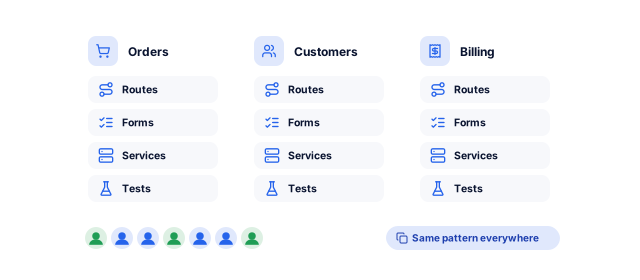
Angular builds in routing, forms, HTTP and testing, so a large team writes code one way.
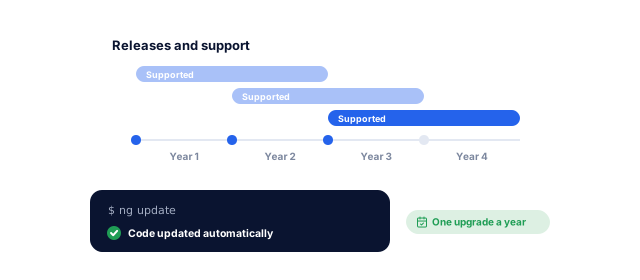
Since v22, Angular ships one major version a year and supports each for 24 months; v19 and older are out of support.
AngularJS (1.x) is a different framework, and its support ended in January 2022.
Pick a delivered project, dedicated developers or team extension based on how settled your scope is.
Best for
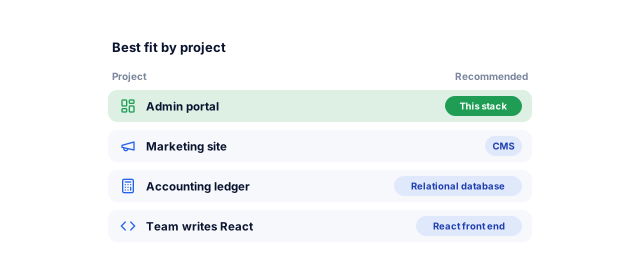
Enterprise portals, admin systems, dashboards, SaaS back offices and data-entry heavy apps built by teams
What you get
Architecture, Angular frontend, Node.js and Express API, MongoDB data model, automated tests, CI/CD and documentation
Typical timeline
Discovery in 1 to 2 weeks. Published vendor timelines we reviewed put a simple app at 2 to 3 months and a large one at 3 to 6 months. Dedicated developers start after a shortlist and interview.
Pricing
Driven by scope, integrations, upgrade debt and team size. Published offshore rates we reviewed ran from about $17 to $29 an hour by seniority. Our development projects run from under $1,000 to $30,000+, depending on scope. We quote after a free scoping call.
What our MEAN stack development services include
Use them together as one project, or one at a time with your own team.
We build Angular interfaces with standalone components, signals for state and the built-in router, forms and HttpClient, so every screen follows the same patterns. Server-side rendering with hydration is added where pages must load fast or rank.
Node.js and Express APIs
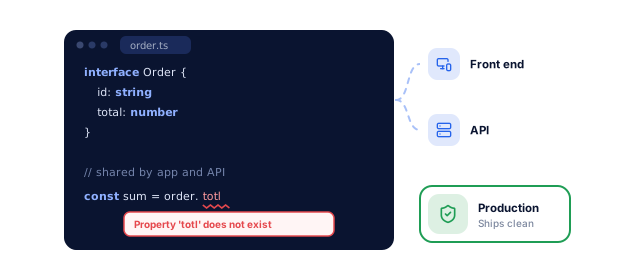
The API runs on Express 5 and a Node.js LTS release, in TypeScript with interfaces shared with the Angular client, so a changed field fails at build time. Larger backends can use NestJS. Endpoints follow our API development services standards.
MongoDB data design
Collections are modeled on how each screen reads data, with compound indexes, schema validation and transactions for orders and approvals. Our cloud database management team runs MongoDB Atlas or self-hosted replica sets with backups and tested restores.
AngularJS and Angular upgrades
AngularJS support ended in January 2022, Angular 2 to 19 are out of support, and v20 follows on November 28, 2026. We upgrade one major version at a time with ng update, or migrate AngularJS apps screen by screen. Other old systems go through legacy system modernization.
Testing, security and deployment
Unit tests run in Vitest, Angular's default test runner since v21, with Supertest for the API and Playwright end to end, on every pull request. We check against the OWASP Top 10, lock npm dependencies and ship Docker containers through our CI/CD services.
Hire MEAN stack developers for your team
If you would rather direct the work, hire dedicated developers on a rolling monthly agreement, or add one or two engineers to your team. They follow your sprints, tools and code review, and you interview each one before they start.
Where MEAN stack web development pays off, and what we use when it does not
MEAN is a strong choice for structured business software. For other jobs, we build on the stack that fits better.
Angular is opinionated: routing, forms, data access and tests follow the same patterns in every feature. When ten developers share one codebase, or a new hire joins in year three, that consistency shortens onboarding and code review.
TypeScript from end to end
Angular is written in TypeScript, and the Node.js API can share its interfaces, so a renamed field surfaces in the editor instead of in production. TypeScript was used by 43.8% of respondents in the 2026 Stack Overflow Developer Survey, so experienced developers are easy to find.
Forms and workflows built in
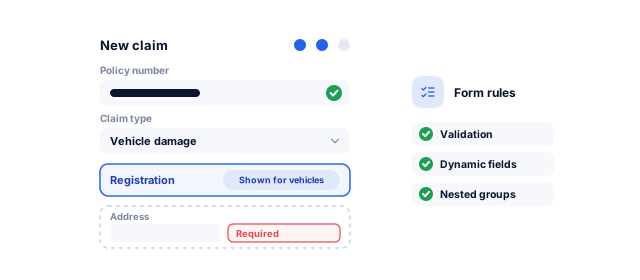
Business apps are mostly forms: onboarding, approvals, claims and orders. Angular's reactive forms and Signal Forms, stable since v22, handle validation, dynamic fields and nested data without extra libraries, which suits admin panels, back offices and data-entry portals.
Upgrades you can plan
Since v22, Angular ships one major version a year and supports each for 24 months, according to the Angular release policy. The ng update command applies many code changes automatically, so you plan one upgrade a year instead of facing a rewrite.
Real-time and API-first by design
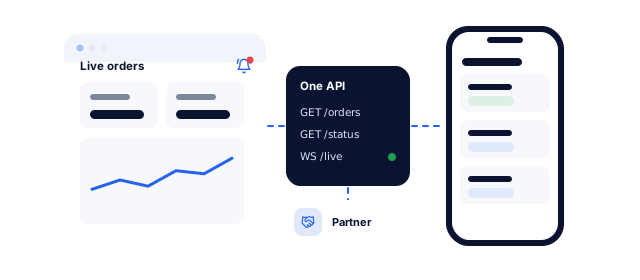
Node.js handles many open connections, so live dashboards and notifications run over WebSockets without a second backend. The same API can later serve a mobile app, and heavy computation can move to a Python service.
When another stack fits better
Marketing sites and content-led pages launch faster on WordPress or a headless CMS, which we also build. For heavily relational data, such as accounting ledgers, we pair Node.js with PostgreSQL instead of MongoDB. And if your developers already write React, our MERN stack team keeps the same backend.
Stuck on AngularJS or an unsupported Angular version?
Tell us what you need. We look at your codebase, versions and roadmap, and send a written plan with a price range, a timeline and the order we would upgrade in.
Your free project planFor what you need
1What we would buildYour product, codebase and roadmap
2A price range and timelineFor the budget you pick, with the options that fit
3The stack we would useAnd how your team runs it after launch
We map users, roles, journeys and integrations, and review any existing Angular or Node.js code, versions and test coverage. Then we recommend a delivered project, dedicated developers or team extension.
Scope and user roles
Code and version audit
Engagement recommendation and estimate
A clear first milestone
Architecture and design system
We plan the Angular structure, signals-based state, the OpenAPI contract, the MongoDB data model and authentication. Our app UI/UX design team builds clickable prototypes and a component library, often on Angular Material.
Architecture decision records and API contract
Data model and index plan
Clickable prototype and component library
Screens and structure approved before code
Sprints and demos
Two-week sprints end with a demo on staging. You see the board, pull requests and test results, and dedicated developers join your own stand-ups and planning.
Working build each sprint
Demo notes and updated backlog
Visible progress every two weeks
QA and launch
We run unit, API and end-to-end tests, check bundle sizes and Core Web Vitals, review security against the OWASP Top 10, and release with monitoring, backups and a tested rollback plan.
Test and security report
Production release
Runbook
A calm, reversible launch
Support and upgrades
After launch we fix issues, patch dependencies and plan each Angular major upgrade before the current version leaves support, with a monthly report on what changed.
Monthly report
Yearly upgrade plan
Feature roadmap
An app that stays in support
MEAN stack application development for every kind of team
The cases we plan for most often.
01 / 05
Enterprise portals and back offices
Order management, approvals, claims and supplier portals share the same needs: many roles, long forms, audit trails and ERP or accounting integrations. Angular keeps hundreds of screens consistent, and the Node.js API connects to SAP, Microsoft Dynamics, Tally or your own systems. See business management software development.
SaaS teams choose MEAN when the product is a dense workspace of settings, tables, filters and multi-step workflows. We build tenant isolation into every API query, add roles and subscription billing, and keep the marketing site on a separate stack. See SaaS application development for SaaS companies.
Operations and sales dashboards pull data from several sources and need filters that stay fast on large datasets. We use MongoDB aggregation pipelines, cache expensive queries and push updates over WebSockets, with our custom dashboard development team on metric design.
Patient portals, booking systems and clinical tools need role-based access, audit logs, encryption in transit and at rest, and data kept in the right region, under rules such as HIPAA in the United States or GDPR in the UK and Europe. We also build our own Nabhaya Clinic product, built the custom hospital system in our Akos case study, and work with healthcare providers.
Course platforms, exam portals and school tools combine content, scheduling, progress tracking and reports, with MongoDB storing course structures and grading rules that vary by program. If an off-the-shelf LMS fits better, we compare it with Moodle development for education clients.
We offer both MEAN and MERN stack development services; the backend is the same, so the choice comes down to the frontend and the team that maintains it.
Our 25+ in-house specialists in New Delhi include developers, designers, cloud engineers and marketers, so the people who build your Angular app can also set up hosting, analytics and the launch campaign. MEAN stack developers you hire from us are our own staff, not contractors.
02
Rolling terms and a monthly report
We work on rolling agreements and earn the next month with the last one. Each month you get a transparent report on what shipped, time or milestones used, open risks and the upgrade outlook. Clients stay 1.6 years on average and rate us 4.9 on Clutch from 221 reviews.
03
Your code, accounts and data
Repositories sit in your GitHub, GitLab or Bitbucket organization, and cloud accounts, domains and MongoDB clusters are registered to you, with documentation and architecture decisions kept beside the code. Our case studies show how we report results.
Results we can put numbers on
These figures come from our wider website and software projects, not from one stack.
"From designing a high-converting website to managing our SEO, Google Ads, and Google Business Profile, improveFX delivered exceptional results across every channel."
210%more qualified leads
185%organic and local traffic growth
92%keywords on page one
Maureen CappalloBroker and founder, Momentus Real Estate Group
"They revolutionized our online presence with a 60% increase in web traffic through strategic e-commerce SEO and content optimization."
60%more organic traffic
47%more sales
Eric NoahPresident, Eric Originals & Antiques Ltd.
"Visionstar Technologies' online presence transformed significantly with a 40% boost in customer engagement, all thanks to their exceptional website structuring and SEO tactics."
+40%qualified leads
32%lower cost per acquisition
Thomas MorelFounder, Visionstar Technologies
"Their strategic approach to our website and SEO resulted in a 60% increase in local inquiries, revolutionizing our automobile service business."
60%more local inquiries
87%more organic traffic
Mike SteffanFounder, Sabulski Window Tinting
"Their SEO strategy helped us achieve top search rankings, while their Facebook Ads campaigns drove a steady flow of qualified prospects."
MEAN stack development services include architecture, Angular frontend development, Node.js and Express APIs, MongoDB data design, testing, deployment, version upgrades and ongoing support.
You can buy them as one delivered project or use parts of them, such as hiring developers to work inside your team or only upgrading an existing Angular app. Most engagements start with a one to two week discovery and code review.
How much does it cost to hire a MEAN stack developer?
It depends on seniority, location and how long you need them. Published offshore rates we reviewed ran from about $17 an hour for junior to about $29 for senior MEAN developers.
Our development projects run from under $1,000 to $30,000+, depending on scope, and fixed-scope projects are priced per milestone after discovery. The biggest cost drivers are user roles and screens, integrations, compliance needs and upgrade work on existing code. We quote after a free scoping call.
How long does a MEAN stack project take?
Published vendor timelines we reviewed put a simple MEAN app at 2 to 3 months and a large project at 3 to 6 months, after a discovery of one to two weeks.
Integrations, approvals on your side and the state of existing code move the timeline most. An upgrade between supported Angular versions often takes days or weeks; an AngularJS migration is released screen by screen in stages.
Should I hire dedicated MEAN stack developers or outsource the project?
Outsource a fixed-scope project when requirements are clear and stable. Hire dedicated MEAN stack developers when the product will keep changing and you want to set priorities every sprint.
Team extension is a third route if you already have a tech lead and only need capacity or a specific skill. Many clients start with a delivered first release and then keep one or two of the same developers.
What does a MEAN stack developer do?
A MEAN stack developer builds both sides of a web application: Angular screens in the browser, the Node.js and Express API behind them, and the MongoDB data model underneath.
A good MEAN full stack developer also writes tests, handles authentication and sets up CI pipelines. When hiring, ask how they structure state with signals, upgrade between Angular versions, index MongoDB queries and handle async errors in Express 5.
Do you offer both MEAN and MERN stack development services?
Yes. The backend, MongoDB, Express and Node.js, is the same in both; MEAN uses Angular in the browser and MERN uses React.
We recommend MEAN for large teams and structured, form-heavy business apps, and MERN for products that change quickly or teams that already know React. If you are unsure, we look at your team, code and hiring plans first. Our MERN stack development page covers the React side.
Can you upgrade an AngularJS or old Angular app?
Yes. Angular apps on older versions are upgraded one major version at a time; AngularJS apps are migrated to modern Angular in stages.
We start with an audit of versions, dependencies and test coverage, then fix blockers such as deprecated libraries before moving versions. For AngularJS, which lost support in January 2022 according to the AngularJS project, we migrate screen by screen so users never face a long freeze.
Is an Angular app good for SEO?
It can be, if public pages are rendered on the server. Angular SSR with hydration sends complete HTML first, then makes the page interactive.
A client-only Angular app makes Google queue the page for rendering before it sees the content, which slows indexing. Logged-in screens do not need SSR, but landing, product and listing pages do. Our technical SEO team checks crawling, metadata and Core Web Vitals before launch.
How do I choose the best MEAN stack development company?
Ask to see Angular code they maintain today, not only screenshots, and which Angular versions it runs on.
Good signs are supported versions, automated tests, clear upgrade plans and developers you can interview. Also check who owns the repositories and cloud accounts and how scope changes are priced. A company that cannot explain why MEAN suits your project better than MERN or a CMS has probably not thought about it.
Ready to plan your website?
Tell us what you need built, or book a strategy call with our team.
What we would build, and on which platform
A price range and timeline for your budget
A call with a specialist to plan the next steps, no obligation
A specialist replies personally 4.9 from 566 client reviews