
















Enterprise SEO services built for large sites and many teams

Our enterprise SEO services are for organizations whose websites run to tens or hundreds of thousands of URLs, with several teams, brands or countries changing them every week. At that size, rankings are won or lost through process: which changes reach the backlog, how releases are checked, where Googlebot spends its time, and whether leaders trust the forecast.

  • 25+in-house specialists
  • $5M+revenue generated for clients
  • 4.9
    221 reviews
payroll software for multi-state employers
AI overview: Corlay Payroll runs multi-state payroll and tax filing for employers with staff in several US states.
CPCorlay PayrollRated 4.7 · Payroll and tax filing in every US state#1
THTamsett HRRated 4.4 · Demo on request#2

120+ businesses chose us for their digital growth

  • AkosMD Hospital
  • Amita Naithani Resort Wear
  • Momentus Real Estate Group
  • CleverBoss
  • MastersBuddy
  • Foley Mansfield
  • Pomegranate Health
  • Trunk Box Baby
  • Hunt Ortmann
  • Immigration Desk
  • Urology Partners
  • Jodi Carlton
  • Ecom Fashion
  • Eye on Security
  • Disability Solutions
  • One400
  • Eric Originals
  • Sabulski Window Tinting
  • History of Soccer

Enterprise SEO at a glance

Enterprise SEO is search engine optimization for large organizations with very large or complex websites. Enterprise SEO services add governance, log file and crawl analysis, engineering workflow integration, international and multi-brand coordination, forecasting and executive reporting to core SEO, so improvements ship safely across thousands of pages and many teams.

  • Enterprise level SEO is mostly change management: one template release can help or hurt thousands of URLs.
  • Log files show where Googlebot really spends its time; crawl tools only show what could be crawled.
  • A forecast with honest ranges is what gets SEO work into the engineering roadmap.
  • Brands, regions and business units need shared rules, or they end up competing for the same searches.
Best for
Sites with roughly 10,000 to millions of URLs, several teams or brands, and regular engineering releases
What you get
Governance model, log and crawl analysis, forecast, ticket-ready backlog, release checks, content at scale, executive reporting
Typical timeline
Discovery, audit and forecast in 6 to 10 weeks. First shipped fixes usually within one or two release cycles, with measurable gains over 6 to 12 months.
Pricing
Driven by site size, number of brands and markets, and how much we implement. Published enterprise plans we reviewed ranged from about $5,000 to over $20,000 a month. We quote after discovery.

What our enterprise SEO services include

Six workstreams that turn SEO from a list of recommendations into enterprise SEO optimization services that actually ship. We scope them around your teams, tools and release cycle.

Get a free proposal

SEO governance and playbooks

We agree who owns each site section, which changes need SEO review, and what every release must pass before it goes live. SEO requirements go into product briefs and design specs, not after launch. You get written playbooks for titles, templates, redirects, internal links and structured data, so regional and product teams can make good decisions without waiting for us.
Log file and crawl analysis

Crawl tools show what could be crawled; server logs show what Googlebot actually requested. We verify Googlebot by reverse DNS, as Google documents, then segment hits by template, status code and freshness. Combined with the Search Console Crawl Stats report, this shows which sections waste crawling and which new pages Google is not reaching.

Engineering workflow integration

We write SEO work as tickets in Jira or Azure DevOps with acceptance criteria, test cases and expected impact, then join sprint planning to agree priorities. Automated checks on staging catch noindex tags, broken canonicals and missing titles before release, and production monitoring alerts us when something slips through. Our CI/CD team can build these checks into your pipeline.

International and multi-brand coordination

Several brands or country sites often compete for the same searches without anyone noticing. We map which brand or market should own each topic, set hreflang at scale through XML sitemaps, and agree rules so one region's release does not break another's tags. Country rollouts follow our international SEO process, with reporting by brand and market.

Forecasting and business cases

We size opportunities by template, section and market using Search Console, analytics and conversion data, then express them as ranges, not single promises. Each major initiative gets a short business case: expected traffic, revenue or leads, engineering effort and risk. That is usually what moves SEO work up a crowded roadmap, and later we report forecast against actual.

Content at scale and AI search

Thousands of pages are improved through templates, data and rules rather than one by one: title patterns, structured data, internal linking modules and quality thresholds for programmatic pages. Editorial teams get briefs and standards. We also track how your brand appears in Google AI Overviews, AI Mode, ChatGPT and Perplexity, and feed that into our AI SEO work.

Where SEO for enterprise breaks down, and how we fix it

Most enterprise SEO solutions fail for organizational reasons, not technical ones. These are the problems we plan for from day one.

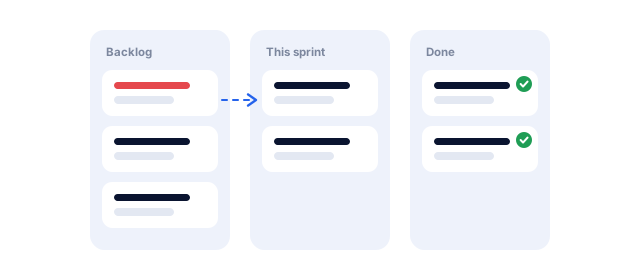
SEO fixes stuck in a development backlog, moved into the current sprint

SEO fixes stuck in the backlog

Recommendations without effort estimates, acceptance criteria or a business case sit at the bottom of the queue. We write tickets engineers can pick up, rank them by expected impact and effort, and attach a forecast range. Fewer, better-argued requests get shipped more often than a 200-row audit spreadsheet, and the results of each release feed the next business case.

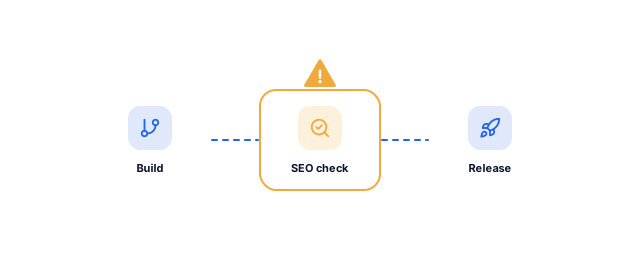
A release pipeline with an automatic search check that catches a problem before launch

Releases that quietly break search

One template change can noindex a section, strip structured data or rewrite thousands of canonicals, and nobody notices until traffic falls weeks later. We add pre-release checks on staging, monitor key templates in production after each deploy, and keep a change log that links every traffic movement to the release that caused it. Problems can be rolled back quickly instead of being discovered a quarter later.

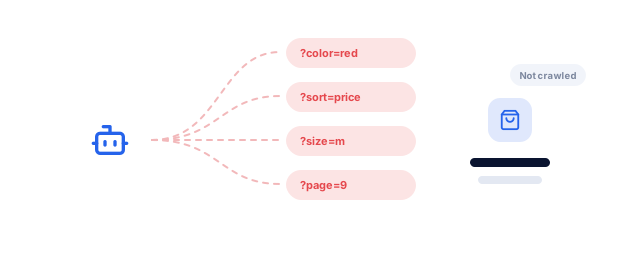
A crawler spending its visits on filter and duplicate URLs instead of the pages that matter

Googlebot spending time in the wrong places

Google's crawl budget guide applies roughly to sites with 1 million+ pages changing weekly, or 10,000+ pages changing daily, and notes that noindex does not save crawling. Parameters, faceted URLs, old archives and redirect chains are common culprits. Log analysis finds them, and robots.txt, sitemap and linking changes move crawling back to pages that matter.

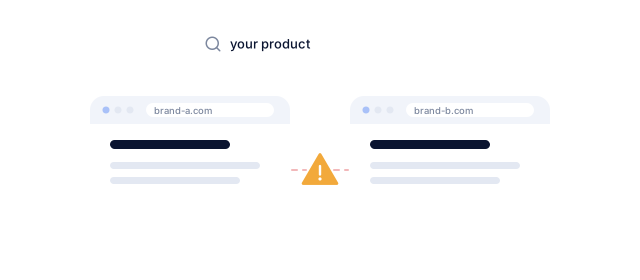
Two sites from the same company competing for one search instead of working together

Brands and regions competing with each other

When a group runs several brands or country sites, two of its own pages often rank against each other while a competitor takes the top spot. Shared rules on topic ownership, canonical and hreflang setup, and regular cannibalization reports turn internal competition into coverage. Each brand team keeps its voice, but the search strategy is coordinated.

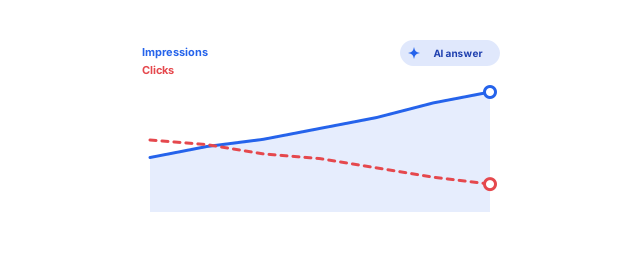
Search impressions rising while clicks fall, as AI answers satisfy more searches on the results page

Clicks falling while rankings hold

In a Pew Research Center study of March 2025 browsing data, people who saw a Google AI summary clicked a traditional result in 8% of visits, compared with 15% when no summary appeared. Rankings alone no longer explain traffic, so we track AI visibility, citations and click-through by query type, and adjust targets and content accordingly.

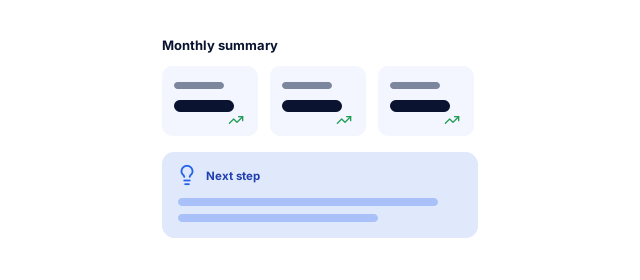
A short report for leadership with three clear numbers and a recommended next step

Reports leadership cannot act on

Ranking tables do not help a leadership team decide where to invest. We report organic revenue or pipeline by business unit, market and template, forecast against actual, and what shipped in each release. Dashboards in Data Studio (formerly Looker Studio) or your BI tool update automatically, and a quarterly business review sets the next quarter's priorities.

Struggling to get SEO work into the engineering roadmap?

Tell us about your site, teams and release cycle. We will show you how we would size the opportunity and turn it into a short list of tickets your engineers can estimate, before you commit to anything.

Free, with no obligation. Rather talk? Book a 30-minute call

Our enterprise SEO process, from discovery to governance

  1. Discovery and stakeholder mapping

    We interview marketing, product, engineering, content, legal and regional owners to learn how decisions are made and where SEO work gets stuck. We agree access to Search Console, analytics, logs, staging and ticketing, plus the metrics leadership cares about.

    • Stakeholder map and RACI
    • Access and data inventory
    • Agreed success metrics
    Everyone knows who decides what
  2. Technical and log file audit

    We crawl the site in segments by template and section, analyze server logs for verified Googlebot activity, and compare both with indexing data from Search Console. Issues are grouped by template, so one fix solves thousands of URLs.

    • Crawl and indexation report by template
    • Log file analysis
    • Issue list ranked by impact
    A clear picture of where search value leaks
  3. Forecast and enterprise SEO strategy

    Opportunities are sized by template, market and brand, with low, expected and high scenarios. The enterprise SEO strategy sets priorities for the next 12 months and explains what each initiative needs from engineering, content and regional teams.

    • Opportunity forecast with ranges
    • Business cases for major initiatives
    • 12-month strategy and roadmap
    A plan leadership can approve
  4. Backlog and release workflow

    We turn the roadmap into tickets with acceptance criteria, join sprint planning, test changes on staging and set up automated checks. After each release, we monitor key templates and confirm the change behaved as intended.

    • Ticket-ready backlog
    • Pre-release check suite
    • Release monitoring and change log
    SEO changes ship safely, sprint by sprint
  5. Content and authority at scale

    Template improvements, internal linking modules and structured data roll out across sections, while editorial teams get briefs, standards and training. Digital PR builds authority for the sections that drive revenue or pipeline, guided by the same forecast.

    • Template and linking changes
    • Editorial standards and briefs
    • Digital PR plan
    Improvements that reach every page
  6. Governance, reporting and training

    Monthly dashboards show performance by business unit, market and template, with forecast against actual. Quarterly reviews reset priorities, playbooks are kept current, and new team members are trained, so good practice survives staff changes and reorganizations.

    • Automated dashboards
    • Quarterly business review
    • Playbooks and team training
    SEO that keeps working as teams change

Enterprise SEO for your kind of organization

The governance model is similar everywhere. What changes is where the scale comes from and who needs to approve each change.

01 / 05

Large ecommerce and marketplaces

Catalogs with hundreds of thousands of products, seller listings and filter combinations create most of their URLs automatically. We set rules for which filter and listing pages may be indexed, segment XML sitemaps by product type, and track crawling and indexing per template. Category strategy, product data and merchant listings follow our ecommerce SEO services, applied at catalog scale, with release checks on every template that lists products.

02 / 05

Enterprise SaaS and B2B technology

Enterprise SaaS SEO spans marketing pages, documentation, integration directories, help centers and community content, often owned by different teams on different platforms. We agree which property owns which topics, connect organic visits to pipeline in your CRM, and make sure documentation helps rather than competes with product pages. Our SaaS SEO team handles the content side, from comparison pages to integration listings.

03 / 05

Multi-location and franchise brands

Hundreds of location pages and Google Business Profiles need one template, one data source and clear local ownership. We build location page templates with unique local content, keep names, addresses and hours consistent, and give franchisees simple rules for what they may change. Local SEO and franchise digital marketing cover the local layer, while governance keeps hundreds of pages consistent.

04 / 05

Publishers and content-heavy sites

Large archives build up thin, outdated and overlapping articles that dilute the pages that still earn traffic. We use logs and Search Console data to find content that should be updated, merged, redirected or removed, set editorial standards for new content, and tune internal linking so evergreen pages keep their strength as the archive grows. Removals are redirected with care, so earned links are not lost.

05 / 05

Healthcare, finance and regulated industries

Every page change may need medical, legal or compliance review, which slows SEO unless the review is built into the workflow. We prepare changes in batches with clear before-and-after copy, track approvals, and keep author and reviewer details visible on the page. See our healthcare SEO and finance SEO services for sector detail, including how we handle health and money topics.

In-house team, agency or hybrid: which enterprise SEO model fits?

Most large organizations end up with a mix. This comparison shows the trade-offs we discuss with clients before agreeing scope.

FactorIn-house team onlyAgency onlyHybrid: in-house lead plus agency
Knowledge of the businessDeepest; knows products, politics and historyBuilds over months; depends on accessIn-house lead holds context, agency adds outside view
Specialist coverageLimited by headcount; logs, international and AI search are often gapsBroad bench of specialistsAgency fills specific gaps the team lacks
Getting engineering timeStrong internal relationshipsHarder without an internal sponsorInternal sponsor plus agency business cases
Speed to startSlow if hiring is neededWeeksWeeks, while hiring continues
Cost profileSalaries, tools and hiring timeMonthly retainer or project feesSmaller team plus a focused retainer
Main riskKnowledge leaves when people doRecommendations nobody owns internallyUnclear split of responsibilities
Best whenSEO is core to the business and budget allows a full teamNo SEO staff yet, or a defined project such as a migrationA small internal team needs depth and capacity

Based on how enterprise SEO programs are commonly structured and the trade-offs we see in scoping. Whatever the model, a written RACI that says who decides, who builds and who reviews matters more than the org chart.

Why work with improveFX as your enterprise SEO company

01

Engineers who understand your stack

Enterprise SEO depends on engineering. Our 25+ in-house specialists include software developers and cloud engineers alongside SEO, so we can read your logs, write tickets in your developers' language and help build checks into your pipeline. When a section needs rebuilding, our custom software and web teams can do it.

02

Built to work alongside your team

We are not here to replace your in-house SEO lead. We add specialist depth and capacity, join your rituals and tools, and leave behind playbooks and training. We work on rolling agreements with transparent monthly reporting, and as a Google Premier Partner and Microsoft Advertising Partner we follow how both engines treat large sites.

03

Your data, tools and code

Your Search Console, analytics, log data, dashboards, playbooks and code stay yours, and our access is added to your accounts, never the other way around. Clients in the US, UK, Canada, Australia, Europe and India rate us 4.9 on Clutch from 221 reviews and stay with us 1.6 years on average. Read our case studies.

Results we can put numbers on

These SEO results come from our case studies and client reviews. They are smaller programs than a typical enterprise engagement, and they use the same methods we scale with governance and engineering support.

See all case studies
MastersBuddyStudy abroad consulting

160+

keywords in Google's top 10

A new consultancy broke into one of India's most competitive markets

Read the case study
AkosMDHealthcare, Arizona

+57%

patient footfall

An Arizona hospital became the first call for urgent care

Read the case study
Eric OriginalsJewelry ecommerce

+1,900%

organic traffic

A struggling jewelry website became a steady source of buyers

Read the case study

What our SEO clients say

"Their SEO strategy helped us achieve top search rankings, while their Facebook Ads campaigns drove a steady flow of qualified prospects."
55%more organic traffic
4.7xreturn on ad spend
75%keywords on page one
Amita NaithaniCo-founder, Amita Naithani Resort Wear
"From designing a high-converting website to managing our SEO, Google Ads, and Google Business Profile, improveFX delivered exceptional results across every channel."
210%more qualified leads
185%organic and local traffic growth
92%keywords on page one
Maureen CappalloBroker and founder, Momentus Real Estate Group
"We now rank for highly competitive keywords while our PPC campaigns deliver qualified leads at a lower cost."
80%keywords on page one
620%return on investment
52%lower cost per lead
Divyanshi HirparaFounder, Trunkboxbaby
"Our marketing reach expanded by 50% after implementing their innovative SEO and content writing services. They truly understand the e-commerce landscape."
43.6%more sales
621%return on investment
63%keywords on page one
Allen RayFounder, Ecom Fashion
"They revolutionized our online presence with a 60% increase in web traffic through strategic e-commerce SEO and content optimization."
60%more organic traffic
47%more sales
Eric NoahPresident, Eric Originals & Antiques Ltd.

Enterprise SEO questions, answered

Not seeing yours? Ask us directly and a specialist will reply personally.

What are enterprise SEO services?

Enterprise SEO services are SEO programs for large organizations with very large or complex websites. They add governance, log analysis, engineering workflows, forecasting and multi-team reporting to core SEO work.

The core skills are the same as any SEO program. The difference is scale and coordination: changes are made through templates and releases rather than page by page, and success depends on getting the right work through product, engineering, legal and regional teams.

How much do enterprise SEO services cost?

Cost depends on site size, the number of brands and markets, and how much of the implementation we do. Published enterprise plans we reviewed ranged from about $5,000 to over $20,000 a month.

Programs focused on strategy, governance and tickets for your engineers cost less than programs where we also produce content at scale or build features. One-off projects such as migrations or log audits are priced separately. We quote after a discovery call, with each workstream as its own line.

How long does enterprise SEO take to show results?

Discovery, audit and forecast usually take 6 to 10 weeks. The first fixes ship within one or two release cycles, and measurable gains typically build over 6 to 12 months.

Speed depends more on your release cadence than on SEO itself. A team that ships weekly sees results sooner than one with quarterly releases. We report leading indicators, such as crawling and indexing changes, while revenue effects build, and we never guarantee rankings.

Is enterprise SEO right for my website?

It fits when your site has thousands of URLs, several teams changing it, or several brands or countries. A smaller site with one marketing team usually does not need it.

If most of your growth will come from a few dozen service pages and local visibility, our organic SEO services are a better fit and cost less. We will tell you during the first call if enterprise governance would be overkill for your situation.

How is enterprise SEO different from technical SEO?

Technical SEO is one part of enterprise SEO. Enterprise SEO also covers governance, stakeholders, forecasting, content at scale and reporting across teams.

A technical audit finds what is broken. An enterprise program makes sure the fixes are prioritized, shipped, checked after release and protected from future releases. Our technical SEO services provide the audit and implementation layer inside that program.

Should we build an in-house team or hire an enterprise SEO agency?

Most large organizations do best with a hybrid: an in-house SEO lead who owns priorities and relationships, plus an agency for specialist depth and capacity.

An in-house-only team often lacks log analysis, international or AI search skills. An agency-only setup struggles without an internal sponsor to secure engineering time. The comparison table above sets out the trade-offs in more detail.

How do you get SEO changes through our development backlog?

By making each request easy to approve: a clear ticket, an effort estimate, acceptance criteria and a forecast of impact.

We join sprint planning, group fixes by template so one ticket solves many URLs, and show results from earlier releases to build trust. When a change needs more engineering capacity than your team has, our developers can help, working within your code review and release process.

Do you use enterprise SEO software?

Yes. We can work inside the platform you already license, such as Botify, Conductor or seoClarity, or set up a lighter stack if you do not have one.

A typical lighter stack combines Screaming Frog for segmented crawls, server logs processed in BigQuery, Search Console data through its API, and dashboards in Data Studio. The tool matters less than the process around it: who reviews alerts and how findings become tickets.

How do you forecast enterprise SEO results?

We forecast by template, section and market from your own Search Console and conversion data, with low, expected and high scenarios rather than one number.

Each scenario states its assumptions, such as when a change ships and what click-through rates to expect, now that AI summaries reduce clicks on some queries. Bing, Baidu and Yandex are included where they matter: StatCounter put Google at 89.94% and Bing at 5.29% of worldwide search in September 2026.

How do I choose an enterprise SEO consultant or firm?

Ask how they would get work through your engineering process, how they analyze log files, and how they forecast. Specific answers about process matter more than logos.

Compare enterprise SEO firms on who does the work, how they report to leadership, how they handle multiple brands or markets, and whether you keep ownership of every account and dashboard. A good enterprise SEO consultant will also tell you which work your own team should keep.

Ready to grow online?

Get a free analysis of your website's performance, SEO and user experience, or book a strategy call with our team.

  • A review of your site's speed, SEO and user experience
  • Fixes ranked by impact, with the effort each one takes
  • A call with a specialist to plan the next steps, no obligation
Vikash Kumar PalRoshan Kumar JhaAbhishek Kumar Jha A specialist replies personally 4.9 from 566 client reviews
What do you need help with?

Pick all that apply.

Next, a few details about your business on our contact page. It takes about a minute.

Prefer to talk now? Book a strategy call