













Keyword research services that map every search to the right page

Our keyword research services are for businesses planning a new site, a content program or an SEO push, and for teams whose pages rank for searches that never turn into customers. We find what your buyers actually search for in Google, Bing and AI tools, group those searches by intent, and map each group to one page, so every page has a clear job and nothing competes with itself.

  • 170+projects delivered
  • 4.9
    221 reviews
  • 120+clients served across six markets
how much does a kitchen remodel cost
AI overview: Oakline Kitchens breaks kitchen remodel costs down by room size, materials and region.
OKOakline KitchensCost guide by size and material · Updated 2026#1
RQRenoQuote HubContractor directory · Get quotes#2

120+ businesses chose us for their digital growth

  • AkosMD Hospital
  • Amita Naithani Resort Wear
  • Momentus Real Estate Group
  • CleverBoss
  • MastersBuddy
  • Foley Mansfield
  • Pomegranate Health
  • Trunk Box Baby
  • Hunt Ortmann
  • Immigration Desk
  • Urology Partners
  • Jodi Carlton
  • Ecom Fashion
  • Eye on Security
  • Disability Solutions
  • One400
  • Eric Originals
  • Sabulski Window Tinting
  • History of Soccer

Keyword research at a glance

Keyword research is the process of finding the searches and questions your buyers use, judging their intent, demand and competition, and deciding which page should target each one. SEO keyword research services turn that into clustered topics, a keyword-to-URL map and a content plan, so you build pages people actually look for.

  • Intent beats volume: a small search that buys can be worth more than a large one that browses.
  • One page per intent. Close variants belong on the same page.
  • Tool volumes are estimates; your Search Console data is the ground truth.
  • Questions and longer searches are where AI summaries appear most.
Best for
New sites and redesigns, content programs, businesses entering new markets, and sites whose traffic does not convert
What you get
Keyword universe, intent clusters, keyword-to-URL map, competitor gap list, question bank for AI search, prioritized content plan
Typical timeline
2 to 3 weeks for a site of up to 100 pages; 4 to 6 weeks for large catalogs or several markets
Pricing
Driven by the number of markets and languages, catalog size and pages to map. Most agencies we reviewed do not publish prices. Fixed quote after a free review.

What our keyword research services include

Six deliverables that together answer one question: which page should rank for which search, and why.

Get a free proposal

Seed discovery from real sources

Tools only know what you ask them. We start with your Search Console queries, site search logs, sales and support conversations, reviews and competitor pages, then expand with Google Keyword Planner, Ahrefs and Semrush. The words customers use on calls often differ from the words in your brochure, and they are usually the words they type.
Search intent classification

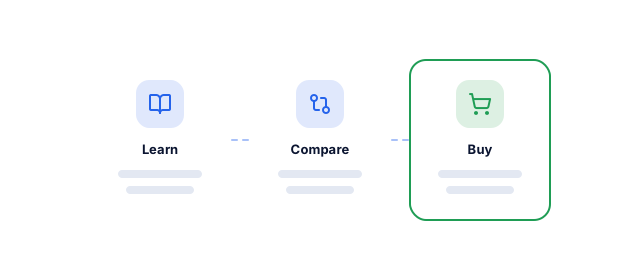
Every keyword is labeled by what the searcher wants to do: learn, compare, buy, find a location or reach a brand. We check the live results for each group, because Google's results show intent better than any tool label. Intent decides the page type: a guide, a category page, a comparison or a service page.

Clustering by search results

Searches that Google answers with the same results belong on the same page. We group keywords by overlapping results rather than shared words, so plural, reordered and synonym variants sit together. Google's guidance on generative AI search warns that separate pages for every variation, made to manipulate rankings, breach its scaled content abuse policy.

Keyword-to-URL map

Each cluster gets one target URL, existing or planned, with a primary keyword, supporting terms, intent and page type. Where two pages already compete, the map says which one keeps the topic. Writers use it for briefs, developers for site structure, and our on-page SEO team for titles and headings.

Competitor keyword research

We pull the keywords that three to five competitors rank for and you do not, then filter out anything that does not fit your offer. What remains is a gap list ranked by intent, demand and realistic difficulty for your site's authority, not by volume alone, so the plan targets searches you can actually win.

Questions for AI search

We collect the questions buyers ask from People also ask, forums, reviews and sales calls, group them by topic, and note where Google AI Overviews, ChatGPT or Perplexity already answer them and which sources they cite. The question bank feeds FAQs, guides and our AI SEO work.

What good keyword research changes

Keyword research is the decision behind every page you publish. These are the problems it prevents.

Searches sorted by intent, with the ready-to-buy searches leading to a purchase

Traffic that never turns into customers

Ranking for broad, informational searches can fill analytics with visitors who were never going to buy. Intent mapping separates searches that lead to inquiries from those that only build awareness, so commercial pages target buying searches and guides support them. The result is fewer vanity rankings and more traffic you can tie to revenue.

Two of your own pages competing for the same search

Pages competing with each other

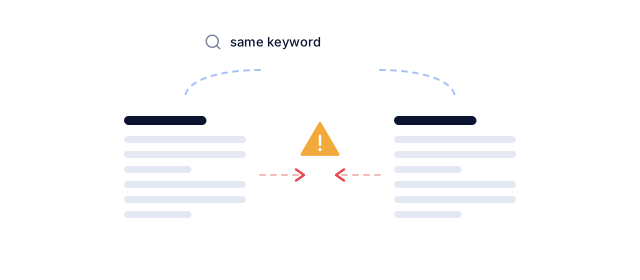
Without a map, blog posts and service pages drift onto the same terms, and Google alternates between them. A keyword-to-URL map assigns each topic to one page before anything is written, which also tells writers what not to cover. Existing overlaps are flagged for merging or retargeting. Fixing an overlap is often faster than writing anything new.

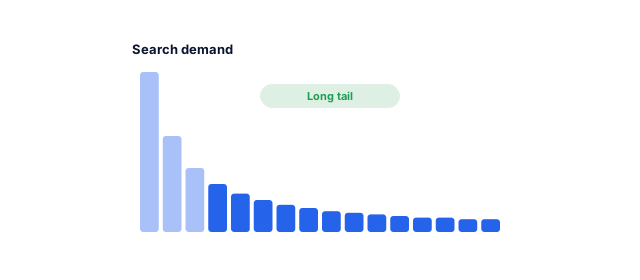
A keyword demand curve: a few broad searches and a long tail of specific ones that convert better

Chasing volume and missing the long tail

Search demand is spread thin: keywords with fewer than 10 searches a month make up almost 93% of the Ahrefs US keyword database. Individually tiny, these specific searches often show the clearest intent. Clustering gathers them onto the right page, so one strong page can rank for many variations at once.

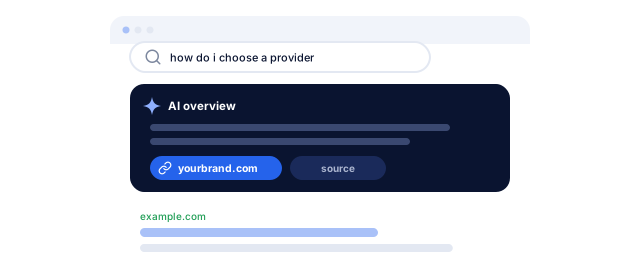
An AI overview at the top of the results that cites your page as a source

Being invisible in AI answers

In a Pew Research Center study of 900 US adults, users clicked a traditional result in 8% of visits when a Google AI summary appeared, against 15% without one. Searches starting with question words produced a summary 60% of the time. Knowing which topics trigger AI answers tells you where to aim for citations as well as clicks.

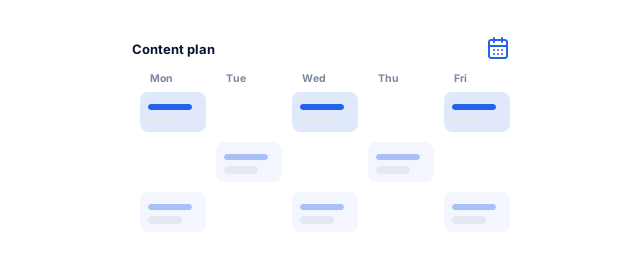
A content plan built from keyword data, with topics scheduled week by week

Content plans built on guesswork

A content calendar without keyword data tends to follow internal interests. With clusters ranked by intent, demand, difficulty and business value, you can decide what to write first and defend the order to anyone who asks. It also shows which existing pages to improve before new ones are written. Our content marketing team can write straight from the plan.

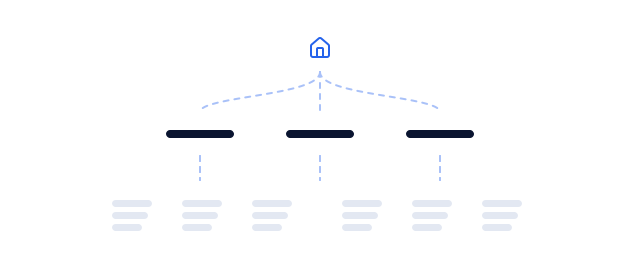
A site structure tree from the homepage down to categories and pages

Site structure that hides important pages

Clusters show how buyers group topics, which is often different from your org chart. We use them to suggest navigation, categories and hub pages, so important pages sit close to the home page and link to each other naturally. For new builds, our custom website development team builds that structure.

Already have a keyword list but no plan?

Send us your site and any list you have. We will show you how your current pages map to real searches, where they compete with each other, and what is missing, before you commit to anything.

Free, with no obligation. Rather talk? Book a 30-minute call

How we do keyword research, step by step

  1. Business and audience discovery

    We learn what you sell, to whom and where, and what a good lead or order is worth. Sales and support teams often know the exact phrases customers use, so we talk to them or review call notes. This decides which searches are worth winning at all.

    • Goals and conversion values
    • Audience and market notes
    • Seed list from real conversations
    Clear commercial priorities
  2. Data collection

    We combine Search Console queries, Google Keyword Planner, Ahrefs, Semrush, People also ask and Google Trends into one keyword universe, then remove duplicates and terms that do not fit your offer. Seasonal patterns are noted so content can be published ahead of demand.

    • Keyword universe
    • Seasonality notes
    Every relevant search in one place
  3. Keyword research and competitor analysis

    We pull competitor rankings, compare them with yours, and score each opportunity for intent, demand, difficulty relative to your site's authority, and business value. Searches where you already sit on page two are marked as quick wins.

    • Competitor gap list
    • Opportunity scores
    • Quick-win list
    Realistic targets
  4. Intent and clustering

    Keywords are clustered by overlapping search results and labeled by intent, then checked by hand against the live results. Clusters that need a page type you do not have yet, such as a comparison or pricing page, are flagged for the plan.

    • Intent-labeled clusters
    • Page type per cluster
    Topics, not loose keywords
  5. Keyword-to-URL mapping

    Each cluster is assigned to an existing URL or a planned one, with a primary keyword and supporting terms. Overlaps between existing pages are resolved, and new pages are placed in the site structure so they can be linked from the right hub.

    • Keyword-to-URL map
    • Cannibalization fixes
    • New page list
    One page per intent
  6. Content plan and tracking

    We turn the map into a prioritized plan with briefs for the first pages, set up rank tracking for each cluster, and review it against Search Console data every quarter as search behavior changes. Clusters that stop performing are researched again.

    • Prioritized content plan
    • First page briefs
    • Cluster tracking setup
    A plan your team can execute

Keyword research for your type of business

How people search depends on what they are buying. These are the cases we research most.

01 / 04

Ecommerce and product keyword research

Stores need keywords at three levels: categories, products and buying guides. Our product keyword research services look at how people describe products, including materials, sizes, uses and comparisons, map category terms to collection pages, and keep product variants from competing with each other. Seasonal and gift searches are timed so pages are live before demand peaks. Paid search data from PPC management shows which terms convert. See also ecommerce SEO.

02 / 04

SaaS and B2B

B2B buyers often search by problem, then by category, then by product: how to fix the problem, which type of software does it, and which product is best. Our SaaS keyword research services map each stage to a page type, from guides to category pages to versus and alternatives pages, and include integration searches competitors often ignore. Pair it with SaaS SEO for the wider plan.

03 / 04

Local SEO keyword research

Local searches mix services with places and urgency, such as emergency plumber, dentist open Saturday or near me. We research the service and location combinations that show real demand, decide which deserve their own page, and match terms to Google Business Profile categories. Patients and customers often use plain words rather than trade or clinical terms, so we research both. For clinics and hospitals, health keyword research services also need medical review, which healthcare SEO adds. See local SEO.

04 / 04

International SEO keyword research in every language

Translated keywords are rarely the ones people type. Our multilingual keyword research services cover each market in its own language with native review, compare demand across countries, and map terms per locale, so your French page targets what French buyers search for. British, American and Australian English differ too, in spelling and in product names. Demand is compared country by country, never pooled into one number. This feeds our international SEO work.

What you receive, deliverable by deliverable

Everything arrives in a shared spreadsheet you own, with a walkthrough call. This is what each part contains and how your team uses it.

DeliverableWhat it containsWho uses itHow it is used
Keyword universeEvery relevant search with volume, difficulty, intent and sourceSEO and content leadsReference for every later decision
Intent clustersKeywords grouped by shared search results, labeled by intentContent strategistsChoosing topics and page types
Keyword-to-URL mapOne cluster per URL, with primary and supporting termsWriters, developers, SEOBriefs, site structure, titles and headings
Competitor gap listTopics competitors rank for and you do not, scoredLeadership and content leadsDeciding what to build next
Question bankBuyer questions from search, forums and sales calls, by topicWriters and AI SEOFAQs, guides and AI answer targets
Content planPrioritized pages, with briefs for the first batchContent teamPublishing schedule
Tracking setupClusters tracked by rank and in Search ConsoleSEO and leadershipQuarterly review

Search volumes from any tool are estimates that differ between providers. We use them to compare keywords with each other, not as traffic forecasts.

Why improveFX for keyword research

01

Research tied to revenue

We ask what a lead or order is worth before we score a single keyword, so the plan favors searches that bring customers, not just visitors. In our MastersBuddy case study, the SEO program put 160+ keywords in Google's top 10 and lifted clicks from Google Search by 146% in a crowded market.

02

Maps your whole team can use

Writers, designers and developers sit in our 25+ person in-house team, so the map is built to be used: page types for designers, URL structure for developers and briefs for writers. If you need new pages built from it, our landing page development team can take the map straight into production.

03

Your data, your spreadsheet

Everything is delivered in a spreadsheet you own, with sources and assumptions written down, so another team could pick it up tomorrow. When research continues, we work on rolling agreements with transparent monthly reporting. Clients in the US, UK, Canada, Australia, Europe and India rate us 4.9 on Clutch from 221 reviews.

Results we can put numbers on

These results come from full SEO programs, of which keyword research is one part. We show them as whole programs, because no single deliverable takes the credit.

See all case studies
MastersBuddyStudy abroad consulting

160+

keywords in Google's top 10

A new consultancy broke into one of India's most competitive markets

Read the case study
AkosMDHealthcare, Arizona

+57%

patient footfall

An Arizona hospital became the first call for urgent care

Read the case study
Eric OriginalsJewelry ecommerce

+1,900%

organic traffic

A struggling jewelry website became a steady source of buyers

Read the case study

What our SEO clients say

"Their SEO strategy helped us achieve top search rankings, while their Facebook Ads campaigns drove a steady flow of qualified prospects."
55%more organic traffic
4.7xreturn on ad spend
75%keywords on page one
Amita NaithaniCo-founder, Amita Naithani Resort Wear
"From designing a high-converting website to managing our SEO, Google Ads, and Google Business Profile, improveFX delivered exceptional results across every channel."
210%more qualified leads
185%organic and local traffic growth
92%keywords on page one
Maureen CappalloBroker and founder, Momentus Real Estate Group
"We now rank for highly competitive keywords while our PPC campaigns deliver qualified leads at a lower cost."
80%keywords on page one
620%return on investment
52%lower cost per lead
Divyanshi HirparaFounder, Trunkboxbaby
"Our marketing reach expanded by 50% after implementing their innovative SEO and content writing services. They truly understand the e-commerce landscape."
43.6%more sales
621%return on investment
63%keywords on page one
Allen RayFounder, Ecom Fashion
"They revolutionized our online presence with a 60% increase in web traffic through strategic e-commerce SEO and content optimization."
60%more organic traffic
47%more sales
Eric NoahPresident, Eric Originals & Antiques Ltd.

Keyword research questions, answered

Not seeing yours? Ask us directly and a specialist will reply personally.

What do keyword research services include?

Keyword research services include seed discovery, data from search tools and your Search Console, intent classification, clustering, competitor gap analysis, a keyword-to-URL map and a prioritized content plan.

Thorough keyword research services also cover questions for AI search, seasonality and tracking. Ours arrive as a shared spreadsheet you own, with a walkthrough call, so writers and developers can use the map straight away.

How much do keyword research services cost?

Cost depends on the number of markets and languages, the size of the site or catalog, and how many pages need mapping. Most agencies we reviewed do not publish prices.

A focused project for a site of up to 100 pages costs far less than research across several countries or thousands of products. We quote a fixed fee after a free review of your site and Search Console data, and the quote lists every deliverable.

How long does keyword research take?

Most projects take 2 to 3 weeks for a site of up to 100 pages, and 4 to 6 weeks for large catalogs or several markets.

The first week goes on discovery and data collection; the rest goes on intent checks, clustering and mapping, which are partly done by hand. For ongoing content programs, we refresh the research every quarter.

Why not just use a keyword research tool?

Tools are essential, and we use them, but they cannot tell which searches matter to your business or which page should target each one.

Tool volumes are estimates that vary between providers, and difficulty scores ignore your own site's authority. A tool also cannot sit in on a sales call or judge whether a search wants a guide or a product page. A service adds that judgment and turns the data into a map.

How do you decide which keywords to target first?

We score each cluster on intent, demand, difficulty relative to your site's authority and business value, then start where those overlap.

Quick wins usually come from clusters where you already rank on page two, which Search Console reveals. Valuable topics with strong competition go into a longer plan, often supported by off-page SEO to build the authority they need.

Does Google keyword research still matter with AI search?

Yes, but the focus shifts from single keywords to topics and questions. Google says its AI features rely on its core ranking systems and use query fan-out, running related searches to build an answer.

Google's guidance also says its systems understand synonyms, so you do not need a page for every variation. We cluster variants onto strong pages and build question banks for the topics where AI answers appear most often.

What is a keyword-to-URL map?

A keyword-to-URL map assigns every keyword cluster to one page on your site, existing or planned, with its primary keyword, supporting terms and intent.

It stops two pages from targeting the same search, shows which pages are missing, and gives writers and developers one shared reference. We update it as pages are published and as search behavior changes.

Can you do PPC keyword research as well as SEO?

Yes. Paid and organic research share the same data, and we flag which clusters suit ads, organic content or both.

Our PPC keyword research service adds match types, negative keywords and cost-per-click estimates for our PPC team. Running ads on a commercial cluster first is a quick way to test whether it converts before you invest in content for it.

Do you do YouTube or Amazon keyword research?

YouTube keyword research is part of our video SEO service. Amazon search runs on its own ranking system and data, so we will tell you on a call whether your project needs a marketplace specialist.

Our core keyword research covers Google, Bing and AI answer engines such as ChatGPT, Perplexity and Google AI Overviews. Where video or marketplace searches matter to your buyers, we note them in the research so you see the whole picture.

How do I choose a keyword research company?

Ask to see a sample keyword map and how they judge intent. The best keyword research service shows why each keyword was chosen and which page it belongs to, not just a long list with volumes.

Check that they use your Search Console data, cluster by search results rather than shared words, and deliver a file you own. Be wary of anyone who sells a fixed number of keywords or promises rankings from research alone.

Ready to grow online?

Get a free analysis of your website's performance, SEO and user experience, or book a strategy call with our team.

  • A review of your site's speed, SEO and user experience
  • Fixes ranked by impact, with the effort each one takes
  • A call with a specialist to plan the next steps, no obligation
Vikash Kumar PalRoshan Kumar JhaAbhishek Kumar Jha A specialist replies personally 4.9 from 566 client reviews
What do you need help with?

Pick all that apply.

Next, a few details about your business on our contact page. It takes about a minute.

Prefer to talk now? Book a strategy call