



















Email marketing services that turn your list into repeat revenue

Our email marketing services plan, write, design and send the campaigns, newsletters and lifecycle emails that bring customers back to buy again. They suit ecommerce brands, B2B companies and service businesses that already have a list or want to build one properly, and we judge every send by the revenue and pipeline it produces, not by open rates.

  • 120+clients served
  • 4.9
    156 reviews
  • 1.6 yrsaverage client relationship
Welcome flowLive
  1. Signs upTrigger
  2. Welcome and brand storyDay 0
  3. Best sellers and reviewsDay 2
  4. First order offerDay 5
Inbox placement
  • SPF
  • DKIM
  • DMARC

120+ businesses chose us for their digital growth

  • AkosMD Hospital
  • Amita Naithani Resort Wear
  • Momentus Real Estate Group
  • CleverBoss
  • MastersBuddy
  • Foley Mansfield
  • Pomegranate Health
  • Trunk Box Baby
  • Hunt Ortmann
  • Immigration Desk
  • Urology Partners
  • Jodi Carlton
  • Ecom Fashion
  • Eye on Security
  • Disability Solutions
  • One400
  • Eric Originals
  • Sabulski Window Tinting
  • History of Soccer

Email marketing at a glance

Email marketing is the practice of sending planned, permission-based emails to subscribers and customers to drive sales, sign-ups and loyalty. Email marketing services cover list growth, segmentation, campaigns and newsletters, lifecycle emails, deliverability and revenue reporting, so that email becomes a dependable source of repeat revenue that the business owns.

  • Deliverability comes first: Gmail, Yahoo and Outlook require SPF, DKIM and DMARC from bulk senders.
  • Open rates are no longer a reliable success measure. Judge email on clicks, orders and pipeline.
  • A smaller, engaged list usually beats a large, stale one on inbox placement and revenue per send.
  • You should own the platform account, the subscriber list and every template.
Best for
Ecommerce, B2B and service businesses with a customer or subscriber list, or a plan to build one
What you get
Deliverability setup, segments, a campaign calendar, newsletters, lifecycle emails, testing and monthly revenue reports
Typical timeline
Audit and authentication fixes in 1 to 3 weeks. First campaigns in weeks 2 to 4. A reliable read on revenue per subscriber after about 3 months.
Pricing
Driven by send volume, segments, languages and design. Published 2026 pricing we reviewed puts managed programs at about $1,000 to $10,000+ a month, plus platform fees. Our programs run from under $750 to $10,000+ a month, and we quote after a free audit.

What our email marketing services include

Six workstreams, scoped to your list, platform and goals. Deliverability always comes first, because every other result depends on reaching the inbox.

Get a free proposal

Email deliverability and authentication

We set up SPF, DKIM and DMARC on your sending domain, add one-click unsubscribe headers and connect Google Postmaster Tools. Google's sender guidelines require authentication and one-click unsubscribe from anyone sending 5,000 or more messages a day to Gmail, and ask every sender to keep spam complaints below 0.3%, ideally under 0.1%. Outlook has applied similar rules since May 2025.
Email campaign management and newsletters

We plan a campaign calendar around your launches, seasons and stock, then write, design and send each email. Newsletters get a regular format readers recognize, with one clear action per issue. Every email is checked in Gmail, Outlook and Apple Mail, on mobile and in dark mode. Our email template design team builds modular templates when you need new ones.

Lifecycle and retention emails

Lifecycle email marketing sends the right message at each stage: welcome, first purchase, replenishment, renewal, win-back and re-engagement. We map those stages against your customer data and write the messages. Where a stage needs triggered flows, CRM syncs or custom logic, our email automation services team builds and maintains them, so strategy and plumbing stay connected.

Email list building and consent

We grow your list with sign-up forms, checkout opt-ins, lead magnets and preference centers, so every subscriber chose to join; we never buy or rent lists. Consent and opt-outs follow each market's law: CAN-SPAM in the US, UK GDPR and PECR in the UK, GDPR in the EU, CASL in Canada and the Spam Act in Australia. Double opt-in is used where the law or your list quality calls for it.

Email segmentation and personalization

We build segments from purchase history, engagement, location and the preferences people share with you directly. Common starting points are new versus repeat customers, how recently and often people buy, and engagement tiers. Unengaged subscribers move into a re-engagement series and then a sunset policy, which protects sender reputation and stops you paying to store contacts who never read.

Testing and revenue reporting

We test subject lines, offers, layouts and send times one variable at a time, and use holdout groups to measure the sales email actually adds. UTM tags let GA4 and your store or CRM confirm what the email platform reports. Reports lead with clicks, orders, revenue per recipient, list growth and complaint rates rather than opens.

The email problems we fix first

Good email marketing management shows up in revenue per send, list health and fewer complaints. These are the problems we see most often, and what fixing them changes.

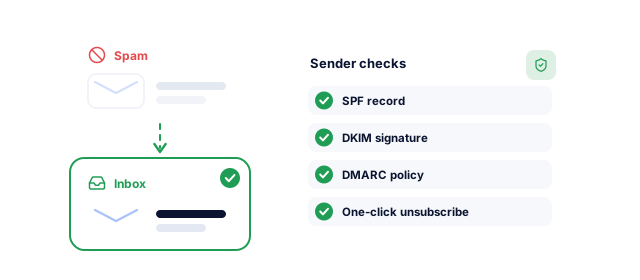
An email moved out of the spam folder into the inbox once sender authentication checks pass

Emails landing in spam

When authentication is missing, complaints creep up or unsubscribes are slow, mailbox providers start filtering your mail, usually without an error you can see. Yahoo, for example, expects bulk senders to honor unsubscribes within two days. Fixing DNS records, unsubscribe handling and who you send to usually restores inbox placement, so every later campaign reaches more of the people who asked for it.

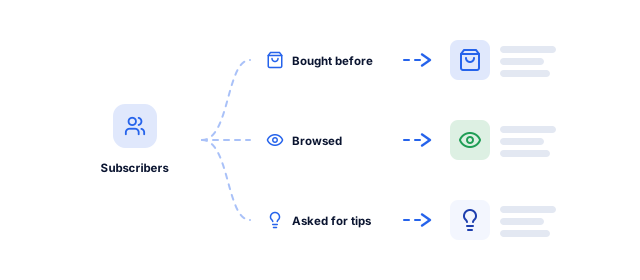
One subscriber list split into segments by what people bought, browsed and asked for, each getting a different email

Every subscriber gets the same email

Statista estimates that around 376 billion emails were sent and received every day in 2025. In an inbox that full, a generic blast is easy to ignore and easy to report as spam. Segmenting by what people bought, browsed and told you they want means fewer emails per person, each more relevant, which lowers unsubscribes and raises revenue per send.

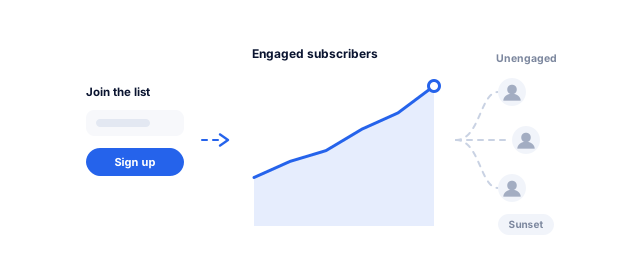
New sign-ups growing the list while unengaged contacts are retired on a schedule, so the engaged list keeps growing

A list that is shrinking or going stale

Lists lose people every month as addresses are abandoned and interests change. Without steady sign-ups the list shrinks, and without a sunset policy it fills with contacts who never engage, which hurts deliverability and, on some platforms, raises your bill. We add sign-up points across your site and retire unengaged contacts on a schedule, so size and quality grow together.

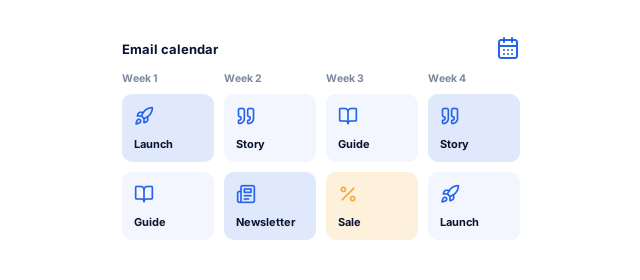
An email calendar that mixes launches, buying guides and customer stories with only the occasional sale

Sales that depend on discounts

If every campaign is a sale, customers learn to wait for the next code. We balance promotions with launches, buying guides, customer stories and newsletters worth opening when nothing is discounted. Testing full-price offers against discounted ones shows how much margin a discount really buys, so promotions become a decision, not a habit.

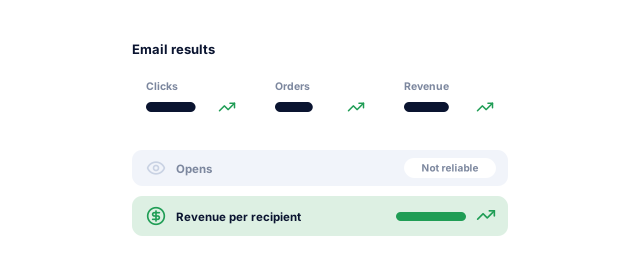
An email report that leads with clicks, orders and revenue per recipient, with open rates set aside

Reports built on open rates

Open rates were once the headline email metric, but Apple says Mail Privacy Protection prevents senders from seeing whether people opened a message. Judging subject lines or send times on opens alone now leads to wrong calls. We report clicks, orders, revenue per recipient and pipeline from your store or CRM instead.

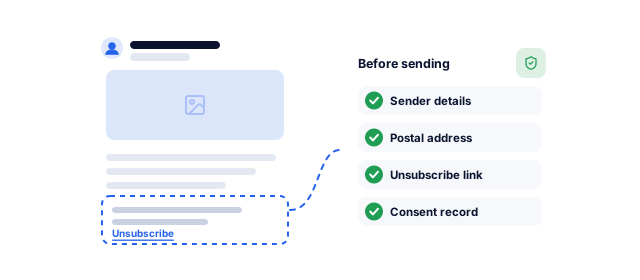
A marketing email checked for sender details, postal address, an unsubscribe link and consent records before it is sent

Compliance risk nobody is watching

Marketing email carries legal duties in every market you sell to. In the US, the FTC's CAN-SPAM guide sets penalties of up to $53,088 for each email in violation and makes no exception for B2B email. We check sender details, postal address, unsubscribe handling and consent records before anything is sent, so list growth does not create legal exposure.

Email not earning what it should?

Pick the problem closest to yours. We check your platform, list, flows and deliverability to find the cause, and send a written plan for what to change first, whether or not you hire us.

What is the main problem?

Free, with no obligation. Rather talk? Book a 30-minute call

Our email marketing process, from audit to monthly report

  1. Audit the program

    We review your authentication records, Postmaster Tools data, bounce and complaint rates, list sources and the last 90 days of campaigns and flows. We also check how email revenue is tracked, because many accounts credit email with sales it did not drive.

    • Deliverability and authentication report
    • List health breakdown
    • Prioritized fix list
    You know why email performs as it does
  2. Strategy and calendar

    We agree goals and the numbers that define success, then build an email marketing strategy: segments, lifecycle stages, sending frequency per segment and a 90-day campaign calendar tied to your launches, seasons and stock. You approve it before anything is written.

    • Email marketing strategy
    • Segment definitions
    • 90-day campaign calendar
    A plan your team can see and change
  3. Fix the foundations

    Before sending more, we fix DNS records, unsubscribe handling, sign-up forms, consent capture and tracking, then set up a modular template system. If you are moving platforms, lists, consent data and suppression lists move first, so nobody who unsubscribed is ever emailed again.

    • Authenticated sending domain
    • Template system
    • Consent and suppression records
    Every email starts on solid ground
  4. Write, design and check

    Each email is written, designed and checked against a QA list: links, UTM tags, personalization fallbacks, alt text, dark mode and rendering in the main inboxes. You approve copy and design, and your team receives test sends before anything is scheduled.

    • Approved copy and design
    • Rendering and QA checks
    • Scheduled sends
    No broken links or blank first names
  5. Send, watch and improve

    After each send we watch bounces, complaints and unsubscribes in the first hours, then sales over the following days. Every month we run planned tests on subject lines, offers, layouts or timing, and carry what wins into the next round of emails.

    • Send log
    • Test plan and results
    • List hygiene updates
    Each month learns from the last
  6. Report and plan

    Each month you get a report and a call covering revenue and pipeline from email, revenue per recipient, list growth, deliverability metrics and test results, checked against GA4 and your store or CRM. We agree the next month's calendar before starting it.

    • Monthly report and review call
    • Updated calendar
    • Quarterly strategy review
    Decisions based on revenue, not opens

Email platforms we work in

We work inside the account you already have when it fits, or set one up in your name. Plans and features change, so we confirm current terms before recommending a move.

Get a free proposal

Klaviyo

Best for: online stores on Shopify, WooCommerce and similar

Klaviyo is an email and SMS platform built around store data such as orders, products viewed and predicted next order dates. We set up the store integration, sign-up forms, segments, welcome, abandoned cart and post-purchase flows, and suppression rules that keep billable active profiles under control.

Mailchimp

Best for: newsletters and smaller lists

Mailchimp, owned by Intuit, is a long-established email platform with simple templates, tags and a visual journey builder. It suits newsletters and small businesses that want a quick start. We set up audiences, tags, sign-up forms, welcome and follow-up journeys, and a routine for archiving unsubscribed contacts, since Mailchimp bills on contacts stored.

HubSpot Marketing Hub

Best for: B2B teams that sell from HubSpot CRM

HubSpot Marketing Hub sends email from inside the HubSpot CRM, so messages can use contact properties, lifecycle stages and deal data. It suits B2B and service businesses whose sales team works in HubSpot. We set up lists, nurture workflows and lead scoring where your plan includes them, sales alerts, and marketing contact settings that keep the bill in check.

ActiveCampaign

Best for: small B2B and service firms that want detailed automation

ActiveCampaign is an email and automation platform built around a visual automation builder, with a sales CRM and lead scoring on higher plans. It suits consultancies, course creators and small B2B firms that want branching sequences. We set up tags, custom fields, site tracking, welcome and nurture automations, and lead scores that tell your team when to follow up.

Brevo

Best for: email, SMS and WhatsApp from one account

Brevo, known as Sendinblue until 2023, is a France-based platform that sends email, SMS and WhatsApp campaigns, plus transactional email such as order confirmations. It suits businesses that want several channels in one tool. We set up sender authentication, contact attributes, sign-up forms with GDPR consent fields, and welcome and follow-up automations.

Shopify Messaging

Best for: smaller Shopify stores starting out

Shopify Messaging, called Shopify Email until late 2025, is Shopify's own email app inside the store admin, now with SMS in some regions. Templates pull products, prices and discount codes straight from your store. We set up branded templates, segments from store data, welcome and abandoned checkout automations, and plan the move to a fuller platform when the store outgrows it.

Email marketing for your type of business

Our email marketing services change with how you sell: what triggers a purchase, how long people take to decide, and what customers expect to hear from you.

01 / 05

Email marketing for ecommerce

For online stores, email is where repeat purchases come from. We connect Klaviyo or Mailchimp to Shopify or WooCommerce order and product data, plan campaigns around launches, restocks and seasonal peaks, and segment by what each customer bought and how recently. Product recommendations, back-in-stock alerts and post-purchase emails sit alongside regular campaigns. If the store loses people at checkout, our ecommerce website team can fix that too.

02 / 05

B2B email marketing and SaaS

B2B buyers rarely act on the first email. We build newsletters and nurture tracks in HubSpot or your CRM that answer the questions buyers ask at each stage, from first download to demo to renewal, and alert sales when a contact shows buying interest. For SaaS, onboarding and feature adoption emails protect revenue too. Our CRM automation team keeps contact data clean between systems.

03 / 05

Healthcare and clinics

Patients welcome health tips and service news, but marketing email is not the place for anything that reveals a condition or treatment. We keep campaigns general, separate from clinical messages, and within the privacy rules of each market you serve. Clinics on Nabhaya Clinic already send booking and refill reminders on WhatsApp, so email can focus on newsletters and launches. See our work for healthcare businesses.

04 / 05

Education and consultancies

Admissions and consultation businesses work to intake cycles and deadlines. We plan email around those dates: open days, application windows, webinars, document checklists and follow-ups for people who inquired but did not book. Segments by course, country or stage keep a postgraduate applicant from receiving undergraduate news. Email also nurtures the inquiries that search brings in, so it works well alongside SEO services.

05 / 05

Professional and local services

Accountants, law firms, consultants and local service businesses win most work from past clients and referrals. A short monthly newsletter keeps you in mind between jobs, seasonal reminders bring back repeat work, and a well-timed message after each job brings in reviews. Our reputation management service uses the same list to ask happy clients for reviews, within each review platform's rules.

Klaviyo vs Mailchimp vs HubSpot for email marketing

Our email marketing services run on all three. Each suits a different kind of business, and each bills in a way that changes how you should manage your list.

Book a strategy call
What to compareKlaviyoMailchimpHubSpot Marketing Hub
Usually best forEcommerce brands on Shopify, WooCommerce and similar storesSmall businesses and newsletters that want a simple startB2B and service businesses whose sales team works in HubSpot CRM
How the bill growsActive profiles (any contact it can email, whatever their consent status) plus email sendsContacts stored, including unsubscribed and non-subscribed contactsMarketing contacts tier; non-marketing contacts are free
List hygiene that saves moneySuppressed profiles drop out of the active countArchive unsubscribed and stale contactsSet contacts you do not email as non-marketing before the update date
Segments best onOrders, products and browsing data from the storeTags, groups, sign-up source and connected store dataCRM properties, lifecycle stages, deals and website activity
Watch out forCosts that climb with large lists you rarely emailSome segmentation and testing features only on higher plansGoing one contact over a tier moves you up until renewal

Billing details from each platform's help center, checked October 2026: Klaviyo, Mailchimp, HubSpot. Plans and prices change, so confirm current terms before you commit. Platform fees are paid to the platform, separate from any agency fee.

Your first 90 days of email marketing

Deliverability and planning come first, campaigns start within weeks, and by day 90 you have a fair read on revenue per subscriber.

Book a strategy call
  1. 1Days 1 to 30

    Audit, fixes and first sends

    • Deliverability, authentication and list health report
    • SPF, DKIM and DMARC fixed, Postmaster Tools connected
    • Strategy, segment definitions and a 90-day campaign calendar
    • Template system and consent and suppression records in place
    • First campaigns sent between weeks 2 and 4

    By day 30, your sending domain is authenticated, the plan is approved and your first campaigns have gone out.

  2. 2Days 31 to 60

    Lifecycle emails and first tests

    • Campaigns sent to the calendar, with QA on every send
    • Priority lifecycle emails written, starting with welcome or post-purchase
    • First planned tests on subject lines, offers or layouts
    • Re-engagement series and sunset policy for unengaged subscribers

    By day 60, regular campaigns and your first lifecycle emails are running, with tests under way.

  3. 3Days 61 to 90

    A first read on revenue

    • Test results carried into the next round of emails
    • Holdout test showing the sales email actually adds
    • Revenue per subscriber and list growth, checked against GA4
    • Quarterly strategy review and the next 90-day calendar

    By day 90, you have a first reliable read on revenue per subscriber and a calendar for the next quarter.

What you see every month

Each month you get a written report and a review call. It leads with the numbers that matter to your business, says what we changed and why, and sets out what we test next.

Every report includes

  • Revenue by campaign and flow, not open rates
  • Deliverability: complaints, bounces and inbox placement
  • List growth and unsubscribes, by source
  • What we change and test next month
Monthly reportSample figures
Revenue from email$21,60014% more
Share from automated flows46%Steady
Spam complaint rate0.04%Below Gmail's 0.1% target
List growth+1,240Opted in
Last six months
What we changed
  • Rebuilt the welcome flow around best sellers and reviews
  • Stopped sending to subscribers inactive for a year
Next month

Test a browse-abandonment email with product recommendations

A sample of the report. Every client's report uses their own numbers.

Yours to keep, always. Everything is set up in your name, and if you leave we remove our access and hand over the documentation.

  • Your email platform and list
  • Templates and flows
  • Segments and data
  • Sign-up forms and consent records
  • Reports and documentation

Who email marketing services from improveFX are for

We run email for businesses that want repeat sales and pipeline from people who chose to hear from them, whether your list is large, small or not built yet.

Book a strategy call

A good fit if

  • Online stores that want more repeat orders from customers they already have
  • B2B and SaaS firms that want email to move leads toward a demo, sale or renewal
  • Service businesses that win most of their work from past clients and referrals
  • Teams that want email judged on clicks, orders and pipeline, not open rates

We can also help when

  • Your list is small or not built yet: we build it properly with sign-up forms, checkout opt-ins and lead magnets, never bought lists, and start a welcome series so every new subscriber hears from you
  • Your sender reputation is damaged: we run a recovery plan, fixing authentication and unsubscribes first, then sending to your most engaged subscribers and widening volume as complaints fall
  • You need only part of the work, such as deliverability fixes or a welcome series: we scope that on its own, and add the rest when you are ready
  • You want guaranteed revenue figures: we commit to agreed metrics, holdout tests that show what email adds, and a report every month

Why businesses choose improveFX as their email marketing company

01

Email, website and data in one team

Email results often stall outside the email platform: a missing DNS record, a sign-up form that never syncs, a store that does not pass order data. Marketing and engineering sit under one roof here, so our in-house specialists fix those issues themselves, and our marketing automation team connects email with SMS, CRM and ads when you are ready.

02

Your platform, your list, your templates

Your Klaviyo, Mailchimp or HubSpot account is in your name, and we are added as users, never the other way around. The subscriber list, consent records, templates and reports belong to you. We work on a rolling monthly agreement with 30 days' notice and transparent monthly reporting, so you stay because the program works, not because a contract or a list you cannot export keeps you.

03

Channels planned together

As a Google Premier Partner, Meta Business Partner and Shopify Partner, we plan email alongside search, paid social and your store, so customer lists can feed ad audiences and every channel tells one story. Clients stay with us 1.6 years on average and rate us 4.9 on Clutch from 221 reviews, 4.8 on Google and 4.9 on Trustpilot.

Certified partners on the platforms we manage for you

  • Google Premier Partner
  • Meta Business Partner
  • Microsoft Advertising Partner

Results we can put numbers on

These results come from our search, paid media and website work rather than email alone. They show how we report every program: in leads, sales and revenue, the same way we measure email.

See all case studies
MastersBuddyStudy abroad consulting

160+

keywords in Google's top 10

A new consultancy broke into one of India's most competitive markets

Read the case study
CleverBossB2B services

185%

conversion growth

PPC rebuilt around smarter targeting and creatives

Read the review
Momentus Real Estate GroupReal estate

210%

more qualified leads

Website, SEO, Google Ads and Business Profile working as one

Read the review

What our marketing clients say

"Their SEO strategy helped us achieve top search rankings, while their Facebook Ads campaigns drove a steady flow of qualified prospects."
55%more organic traffic
4.7xreturn on ad spend
75%keywords on page one
Amita NaithaniCo-founder, Amita Naithani Resort Wear
"improveFX transformed our PPC campaigns with smarter targeting, compelling ad creatives, and continuous optimization."
185%conversion growth
42%lower cost per lead
210%more qualified leads
Nadya SmolskayaCo-founder, CleverBoss
"From designing a high-converting website to managing our SEO, Google Ads, and Google Business Profile, improveFX delivered exceptional results across every channel."
210%more qualified leads
185%organic and local traffic growth
92%keywords on page one
Maureen CappalloBroker and founder, Momentus Real Estate Group
"We now rank for highly competitive keywords while our PPC campaigns deliver qualified leads at a lower cost."
80%keywords on page one
620%return on investment
52%lower cost per lead
Divyanshi HirparaFounder, Trunkboxbaby
"Our marketing reach expanded by 50% after implementing their innovative SEO and content writing services. They truly understand the e-commerce landscape."
43.6%more sales
621%return on investment
63%keywords on page one
Allen RayFounder, Ecom Fashion

Email marketing questions, answered

Not seeing yours? Ask us directly and a specialist will reply personally.

How much do email marketing services cost?

Most businesses pay a monthly fee plus their email platform's subscription. Published 2026 pricing we reviewed puts managed programs at about $1,000 to $10,000+ a month.

The fee depends on how many campaigns you send, how many segments and languages each needs, whether design is included, and how much deliverability or migration work comes first. Platform costs are paid to Klaviyo, Mailchimp or HubSpot directly. Our fee is a fixed monthly amount, and our programs run from under $750 to $10,000+ a month, so a smaller list starts on a narrower scope and grows with it. We quote after a free audit, with every line itemized.

What is included in your email marketing services?

Our email marketing services cover strategy, deliverability, list growth, segmentation, campaigns and newsletters, lifecycle emails, testing and monthly revenue reporting.

Copywriting, design and QA are part of every send. Template builds, platform migrations and complex automated flows are scoped separately, because the work varies a lot between accounts. You get a written plan, a campaign calendar and a monthly report.

What is the difference between email marketing and email automation?

Email marketing is the strategy, content and campaigns: what you send, to whom and why. Email automation is the system that sends messages when a trigger fires, such as a sign-up, purchase or abandoned cart.

Most programs need both. Our email marketing services plan the lifecycle and write the messages, and our email automation team builds the triggered flows, data syncs and integrations that deliver them, so the welcome flow and the weekly newsletter never contradict each other.

How long do email marketing services take to show results?

Campaigns can produce sales in the first weeks, but a reliable read on revenue per subscriber and list growth usually takes about three months.

The first weeks go on fixing authentication, cleaning the list and setting up tracking. If deliverability was poor, inbox placement improves gradually as mailbox providers see fewer complaints. The quickest gains usually come from authentication fixes and a welcome or post-purchase email. Results depend on list size, engagement, your offer and sending history, so we agree target metrics upfront and report early indicators monthly instead of promising a fixed return.

Should we hire an email marketing agency or keep email in-house?

Keep it in-house if someone has the time and skills to plan, write, design and analyze every send. If email is irregular or nobody owns deliverability, an email marketing agency usually costs less than the revenue you are missing.

A full-time hire brings deep product knowledge but one person's skills. An agency brings copy, design, data and technical skills together. Many clients combine both: an internal owner for brand and calendar, and our team for strategy, production and reporting.

Which platform should we use: Klaviyo, Mailchimp or HubSpot?

Klaviyo usually suits ecommerce, Mailchimp suits simpler newsletters and smaller lists, and HubSpot suits businesses whose sales team already works in HubSpot CRM.

The deciding factors are where your customer data lives, how you want to segment, and how each platform's bill grows with your list. If your current platform works, we usually keep it, and recommend a move only when the gains outweigh the cost and risk of migrating lists, consent records and history.

Why are our marketing emails going to spam?

The usual causes are missing or misaligned SPF, DKIM or DMARC records, high spam complaint rates, sending to old or purchased lists, and slow unsubscribes.

Our email deliverability checks start with your DNS records and Google Postmaster Tools data, then look at list sources, bounce rates and how often unengaged contacts are mailed. Technical fixes usually take days or weeks, but rebuilding sender reputation after heavy complaints takes longer, because mailbox providers need to see better behavior over time. We run that recovery for you: sending first to your most engaged subscribers, widening volume as complaints fall, and reporting Postmaster Tools data each month.

How often should we send marketing emails?

As often as you have something useful to say to each segment. Engaged customers can receive more email than people who rarely interact, so frequency should differ by segment.

We usually start with a weekly or twice-monthly rhythm for engaged subscribers and less for the rest, then test. We watch unsubscribes and complaints alongside revenue as frequency rises, and stop when extra sales no longer justify the people you lose. A preference center lets subscribers choose for themselves.

Can you grow our email list without buying contacts?

Yes. We build your list only from people who choose to join, never from bought, rented or scraped contacts, which break consent rules in most markets and quickly damage sender reputation.

We grow lists through sign-up forms with a clear reason to join, checkout opt-ins, lead magnets such as guides or quizzes, webinar registrations, and paid social lead forms that capture consent properly. Every subscriber is tagged by source, so you can see which sources bring buyers.

What should we measure if open rates are unreliable?

Measure clicks, orders or leads, revenue per recipient, list growth, unsubscribe rate and spam complaint rate. Opens still show a rough trend, but they should not decide tests.

Mail Privacy Protection hides whether Apple Mail users who turn it on opened an email, which blurs open rates. For proof of what email adds, we use holdout groups: a small random share of a segment does not receive a campaign, and the difference in sales between the groups shows its real effect.

Can we move to a new email platform without losing deliverability?

Yes, if the move is planned around your sender reputation. The main risks are a sending domain or IP with no history, lost unsubscribes and a sudden jump in volume.

We authenticate the new platform before any send, move consent records and suppression lists first, and keep the same sending domain where possible. Then we warm up gradually, starting with the most engaged subscribers and widening each week while we watch bounces and complaints. Flows are rebuilt and tested before the old platform is switched off, so no welcome email goes missing.

Should we add SMS to our email marketing?

Add SMS for time-sensitive messages customers welcome: shipping updates, restocks, appointment reminders or short sale windows. Email stays better for longer content and newsletters.

SMS needs its own explicit consent, and the rules are stricter than for email: in the US the TCPA and carrier requirements apply, and other markets have their own. We plan both channels together, so nobody gets the same offer by email and text an hour apart, and our marketing automation team connects SMS to your platform and CRM.

How do you attribute revenue to email?

We show three views side by side: what the email platform reports, what GA4 records from UTM-tagged clicks, and, for key campaigns, the lift measured with a holdout group.

Email platforms usually credit email with any order placed within a set window after an open or click, which can include sales that would have happened anyway. GA4 is stricter but misses some cross-device journeys. A holdout group that does not receive the email shows what email truly added. We agree the attribution window with you and keep it fixed.

When does an email freelancer make more sense than an agency?

A freelancer suits a business with a working platform, a clear calendar and a need for extra writing or design. An agency suits programs that also need deliverability fixes, segmentation, testing and reporting.

Email freelancers often specialize in one skill, such as copy, design or a single platform, so someone still has to own strategy, data and the sending domain. Ask anyone you hire who monitors complaints and authentication, who owns the platform account and how revenue will be reported. Either way, keep the account, list and templates in your own name.

Ready to get more from your marketing?

Tell us what is holding your marketing back, or book a strategy call with our team.

  • A look at what you spend and what it brings in
  • Fixes ranked by their effect on leads and cost
  • A call with a specialist to plan the next steps, no obligation
Vikash Kumar PalRoshan Kumar JhaAbhishek Kumar Jha A specialist replies personally 4.9 from 566 client reviews
What do you need help with?

Pick all that apply.

Next, a few details about your business on our contact page. It takes about a minute.

Prefer to talk now? Book a strategy call