We design and build online appointment scheduling software around the rules your business already runs on: provider availability, room and equipment limits, booking buffers, deposits, and multi-location coverage. Clinics, dental and spa groups, salons, law firms, and accounting practices come to us when off-the-shelf tools stop bending, per-seat pricing starts to hurt, or booking data needs to stay in-house.
Companies that chose us for their digital transformation



















No two scheduling projects start in the same place. Some businesses have never taken a booking online. Others have outgrown a subscription tool that cannot model their availability rules. A few need booking inside a product they already own. We scope online appointment booking software against the situation you are actually in, then build only what that situation calls for, not a feature list you will never switch on.

For teams still running on phone calls, texts, and a paper diary. We replace the back-and-forth with a booking page customers can use at midnight.

When per-seat costs climb or the software cannot handle your rooms, buffers, or provider rules, we rebuild it your way and migrate live appointments intact.

We embed appointment scheduler software into the app, portal, or website you already run, using your design system, your login, and your customer records.

Multi-tenant, white-label appointment booking software for franchises, groups, and SaaS founders. One codebase, separate data per location, branding, and pricing you control.
A booking slot means something different in every industry. A dental chair, a color processing gap, a conflict check, and a tax season cap. Generic tools flatten all of that into one calendar and leave your front desk patching the difference by hand. We build healthcare appointment scheduling software and the salon, legal, and accounting equivalents around the constraint that actually governs your day.
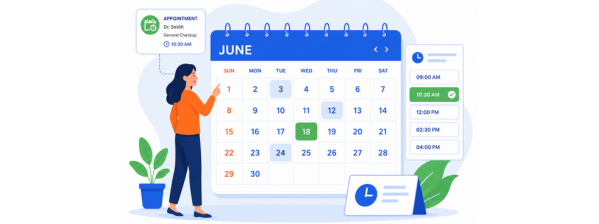
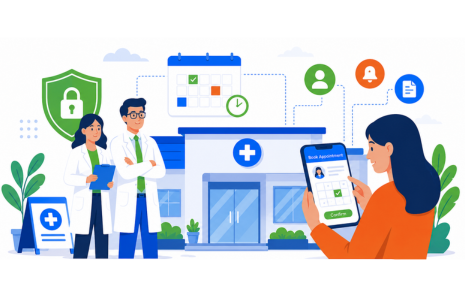
New patient visits, follow-ups, and annual physicals rarely need the same block of time, and not every provider can take every visit type. We build patient appointment scheduling software that encodes those rules, syncs with your EHR through HL7 or FHIR, runs insurance eligibility before arrival, and backfills cancellations from a waitlist. Reminders are built to respect HIPAA and current TCPA consent rules.
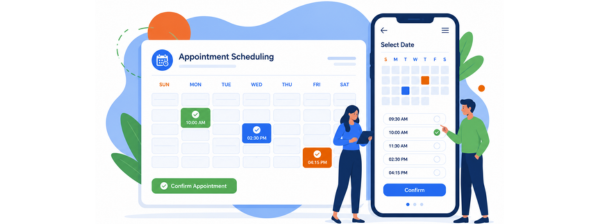
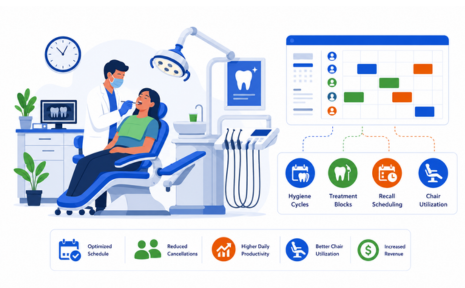
In a dental practice, the operatory is the bottleneck, and a hygiene appointment needs the dentist for only a few minutes in the middle of it. Our dental appointment scheduling software models chairs, hygienists, and doctor check-ins as separate resources, automates six-month recall, and connects to Dentrix, Open Dental, or Eaglesoft so the front desk stops keying the same appointment twice.
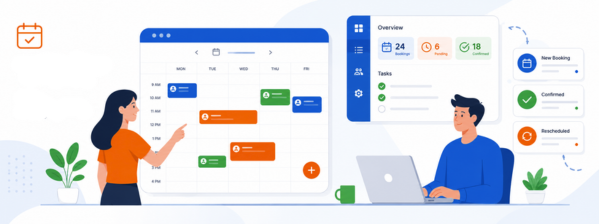
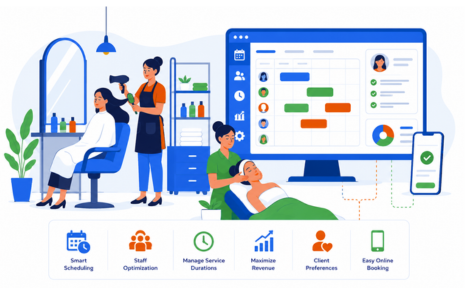
A balayage appointment is not one continuous block. The stylist is free while color processes, and most booking tools cannot sell that gap to anyone else. Our appointment scheduling software for salons and spas splits services into active and processing time, matches staff to the services they are certified for, holds deposits, and enforces your cancellation window without an awkward phone call.
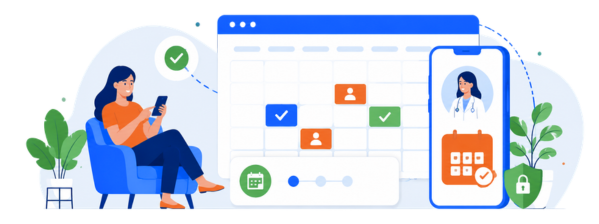
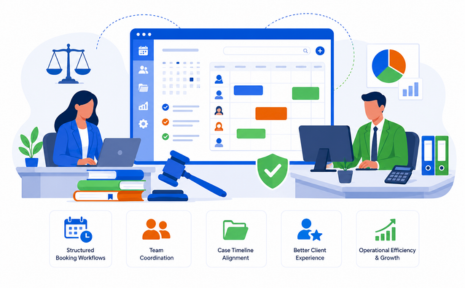
A consultation cannot be confirmed until the conflict check clears. We build appointment scheduling software for legal firms that routes inquiries by matter type, holds the slot pending a conflict review, collects intake details and consultation fees upfront, and keeps client names out of shared calendar entries. It syncs with Clio and Outlook, so court dates and depositions block availability automatically.
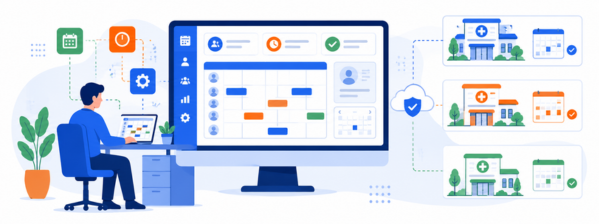
Between January and April, your capacity, not your calendar, is the real constraint. The appointment scheduling software we build for accountants caps how many returns each preparer takes per day, requires prior-year documents to be uploaded before a slot is confirmed, and separates individual, business, and advisory meetings. Off-season, the same system pushes planning and extension deadlines back into your booking flow.
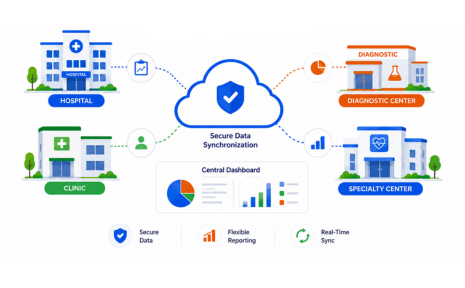
Once you pass a handful of locations, scheduling turns into a governance problem. Which services each site offers, which staff float between them, whose brand rules apply, and who sees which reports. We build multi-location booking platforms with location-level configuration under central control, so a new site launches from a template in days, and the head office still sees one clean view of demand.
Get a free proposal with real numbers, honest timelines, and no lock-in. Judge us on that.
Booking pages are easy. What breaks in production is everything underneath: overlapping availability rules, reminders you are legally allowed to send, and money that has to move before a slot is held. Here is what we build into software for appointment scheduling so it still works in month twelve, not just at launch.

Availability is a rules problem, not a calendar. We model provider eligibility, room and equipment limits, buffers, turnaround time, and recurring series, then lock slots atomically so two people can never claim the same one.

Every reminder carries a consent record. We capture opt-in at booking, honor revocation in any reasonable form under current FCC rules, respect quiet hours, and keep protected health details out of the message body.

Card on file, partial deposits, and cancellation windows enforced by the system rather than your receptionist. Payments run through tokenized gateways, so your booking appointment software keeps PCI scope to a minimum.

A late cancellation should not become an empty slot. When one opens, the system offers it to matched waitlist clients in order, first confirmation wins, and the calendar refills without a single phone call.

EHR and practice management systems, CRM, Google and Outlook calendars, video consults, payment gateways, and Reserve with Google. Where a native connector does not exist, we build the API layer and the webhooks.

Utilization by provider, no-show rate by service and time of day, booking source attribution, and revenue per available slot. The numbers you need to decide who to hire and when to open.
Most agencies use this space to sell you. We would rather you arrive at the call already knowing whether a custom build makes sense, because plenty of businesses that ask us are better served by something they can subscribe to. Here is how we tell the difference and what it costs you either way.
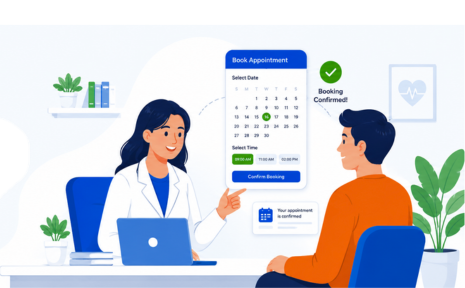
If you run one location, book one service type, and your rules fit inside a dropdown, the best appointment scheduling software for you is almost certainly something you can subscribe to today. We will tell you that on the first call. Custom work earns its cost when your availability logic, integrations, or data ownership requirements stop fitting a product built for everyone.
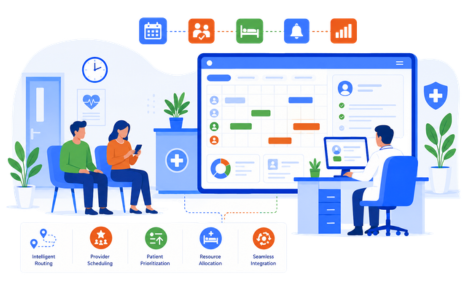
We do not publish a price because the same brief can vary several times over depending on four things: how many distinct booking rules you need, how many systems it has to talk to, whether patient or payment data brings compliance obligations, and how many user roles need their own interface. Scoping answers those questions in a couple of sessions, before anyone signs anything.
We release in phases rather than disappearing for six months. The first phase usually covers one service type, one location, and the booking and reminder flow, so you have something live and taking real appointments while the harder scheduling rules are still being built. Integrations, payments, and reporting follow in later phases against dates agreed upfront. You are never waiting on a big-bang launch.
Switching online booking appointment software is the part people underestimate. We export your existing appointments, clients, and history, run both systems in parallel through a full booking cycle, and reconcile the differences before we cut over. Future-dated appointments move with their reminders intact, so no client gets a duplicate confirmation or, worse, no confirmation at all. We plan the cutover for your quietest hours, not ours.
You do. The repository transfers to your organization, the database sits in your cloud account or ours, at your choice, and your client records are never pooled with another company’s. There is no per-seat ceiling that punishes you for hiring, and no export fee if you ever decide to take the platform to a different development partner. That last point is worth checking in any proposal you receive.
Scheduling systems reveal their edge cases in the first busy month, not in testing. Daylight saving time, a provider who works alternate Saturdays, and a holiday nobody configured. We stay on through that period as standard, then move to a support arrangement that fits how much you expect to change: monitoring and fixes only, or a rolling roadmap with a named engineer.
Scheduling systems hold some of the most sensitive data a business keeps: who is seeing a doctor, who is consulting a lawyer, and when. The bar for medical appointment booking software is not the bar for a salon page. We agree on which standards apply before anyone writes booking logic, then design to them.
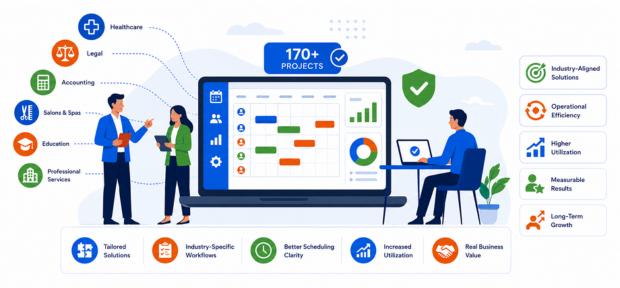
Patient appointment booking software carries obligations that a general booking page does not. We map yours at the start: HIPAA and a signed BAA where protected health information is involved; PCI DSS handled through tokenized gateways; SOC 2 and ISO 27001-aligned practices; role-based access, encryption in transit and at rest, and audit logs showing who viewed which record and when.
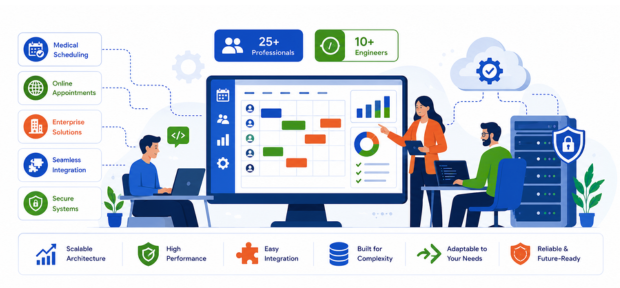
Booking pages for businesses with physical locations have drawn ADA accessibility claims in the US, and the risk is real enough that we do not treat it as optional. We build to WCAG 2.2 AA: keyboard-operable date pickers, screen reader labels on every time slot, visible focus states, and color contrast that survives your brand palette. It lifts mobile conversion too.
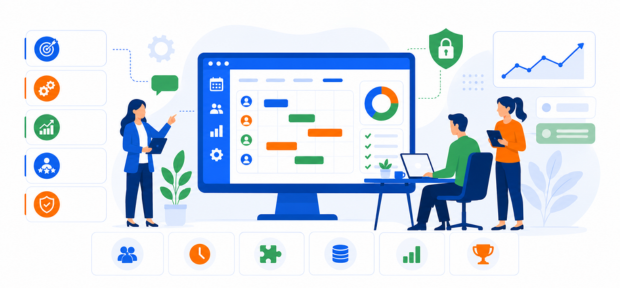
Six stages, none of them a black box. Discovery maps your booking rules and integrations. Design the prototype’s flow so you can click it before we build it. Build runs in two-week increments that you review. Verify covers load, security, and accessibility testing. Launch is phased. Support carries you through the first busy season. You work with the same engineers throughout.
A booking system almost never lives on its own. It reads from your client records, competes for the same staff and rooms your operations software manages, and usually needs a mobile app in front of it. These are the builds that most often start or finish alongside an appointment scheduling project.
When scheduling, records, and operations are built by the same team, they share one data model instead of syncing through fragile middleware. That is the difference between a client who books an appointment and a client whose entire history updates the moment they do.
Scheduling is one module of a working hospital system. We build the rest: patient records, admissions, billing, pharmacy, and lab workflows, connected to the same appointment data.
Every booking is a customer event. A custom CRM turns appointment history into follow-ups, recall campaigns, and retention reporting instead of rows nobody looks at again.
Staff, rooms, and equipment are finite. ERP software plans the capacity your booking system sells, so you stop overselling hours your team cannot actually deliver.
Most clients book from a phone. We build the customer app and the staff app that sit on top of your scheduling platform, sharing one login and one calendar.
Native iOS booking with push reminders, Apple Wallet passes for appointments, and Sign in with Apple, built to pass App Store review the first time.
Native Android apps for clients and field staff, with offline booking capture, Google Calendar sync, and reminder delivery that survives the aggressive battery optimization on Samsung and Xiaomi devices.
These are the questions that come up most often on first calls, answered the way we would answer them on the phone. If yours is not here, the fastest route is a short scoping call. We will tell you whether a custom build is worth it before we tell you what it would involve.