Most Android apps don’t fail at launch. They fail three months later, on a mid-range phone, in a market you never tested. That’s where our Android app developers focus. Our custom Android app development services are coded clean, performance measured on real hardware, and security scoped from day one. New build or inherited mess, we’ll tell you which one you actually have.
Companies that chose us for their digital transformation



















No two Android projects start from the same place. Some teams have a blank slate. Others have a codebase they’ve lost confidence in, or an app still running on Java. A few just need senior hands on a team already moving. Our custom Android app development services start by naming which one you’re in, because the right solution looks different in each.

You have an idea and a deadline. We handle discovery, architecture, and end-to-end Android apps development services through to your first Play Store release.

Crashes climbing, reviews falling, releases stalling. We audit the codebase, tell you honestly what's salvageable, and then stabilize or rebuild without pausing your roadmap.

Java, XML layouts, and an aging target API. We migrate to Kotlin and Compose incrementally, keeping your app shipping and Play Store compliant throughout.

Your roadmap is bigger than your team. We embed vetted Android developers into your existing sprints, tools, and code review standards within two weeks.
Most agencies show you a wall of tech stack logos. That tells you nothing about whether they’ve shipped anything difficult. Below is what we actually handle; in detail, a CTO or tech lead needs to evaluate us properly. If you’re comparing us against another Android mobile app development company, use these six areas as your checklist, and ask them the same questions.
There’s no single right stack. Kotlin with Jetpack Compose is our default for native Android because Google builds for it first. Java stays where your codebase and team already live. Kotlin Multiplatform when you’re sharing logic with iOS. Flutter or React Native when one team and one codebase are the honest economic answer. We decide with you in discovery, then hold the line on architecture regardless.
Whatever the stack, the discipline is the same. Modular structure instead of one sprawling app module. Clear separation between UI, domain, and data. Dependency injection so pieces can be swapped and tested. The test is simple: a new engineer opens the project, finds the feature they need, and changes it without breaking three others. Most inherited codebases we audit fail that test.
Flagship phones hide bad code. We profile on the mid and low tier too, where most of your install base actually sits. Baseline Profiles for startup time, Macrobenchmark for regressions, StrictMode for main-thread violations, and LeakCanary for the leaks that only show after twenty minutes of use. We target crash-free sessions above 99.5% and cold start under two seconds on mid-tier hardware.
Connectivity drops, and apps that assume otherwise lose data and trust. We design a local source of truth, queue writes for retry, and agree the conflict resolution rule with you before two devices ever edit the same record. On the server side we integrate with the CRMs, ERPs, and legacy APIs you already run or build the backend when you don’t have one.
Encryption at rest via EncryptedSharedPreferences and SQLCipher, keys held in the Android Keystore, certificate pinning on every API call, and Play Integrity to verify the app hasn’t been tampered with. For regulated work we map controls to HIPAA or SOC 2 requirements during discovery, not during an audit. We’ll also tell you when your compliance requirement doesn’t need the architecture someone quoted you.
From August 31, 2026, new apps and updates must target Android 16 (API 36), and existing apps must target at least Android 15 (API 35) to stay visible to new users. Miss it, and your listing quietly stops reaching new devices. We track these deadlines against your release calendar, keep the Data Safety form accurate, and handle policy rejections before they cost you a launch window.
Get a free proposal with real numbers, honest timelines, and no lock-in. Judge us on that.
If you’ve been researching how to develop an Android app, you’ve probably found plenty of theory and very little about what a real engagement looks like. Here’s ours. Every stage below lists what you receive, roughly how long it takes, and who works on it. Timelines reflect a mid-complexity build, and we’ll tell you up front if yours runs longer.
Duration: 1 to 2 weeks. We map features, users, and constraints, then challenge anything that doesn't earn its place. You leave with a scoped build, a fixed estimate, and a clear picture of what we're cutting.
2 to 4 weeks. Wireframes first, so we agree on structure before anyone argues about color. Then high-fidelity screens in Figma, built against Material 3 and your brand, with every state and edge case drawn.
Duration: 1 week. We choose the stack, design the data model, plan the API contracts, and decide the security approach. This is the week that prevents the six months of rework nobody budgets for.
Duration: 8 to 20 weeks. Two-week sprints, each ending with a build you can install and use. You see progress on a real device, not a status report. Change your mind between sprints, not mid-sprint.

Duration: Runs parallel to development, plus a 2-week final pass. Automated tests plus manual runs on a physical device matrix spanning current flagships, mid-range, and older budget hardware. We test on the phones your users actually own, not the ones on our shelf.

Duration: 1 week to launch, 30 days of monitoring. We handle Play Console setup, the Data Safety form, target API compliance, and staged rollout. Then we watch crash rates and reviews for thirty days and fix what the real world finds.
Most agencies make you get on a call before answering anything commercial. We’d rather you knew now. Below is how our Android app development services are structured, what shapes the price, who does the work, and who owns it at the end. If something here doesn’t fit your situation, that’s useful to know early.
Two models. A fixed-scope build, where discovery produces a defined feature set, a firm estimate, and a delivery date. Or an ongoing product partnership, where a dedicated team works on a roadmap in continuous sprints. Most first projects start fixed-scope, because you shouldn’t commit to a long partnership with an agency you haven’t worked with yet. We recommend the model that fits, not the one that bills the longest.
Screen count matters less than people assume. What moves the number is integration complexity, whether you need a backend built or already have one, compliance requirements like HIPAA, offline and sync behavior, and how much custom design versus Material components you want. We price after discovery, against your real scope, rather than quoting a range that means nothing. Tell us your budget, and we’ll tell you what fits inside it.
If you came here looking to hire an Android app developer, what you’ll get from us is a team instead. Android app developers, a QA specialist, a designer, and a project manager, all in-house and all on payroll. We don’t subcontract, and we don’t broker freelancers. The people in your kickoff call are the people writing your code. One team, start to finish, so nobody re-learns your product mid-build.
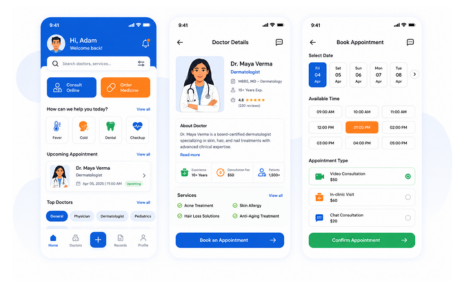
You get a named project manager, a shared Slack channel, and access to the board. Sprint demos every two weeks on a call, with written summaries in between. We hold a minimum four-hour overlap with your working day regardless of where your team sits, so questions get answered the same day rather than the next one. No account manager relaying messages to a team you never meet.
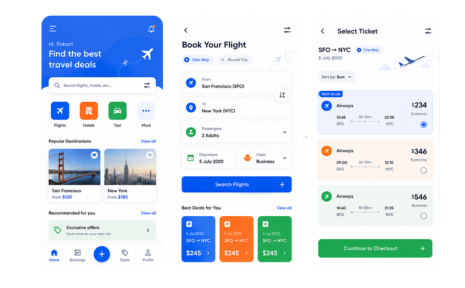
You do, completely, from the first commit. Source code, designs, documentation, and app store assets transfer to you on final payment, and the contract says so before you sign it. We work in your repository, where you have one. No proprietary frameworks you can’t leave, no licensing that makes switching to another Android app development company expensive later. Bringing the work in-house later is entirely possible.
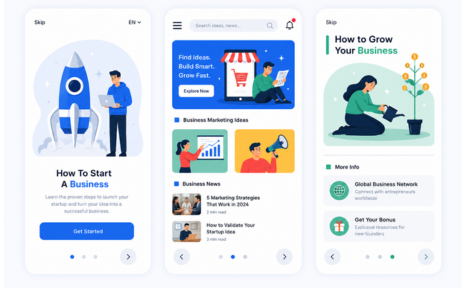
Thirty days of stabilization are included, covering crash fixes and issues real users surface. After that, most clients move to a monthly support retainer covering OS upgrades, target API compliance, security patches, and small feature work. Some hand off to an internal team instead, and we’ll run the handover properly, with documentation and walkthrough sessions. Leaving well is part of the service.
Every agency on this search page will tell you they’re award-winning and client-focused. None of it is checkable. So instead of adjectives, here are three things we do that you can verify before signing anything and that most competitors won’t offer. Ask any other Android app development agency the same three questions.
Discovery sometimes ends with us recommending a smaller app, a web tool, or nothing at all. We’ve walked away from projects where the numbers didn’t work for the client and said so before invoicing for a build. An agency that has never talked a client out of scope has never prioritized the client’s outcome over its own pipeline. Ask for an example. We’ll give you one.
Before you commit to a full build, run a paid two-week sprint with us. You get real working code, a working relationship you can judge, and an exit with no obligation. Most competitors want a signed statement of work covering six months. If an Android app development firm won’t let you test-drive the team, ask why. Two weeks tells you more than any case study.
Delivery isn’t the finish line. We track crash-free rate, cold start time, and thirty-day retention after your app goes live, and we report them to you on whether they look good or not. Any top Android app development company can hit a launch date. Fewer will show you what happened to the app three months later. That report is where our reputation actually gets made.
Most projects don’t stop at one platform. An Android build often arrives alongside an iOS app, a design system that doesn’t exist yet, or a backlog of maintenance nobody owns. These are the services that usually sit next to Android mobile app development, and the same in-house team handles all of them.
Split your product across three vendors, and you’ll spend your time refereeing between them. When the same team builds your Android app, your iOS app, and the backend they share, integration problems become our problem to solve rather than yours to arbitrate.
The other half of your mobile product. Native Swift, built by the same team to the same standards, so both apps behave consistently and ship on the same cycle.
One codebase for Android and iOS when the economics justify it. We'll tell you honestly whether Flutter fits your product or whether native is the better call.
Useful when your team already lives in JavaScript or you need both platforms fast. We build it properly, with native modules where performance actually demands them.
The smallest version that proves your idea works. Scoped in weeks rather than months, built to be extended, not thrown away when the funding round closes.
OS upgrades, target API deadlines, security patches, and the small fixes that pile up. For your app, or for one another's agency-built and left behind.
Research, wireframes, and a design system built against Material 3 and Human Interface Guidelines. Available on its own if you already have engineers but no designer.
These are the ten questions that come up on almost every Android project, answered the way we’d answer them on a call rather than the way marketing teams usually write FAQs. If your question isn’t here, ask us directly. You’ll get a straight answer, not an invitation to a discovery call.