
Hospital Management System in Delhi: Features, Benefits, Pricing & How to Choose the Best Software

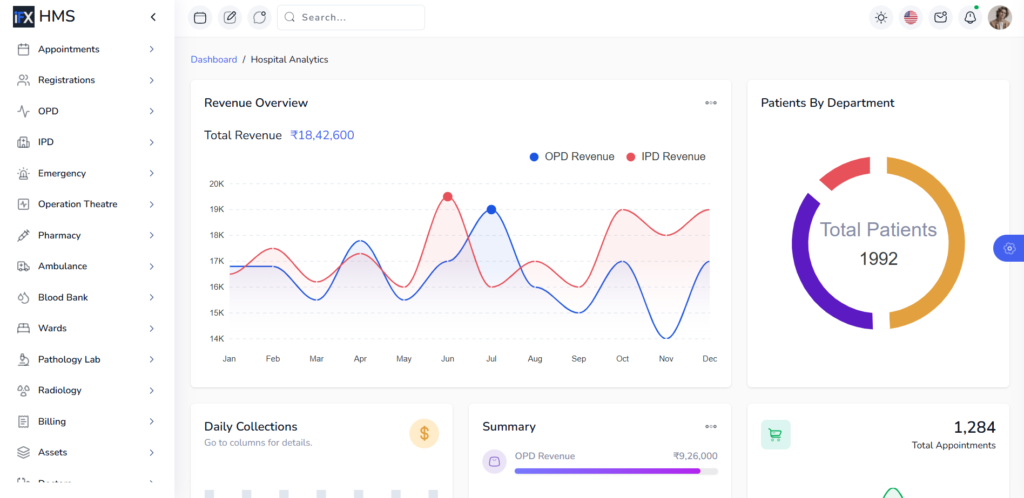
The healthcare industry in Delhi is evolving rapidly, with hospitals, clinics, diagnostic centers, and nursing homes serving thousands of patients every day. Managing patient records, appointments, billing, pharmacy, laboratory reports, and administrative tasks manually is no longer practical. Manual processes often lead to paperwork, delayed services, billing errors, and difficulties in accessing patient information when it is needed the most. As healthcare providers focus on delivering better patient care while improving operational efficiency, adopting a reliable Hospital Management System (HMS) has become a necessity rather than a choice.
A Hospital Management System is an all-in-one software solution designed to simplify and automate the daily operations of healthcare facilities. It brings together essential functions such as patient registration, appointment scheduling, electronic medical records, billing, pharmacy management, laboratory integration, inventory control, and reporting on a single platform. By digitizing these processes, hospitals can reduce administrative workload, improve communication between departments, enhance data accuracy, and deliver faster, more personalized patient care. Whether you operate a small clinic or a multi-specialty hospital in Delhi, investing in the right HMS software can increase productivity, improve patient satisfaction, and support long-term business growth.
What is a Hospital Management System (HMS)?
A Hospital Management System (HMS) is a comprehensive software solution that helps healthcare organizations manage their daily clinical, administrative, and financial operations from a single platform. It is designed to automate routine tasks, improve communication between departments, and ensure that patient information is stored securely and can be accessed whenever required. From patient registration and appointment scheduling to billing, pharmacy, laboratory, and discharge management, an HMS simplifies complex workflows and allows hospitals to provide faster and more efficient healthcare services.
Definition of Hospital Management Software
Hospital Management Software is a digital system that integrates multiple hospital functions into one centralized platform. Instead of maintaining separate records for admissions, billing, pharmacy, laboratory, and inventory, healthcare providers can access and manage all essential information through a single dashboard. This reduces paperwork, minimizes human errors, improves operational efficiency, and enhances the overall patient experience.
How HMS Works
An HMS connects every department within a healthcare facility through a shared database. When a patient is registered, their information becomes available to authorized departments such as reception, doctors, laboratory, pharmacy, radiology, billing, and administration. As the patient moves through different stages of treatment, the system updates records in real time. This ensures seamless coordination, accurate billing, faster report generation, and better clinical decision-making while maintaining complete data security.
Difference Between HMS, HIS & EMR
Although the terms HMS, HIS, and EMR are often used interchangeably, they serve different purposes. A Hospital Management System (HMS) focuses on managing both clinical and administrative operations, including appointments, billing, pharmacy, inventory, and patient records. A Hospital Information System (HIS) is a broader enterprise-level platform that connects multiple departments, facilities, and healthcare processes across an organization. An Electronic Medical Record (EMR), on the other hand, primarily stores a patient’s medical history, diagnoses, prescriptions, treatment plans, and clinical notes. In simple terms, an EMR is a clinical records component, while an HMS and HIS offer complete hospital management capabilities.
Why Hospitals in Delhi Need Hospital Management Software
Delhi’s healthcare sector is expanding rapidly, with hospitals, clinics, and diagnostic centers handling an increasing number of patients every day. As healthcare demands continue to grow, managing appointments, medical records, billing, inventory, and communication through manual methods becomes time-consuming and prone to errors. A Hospital Management System (HMS) enables healthcare providers to streamline operations, improve service quality, and deliver a seamless patient experience while maintaining compliance and data security.
Increasing Patient Volume
Hospitals in Delhi often experience high patient footfall, making it difficult to manage registrations, consultations, admissions, and discharge processes manually. An HMS automates these workflows, helping healthcare staff handle larger patient volumes efficiently without compromising the quality of care.
Digital Healthcare Transformation
The healthcare industry is embracing digital technologies to improve accessibility, accuracy, and operational efficiency. Hospital Management Software supports this transformation by replacing paper-based processes with secure digital records, automated workflows, and real-time information sharing across departments.
Faster Patient Services
From online appointment booking and quick patient registration to instant billing and laboratory report access, an HMS significantly reduces waiting times. Faster services improve patient satisfaction and allow medical professionals to focus more on treatment rather than administrative tasks.
Better Record Management
Maintaining patient records manually can lead to misplaced files, duplicate entries, and delayed access to important information. A centralized HMS securely stores patient histories, prescriptions, diagnostic reports, and treatment records, making them easily accessible to authorized healthcare professionals whenever required.
Reduced Operational Costs
By automating repetitive administrative tasks, minimizing paperwork, reducing billing errors, and optimizing inventory management, Hospital Management Software helps healthcare facilities lower operational expenses. Efficient resource utilization also improves productivity, allowing hospitals and clinics to deliver high-quality healthcare while controlling overall costs.
Key Features of a Hospital Management System
A modern Hospital Management System (HMS) is designed to simplify hospital operations by connecting every department through a single digital platform. It improves workflow efficiency, minimizes manual errors, enhances patient care, and provides healthcare administrators with complete control over clinical and administrative activities. Below are the essential features that every reliable hospital management software should offer.
Patient Registration
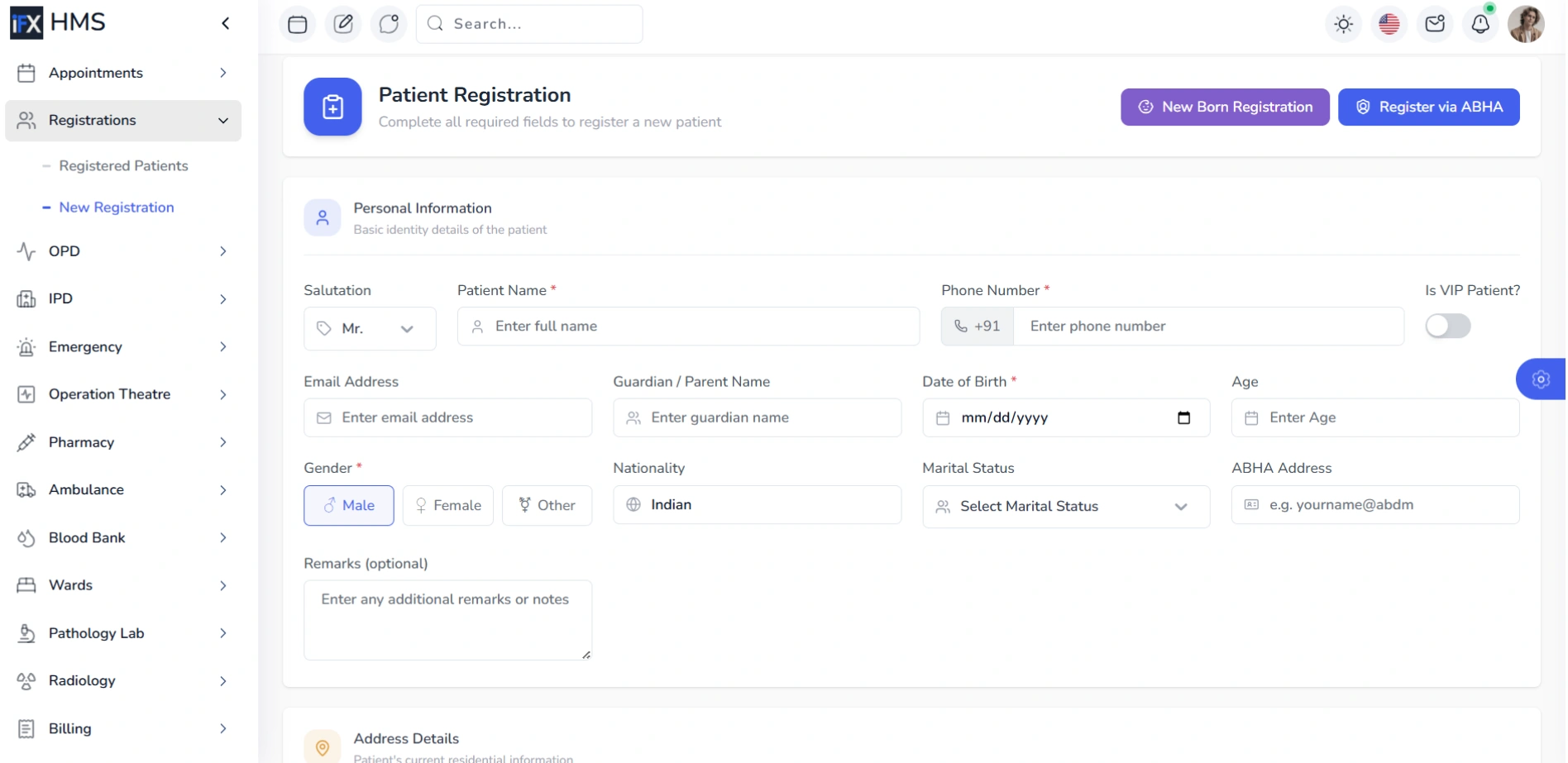
The system enables quick patient registration with unique patient IDs, demographic details, medical history, and contact information, reducing paperwork and saving valuable time.
OPD Management
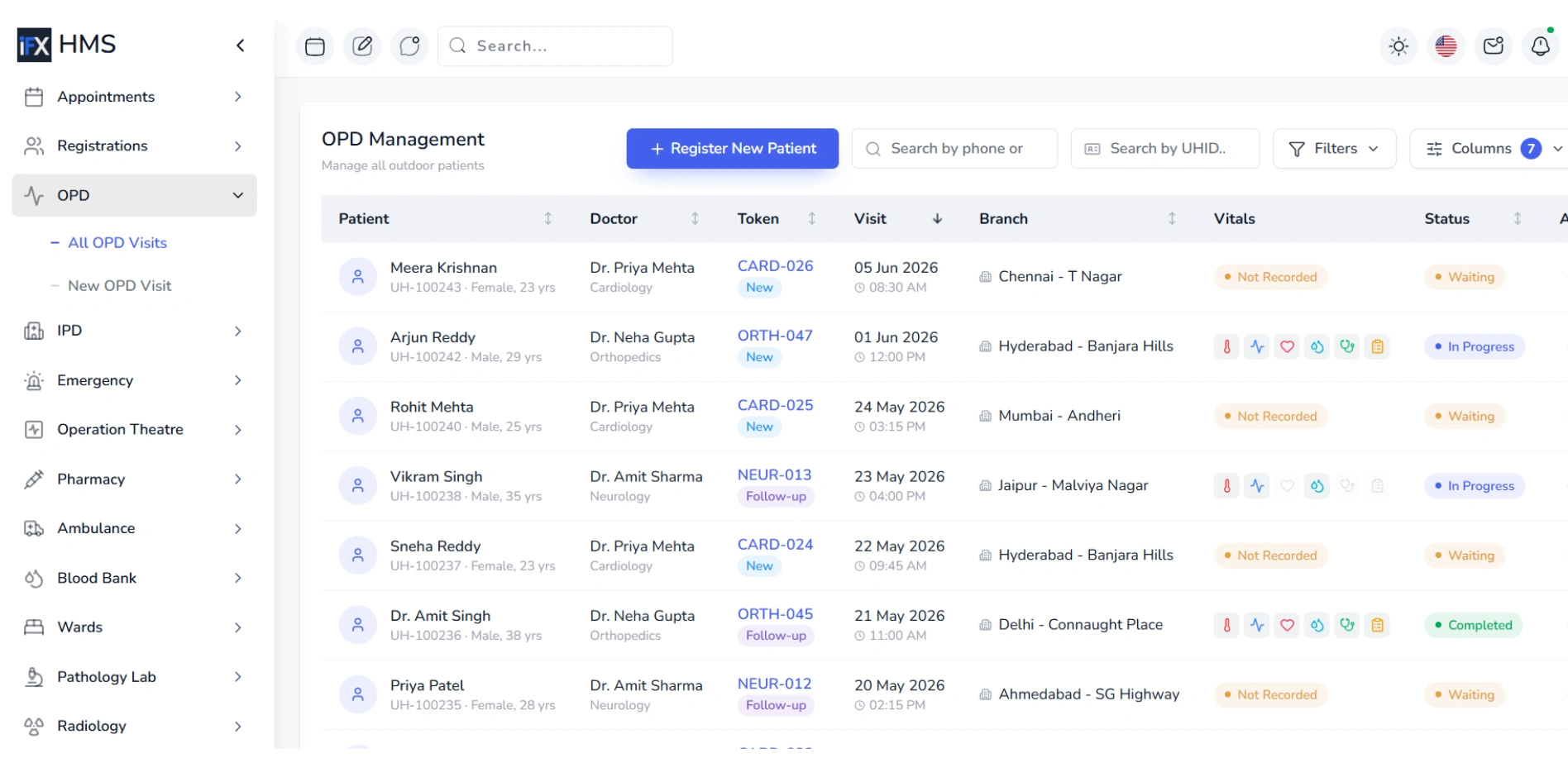
OPD management streamlines outpatient consultations by managing registrations, appointments, doctor consultations, prescriptions, and follow-up visits from one centralized dashboard.
IPD Management
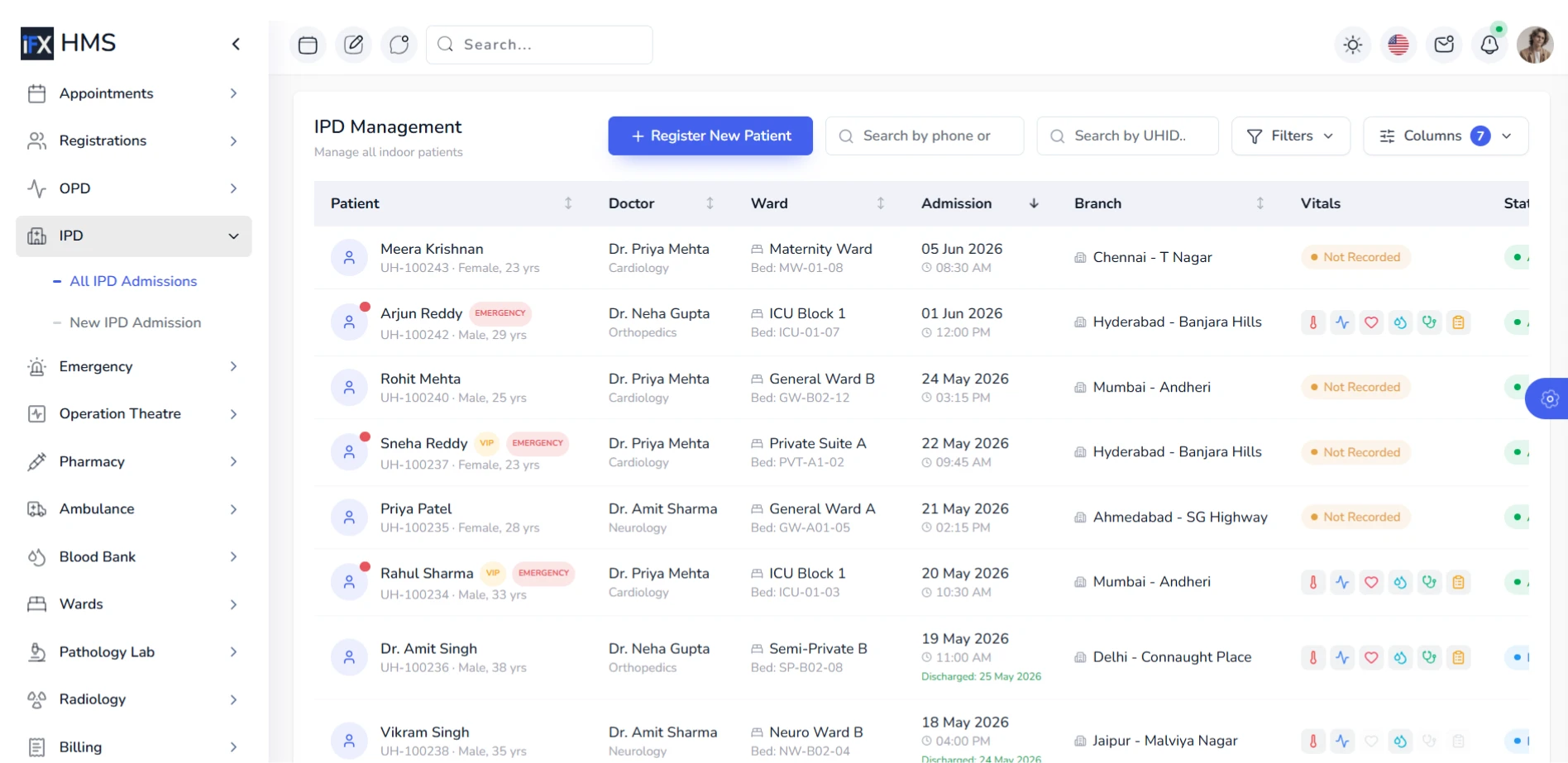
IPD management helps hospitals efficiently handle patient admissions, bed allocation, nursing records, treatment plans, discharge summaries, and billing for admitted patients.
Appointment Scheduling
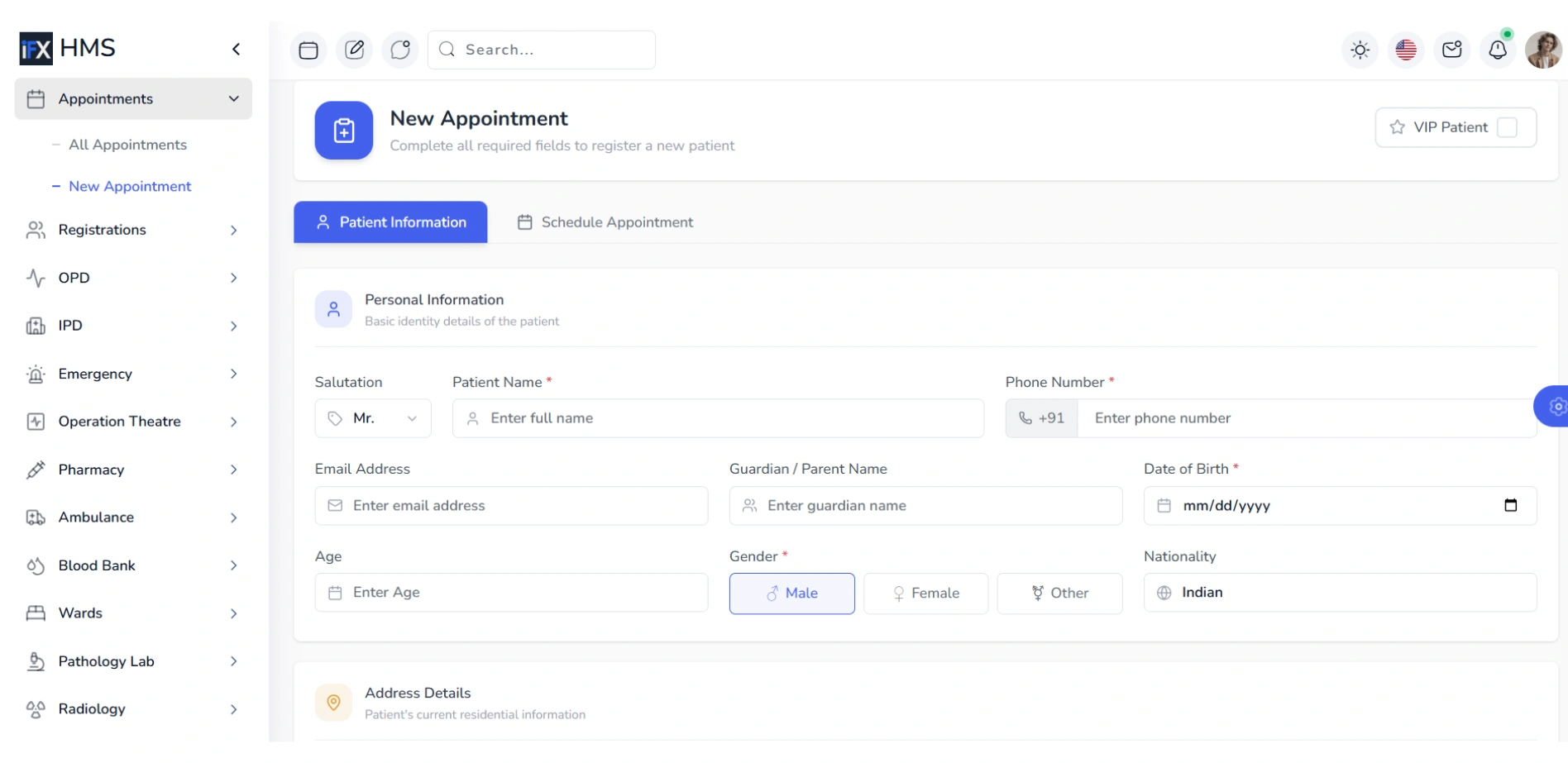
Patients can book appointments easily while hospital staff can manage doctor availability, appointment reminders, cancellations, and rescheduling without scheduling conflicts.
Doctor Management
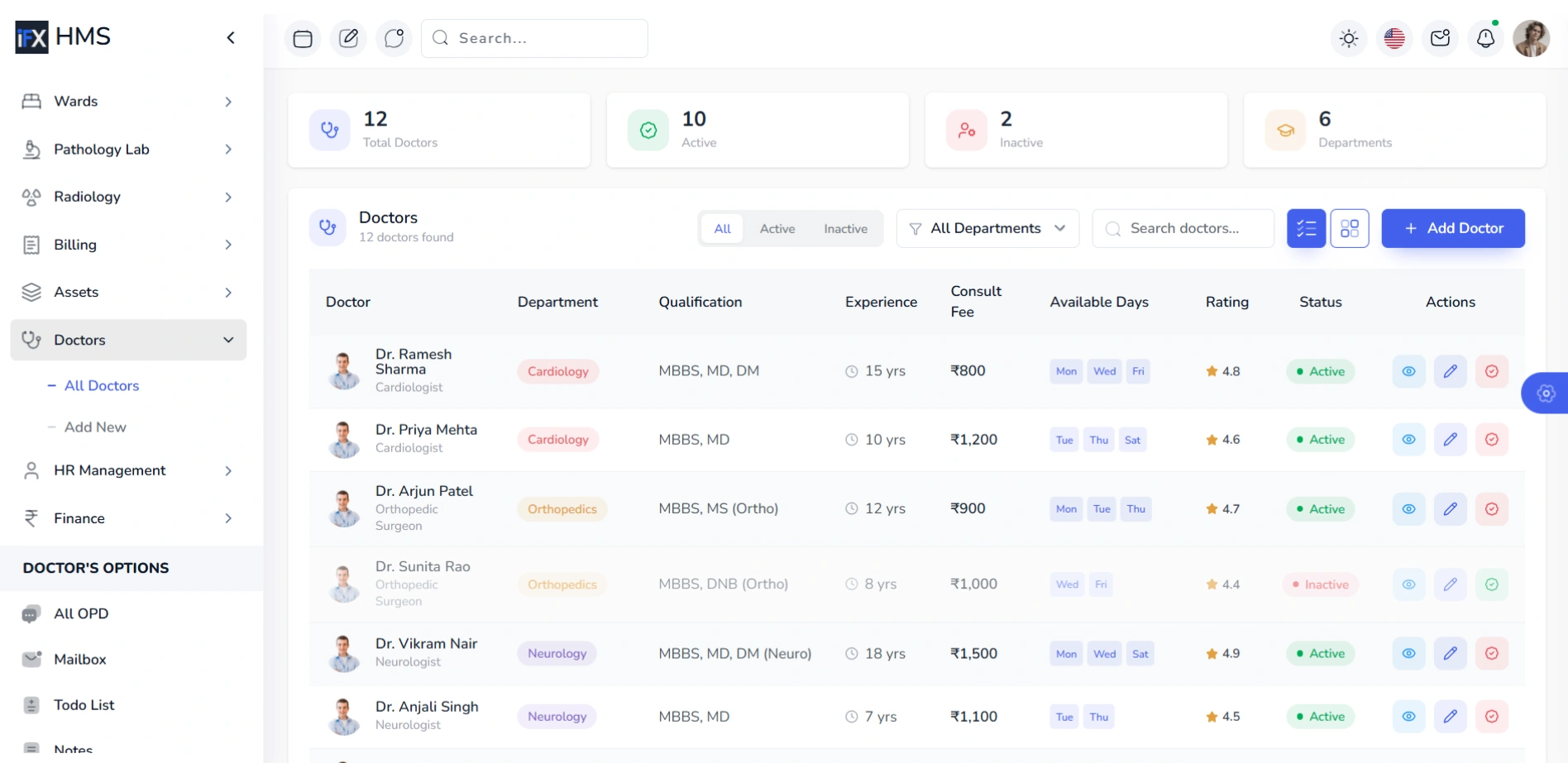
This feature maintains doctor profiles, consultation schedules, specialties, attendance, and patient assignments, ensuring smooth coordination between medical professionals.
Electronic Medical Records (EMR)
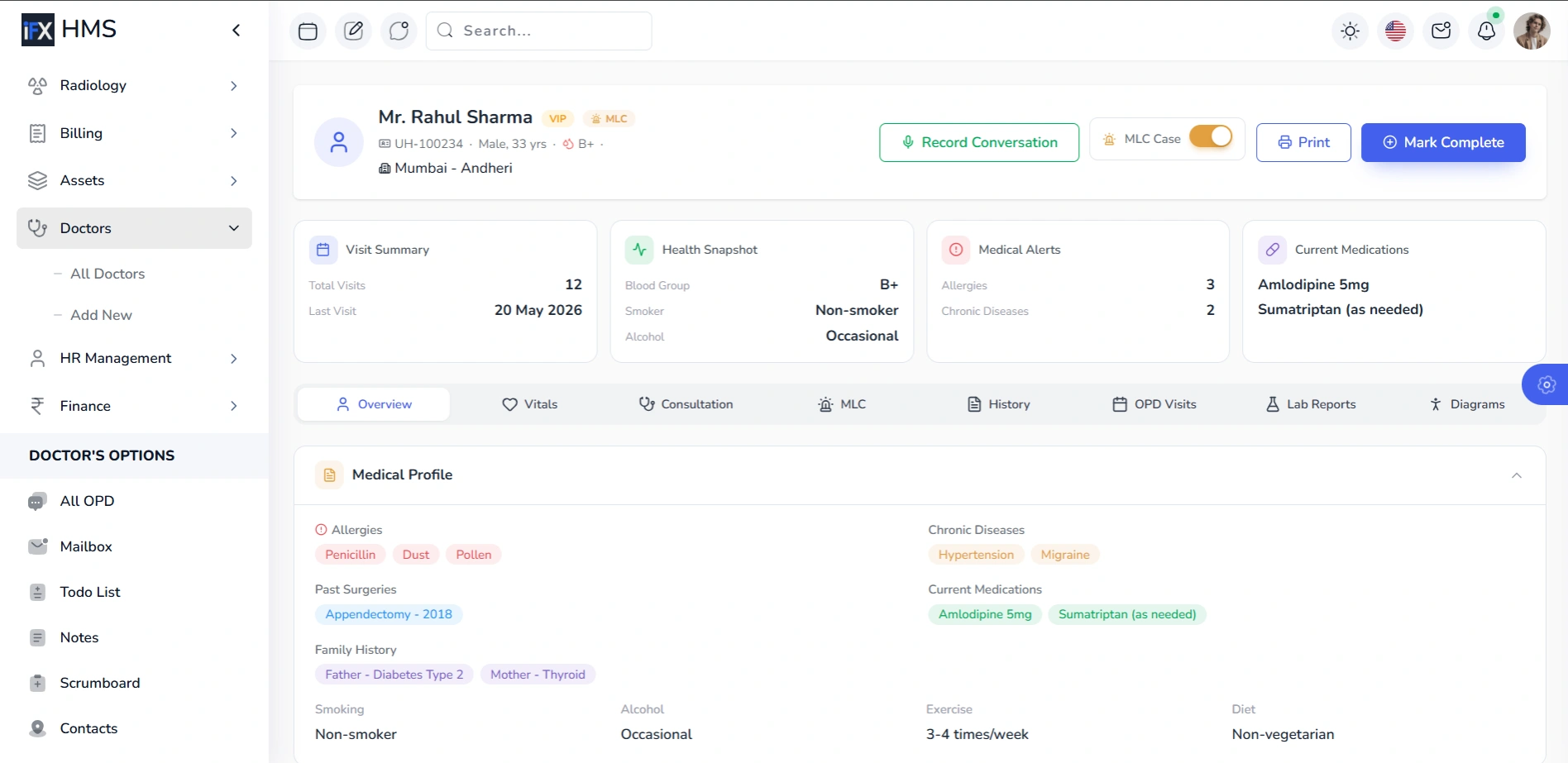
EMR stores patient diagnoses, prescriptions, laboratory reports, allergies, treatment history, and clinical notes in a secure digital format, allowing doctors to access complete medical information instantly.
Pharmacy Management
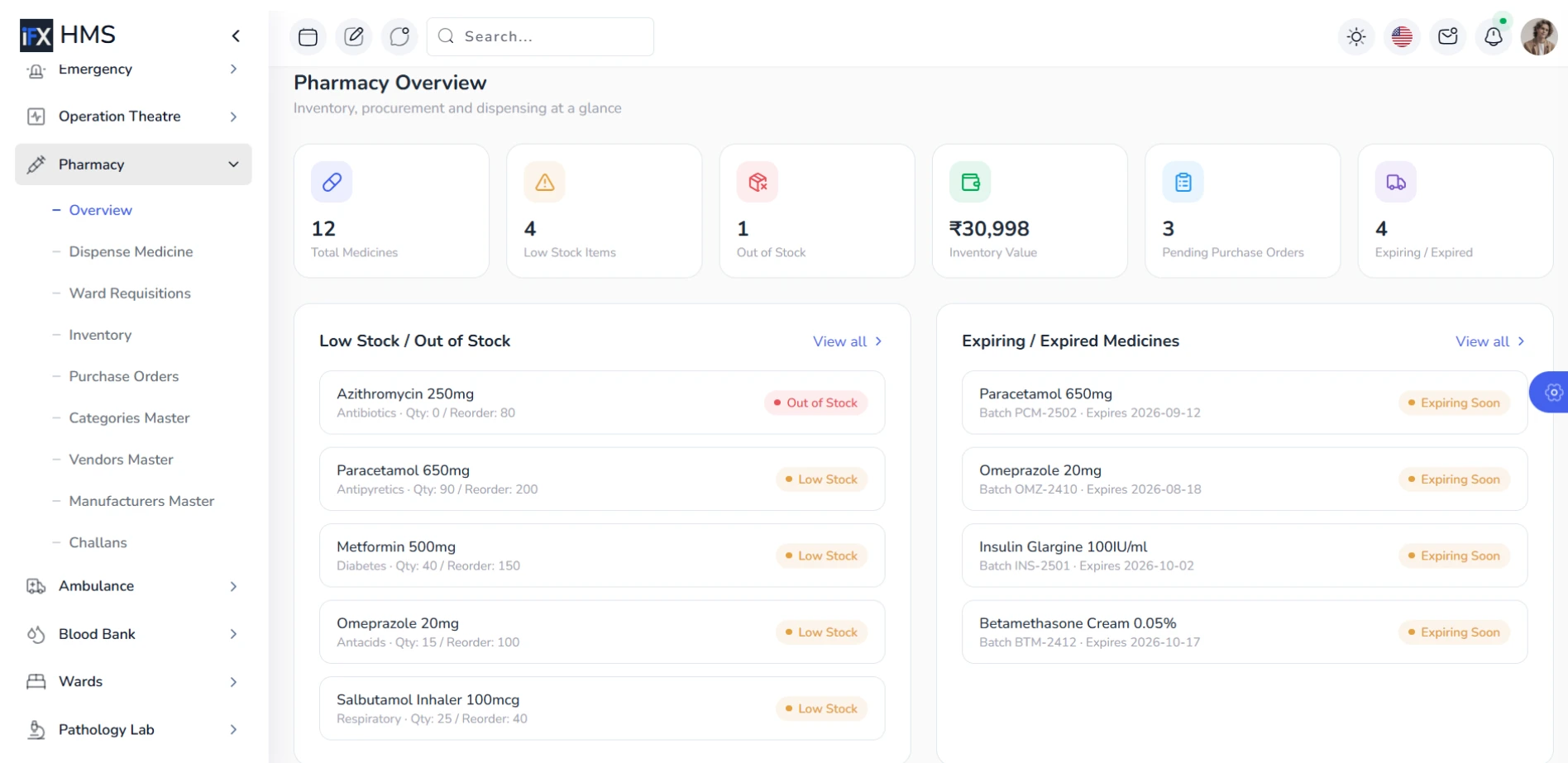
The pharmacy module manages medicine inventory, stock levels, purchase records, prescriptions, expiry tracking, and billing to ensure uninterrupted medicine availability.
Path Laboratory Management
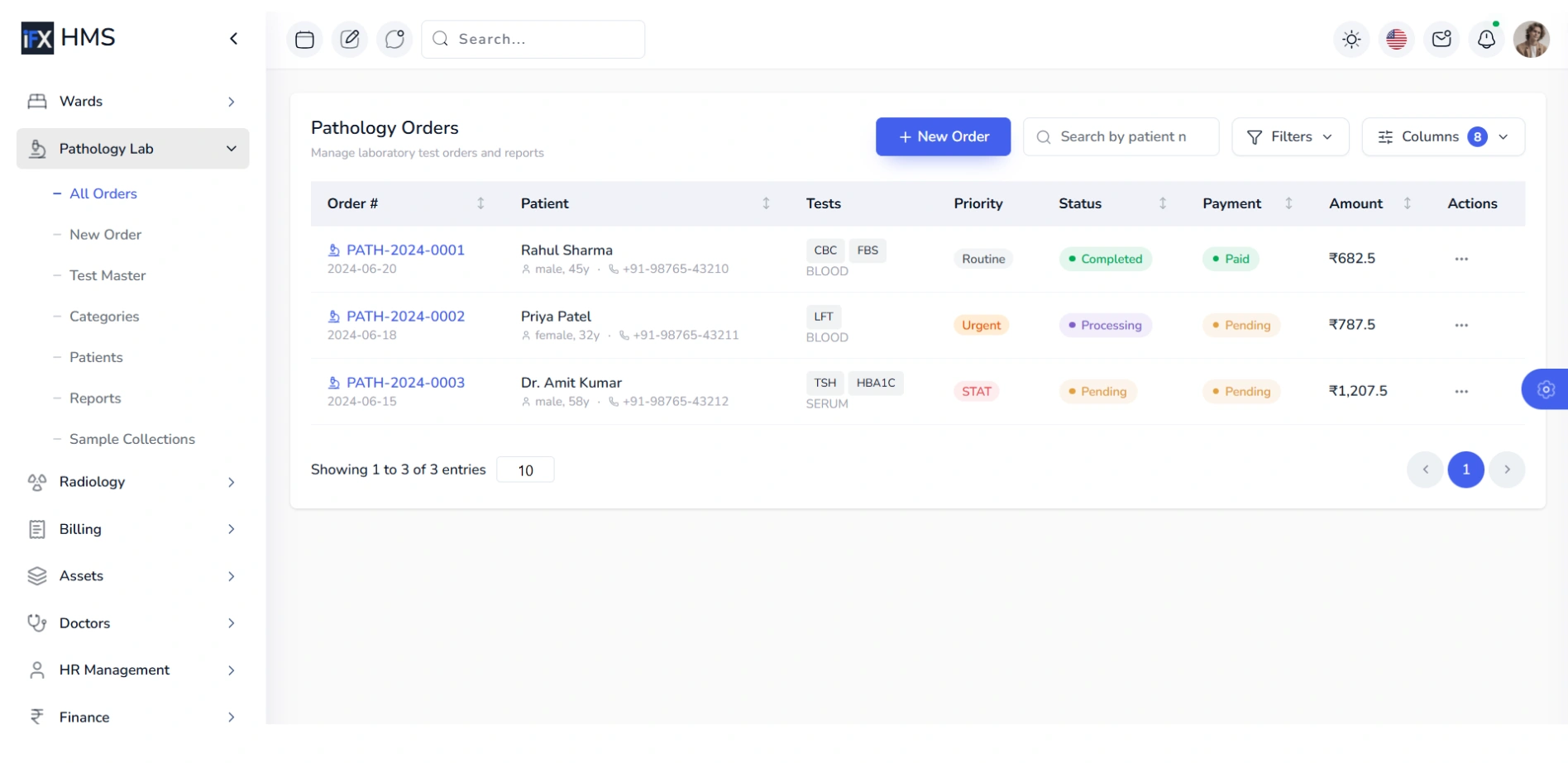
Laboratory management automates test requests, sample tracking, report generation, and result sharing, improving diagnostic efficiency and reducing turnaround time.
Radiology Integration
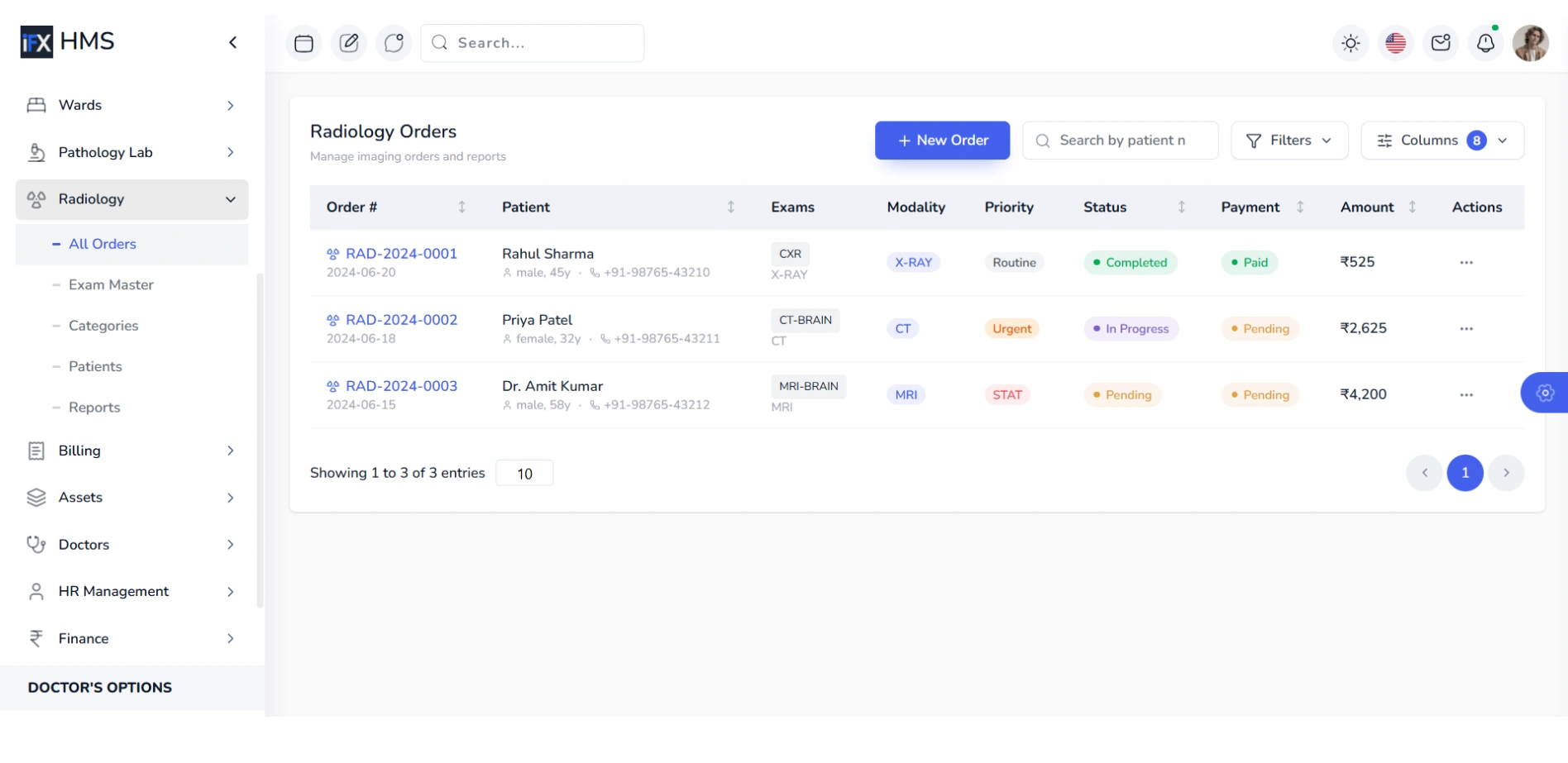
Integration with radiology departments enables scheduling of imaging tests, report management, digital image storage, and seamless sharing of diagnostic results with physicians.
Billing & GST Invoicing
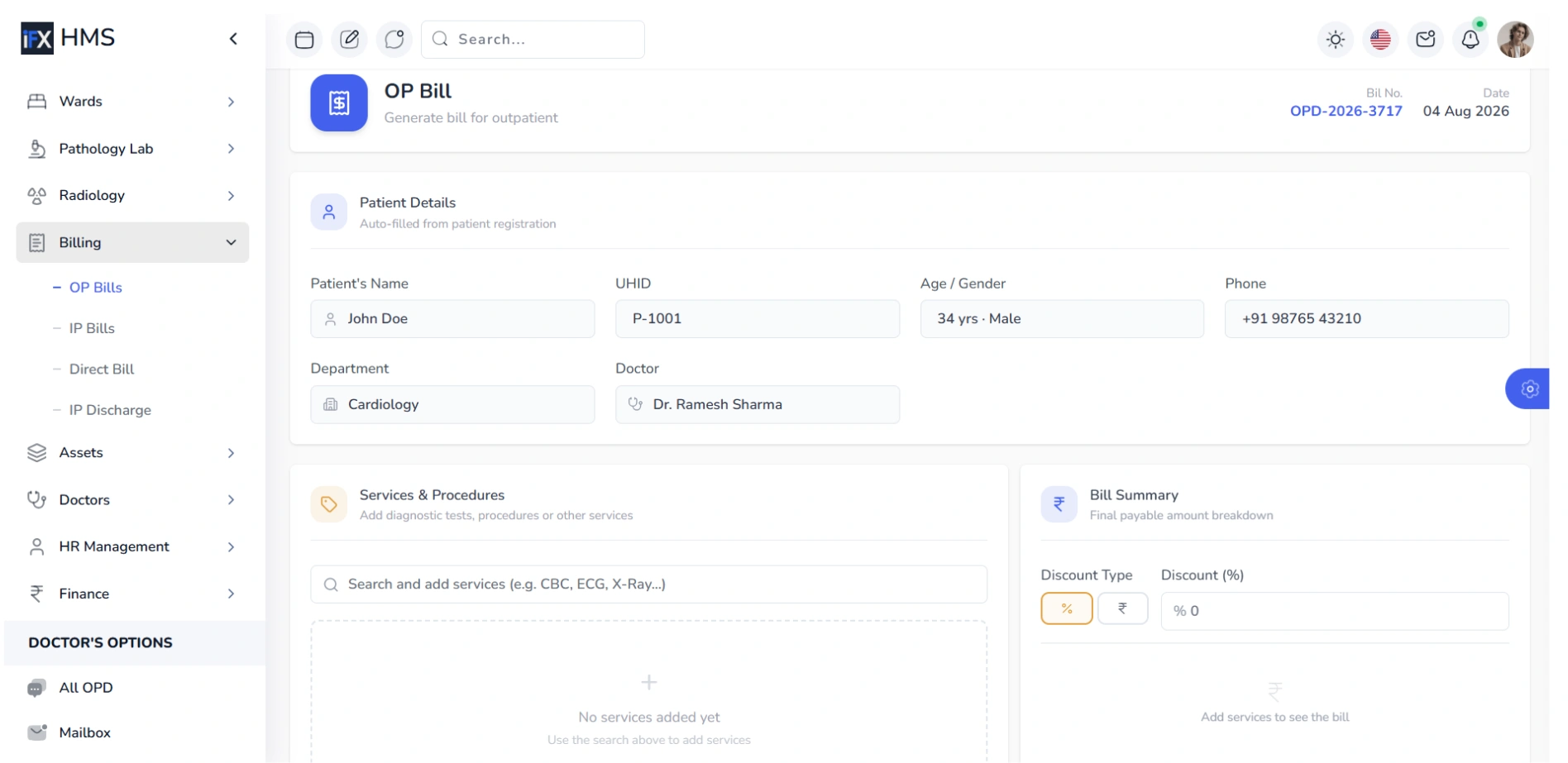
The billing module generates accurate invoices for consultations, treatments, laboratory tests, pharmacy purchases, and room charges while supporting GST-compliant billing and multiple payment methods.
Insurance & TPA Management
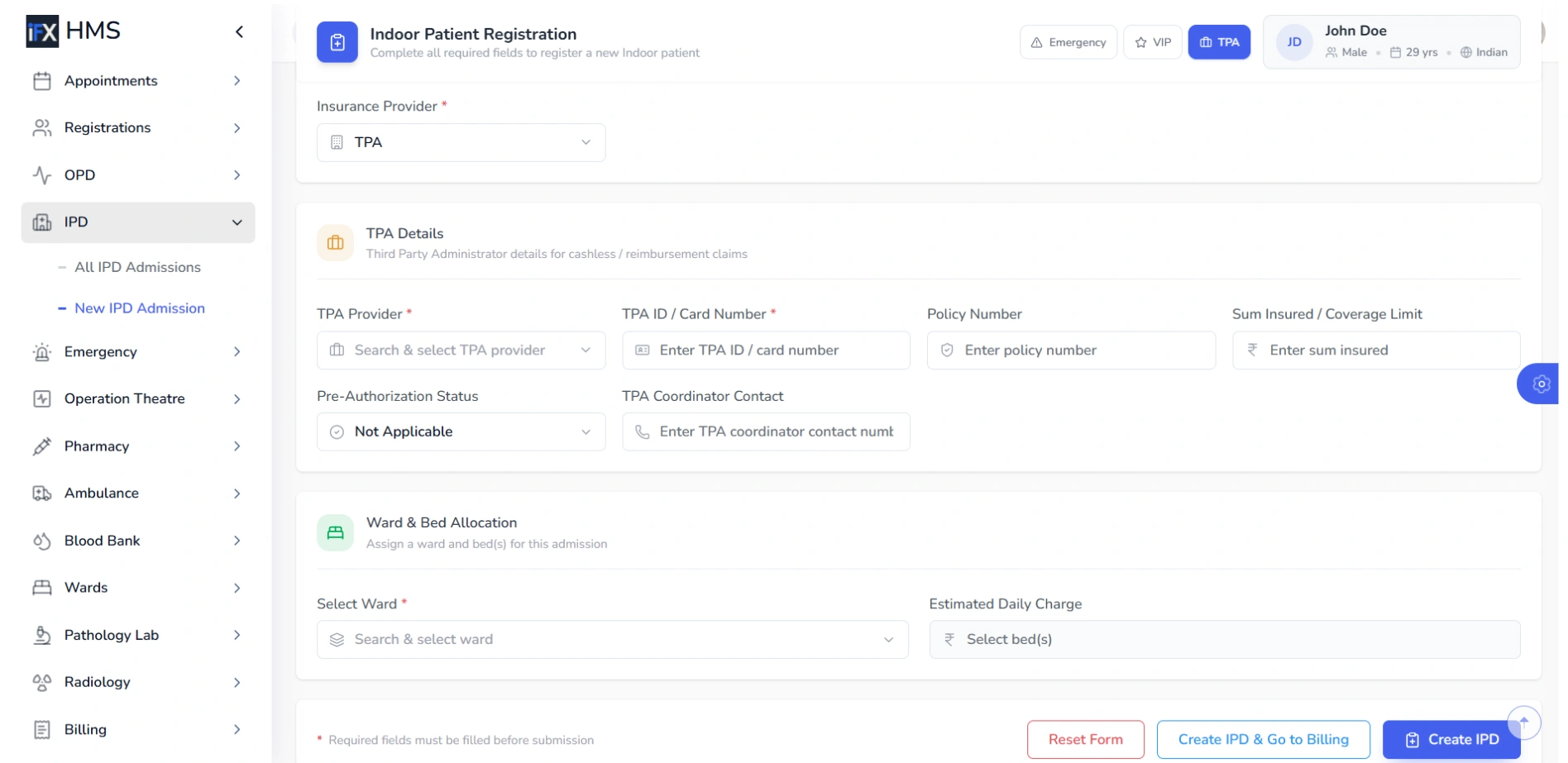
The software simplifies insurance claim processing by maintaining policy details, cashless approvals, claim documentation, and Third-Party Administrator (TPA) coordination.
Asset Management
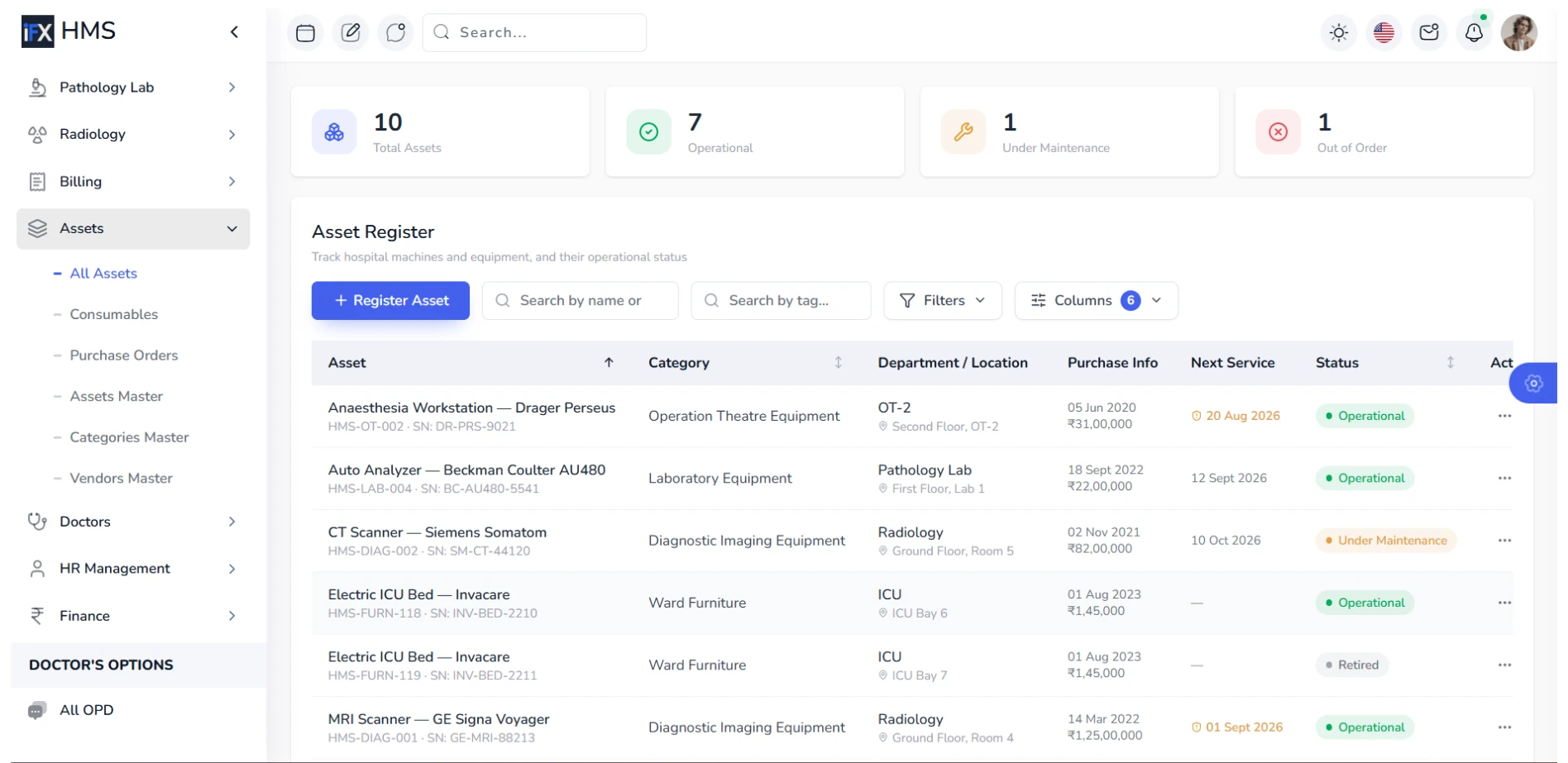
Asset management tracks medical equipment, consumables, surgical supplies, and stock movement, helping hospitals avoid shortages, overstocking, and unnecessary procurement costs.
HR & Payroll
The HR module manages employee records, attendance, shift scheduling, leave management, payroll processing, and performance tracking for hospital staff.
Reports & Analytics
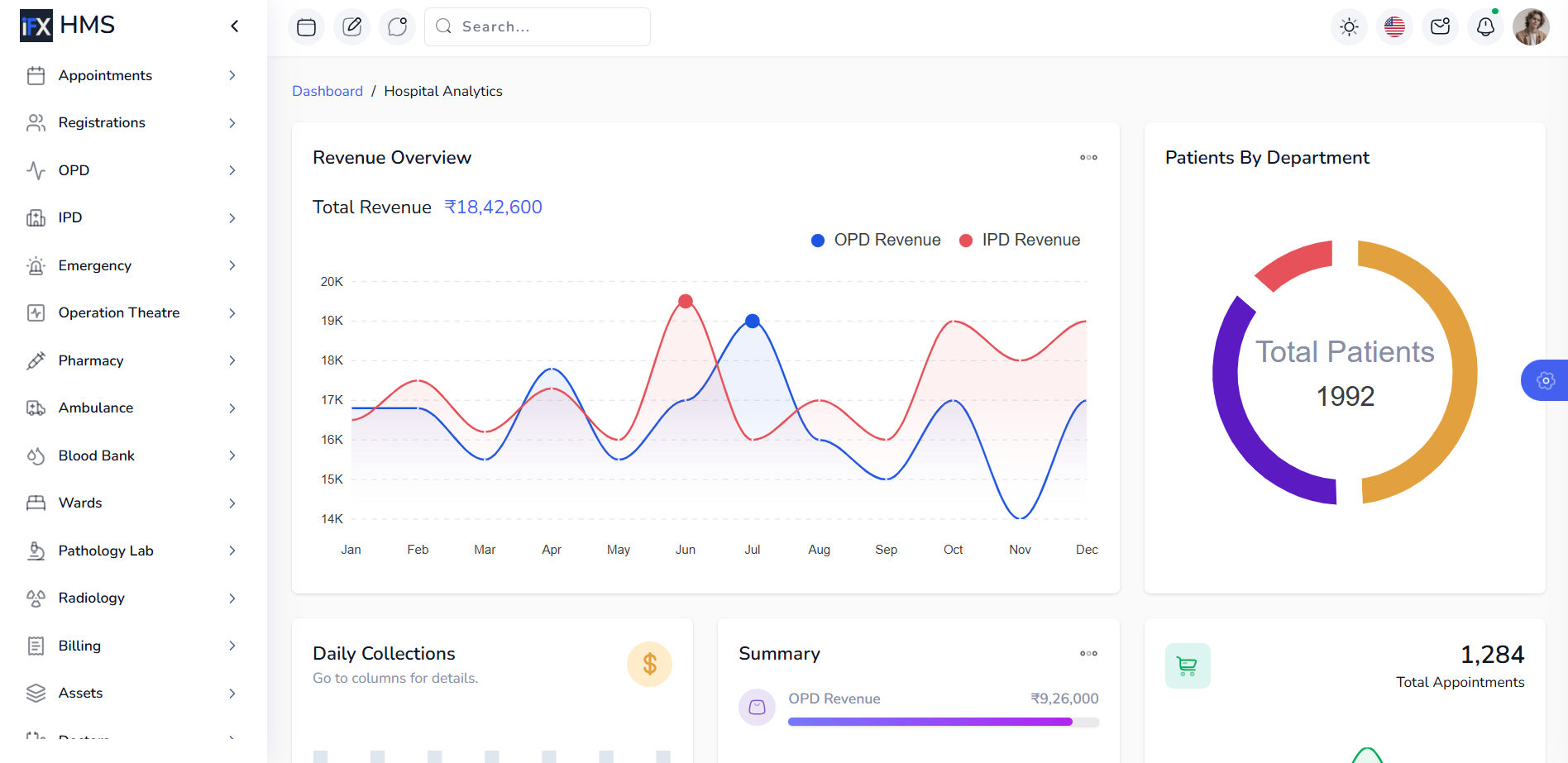
Real-time dashboards and analytical reports provide valuable insights into patient statistics, revenue, department performance, occupancy rates, and operational efficiency, supporting better decision-making.
Mobile App Integration
Mobile access allows doctors, staff, and patients to view appointments, medical records, prescriptions, reports, and notifications anytime, improving communication and convenience.
Cloud-Based Access
Cloud-enabled Hospital Management Software allows authorized users to securely access hospital data from any location with an internet connection. It offers automatic backups, enhanced data security, easy software updates, and seamless management of single or multiple hospital branches without investing in expensive on-site infrastructure.
Cloud-Based vs On-Premise Hospital Management Software
Choosing between a cloud-based and an on-premise Hospital Management System (HMS) is an important decision for any healthcare organization. Both deployment models offer unique advantages, and the right choice depends on factors such as hospital size, budget, IT infrastructure, data management preferences, and future expansion plans. Understanding the differences between these two options helps hospitals invest in a solution that aligns with their operational and long-term business goals.
Cloud HMS Advantages
A cloud-based Hospital Management System is hosted on secure remote servers and can be accessed through the internet from any authorized device. It requires minimal upfront investment because hospitals do not need to purchase expensive servers or maintain complex IT infrastructure. Automatic software updates, regular data backups, enhanced security measures, and remote accessibility make cloud HMS an ideal choice for hospitals with multiple branches or healthcare professionals who need access to patient information from different locations. It also offers excellent scalability, allowing organizations to add users and features as they grow.
On-Premise HMS Advantages
An on-premise Hospital Management System is installed and managed on the hospital’s own servers. This option provides complete control over data storage, security policies, and system customization. Healthcare organizations with dedicated IT teams and strict internal compliance requirements often prefer on-premise deployment because it allows them to manage software updates, server configurations, and sensitive patient data within their own infrastructure. It can also operate independently of internet connectivity for internal hospital operations.
Which One is Best for Delhi Hospitals?
For most hospitals, clinics, diagnostic centers, and nursing homes in Delhi, a cloud-based HMS offers greater flexibility, lower maintenance costs, faster implementation, and easier scalability. It is particularly beneficial for growing healthcare organizations that require secure remote access and seamless integration across departments. However, large hospitals with advanced IT infrastructure, specialized security requirements, or highly customized workflows may find an on-premise solution more suitable. Evaluating operational needs, available resources, and future growth plans will help healthcare providers select the most effective Hospital Management Software for their organization.
Who Can Use Hospital Management Software?
Hospital Management Software is a versatile solution designed to meet the operational needs of healthcare organizations of all sizes. Whether it is a small private clinic or a large multi-specialty hospital, an HMS helps automate administrative tasks, improve patient care, streamline billing, and maintain accurate medical records. With customizable modules and scalable features, the software can be tailored to suit different healthcare specialties and workflows.
Multi-Specialty Hospitals
Large hospitals with multiple departments can use HMS to manage patient admissions, consultations, surgeries, pharmacy, laboratory services, billing, inventory, and interdepartmental coordination through a single integrated platform.
Clinics
General physicians and specialty clinics can simplify appointment scheduling, patient registration, consultation records, prescriptions, billing, and follow-up management, allowing doctors to focus more on patient care.
Nursing Homes
Nursing homes can efficiently manage inpatient care, bed occupancy, nursing notes, medication schedules, discharge summaries, and financial transactions using a centralized digital system.
Diagnostic Centers
Diagnostic laboratories and imaging centers benefit from automated test bookings, sample tracking, report generation, online report delivery, and seamless integration with hospital and clinic systems.
Dental Clinics
Dental practices can organize patient histories, treatment plans, X-ray records, appointment reminders, billing, and recurring dental care schedules with greater efficiency.
IVF Centers
IVF clinics can securely manage patient records, treatment cycles, laboratory procedures, medication schedules, donor information, and consultation history while ensuring complete confidentiality.
Eye Hospitals
Ophthalmology hospitals can maintain vision test records, surgical schedules, optical inventory, prescriptions, follow-up appointments, and diagnostic imaging within a single software platform.
Government Hospitals
Government healthcare facilities can use Hospital Management Software to improve patient registration, resource allocation, departmental coordination, reporting, inventory management, and public healthcare service delivery. By digitizing daily operations, government hospitals can reduce paperwork, increase transparency, and provide faster, more efficient medical services to a larger population.
How to Choose the Best Hospital Management System in Delhi
Selecting the right Hospital Management System (HMS) is a crucial decision that can significantly impact the efficiency and quality of healthcare services. With numerous software solutions available in the market, hospitals and clinics in Delhi should evaluate their specific operational requirements before making an investment. A reliable HMS should not only streamline day-to-day processes but also support future growth, ensure data security, and enhance the overall patient experience. By considering the following factors, healthcare providers can choose a solution that delivers long-term value and improves operational performance.
Easy-to-Use Interface
A user-friendly interface allows doctors, nurses, receptionists, and administrative staff to navigate the system with minimal training. An intuitive design improves productivity, reduces errors, and speeds up daily hospital operations.
Customizable Modules
Every healthcare facility has unique requirements. The best Hospital Management Software should offer customizable modules that can be tailored for departments such as OPD, IPD, pharmacy, laboratory, billing, inventory, and human resources.
Data Security
Patient information is highly confidential and must be protected at all times. Choose an HMS that provides secure user authentication, role-based access, data encryption, regular backups, and compliance with healthcare data protection standards.
Technical Support
Reliable technical support is essential for uninterrupted hospital operations. Look for a software provider that offers timely assistance, software maintenance, user training, and regular updates to resolve issues quickly.
Cloud Backup
Cloud backup ensures that critical hospital data remains secure even in the event of hardware failures or unexpected system issues. Automatic backups also help hospitals recover data quickly without disrupting patient services.
Mobile Accessibility
A mobile-friendly HMS enables doctors and hospital administrators to access patient records, appointments, reports, and notifications from smartphones or tablets, providing greater flexibility and faster decision-making.
Scalability
As hospitals expand their services or open new branches, the software should easily accommodate additional users, departments, and advanced features without requiring a complete system replacement.
Integration Capabilities
The ideal Hospital Management System should seamlessly integrate with laboratory equipment, radiology systems, pharmacy software, accounting tools, payment gateways, insurance platforms, SMS and WhatsApp notifications, and government healthcare initiatives. Strong integration capabilities improve workflow efficiency, eliminate duplicate data entry, and ensure smooth communication across every department.
Essential Integrations Every Modern HMS Should Support
A modern Hospital Management System (HMS) is most effective when it seamlessly integrates with the technologies and services used across a healthcare facility. These integrations help automate routine tasks, improve communication, reduce manual work, and enhance the overall patient experience. By connecting various systems and tools through a centralized platform, hospitals can ensure smoother operations, greater accuracy, and faster access to critical information.
WhatsApp Notifications
WhatsApp integration allows hospitals to send appointment confirmations, prescription reminders, laboratory reports, payment notifications, and follow-up messages directly to patients, improving communication and engagement.
SMS Gateway
SMS notifications provide a reliable way to share appointment reminders, billing updates, emergency alerts, and important healthcare information with patients who may not use mobile applications.
Payment Gateway
Integrated payment gateways enable secure online payments for consultations, hospital bills, diagnostic services, and pharmacy purchases, offering convenience for both patients and healthcare providers.
Barcode Printing
Barcode integration helps streamline patient identification, laboratory sample tracking, inventory management, and medication dispensing while minimizing manual errors.
QR Code
QR codes simplify patient registration, appointment check-ins, digital report access, and secure sharing of healthcare information, making hospital processes faster and more efficient.
ABHA Integration
Integration with the Ayushman Bharat Health Account (ABHA) supports digital healthcare initiatives by enabling secure access to patient health records and improving interoperability across healthcare systems.
Laboratory Machines
Direct integration with laboratory equipment allows test results to be automatically transferred into the HMS, reducing manual data entry and improving diagnostic accuracy.
PACS
Picture Archiving and Communication System (PACS) integration enables hospitals to store, manage, and share medical images such as X-rays, CT scans, and MRIs digitally, ensuring quick access for healthcare professionals.
Accounting Software
Connecting the HMS with accounting software helps automate financial reporting, expense tracking, tax management, and reconciliation processes, improving financial transparency and accuracy.
Biometric Attendance
Biometric integration simplifies employee attendance tracking, shift management, and payroll processing while reducing the possibility of attendance-related discrepancies. Together, these integrations create a connected healthcare ecosystem that improves efficiency, supports better patient care, and enhances overall hospital management.
Hospital Management Software Pricing in Delhi
The cost of Hospital Management Software (HMS) in Delhi varies depending on the size of the healthcare facility, the number of users, required modules, deployment method, and customization needs. While smaller clinics may require only basic features, multi-specialty hospitals often need advanced functionality, third-party integrations, and enterprise-level support. Understanding different pricing models helps healthcare providers choose a solution that aligns with their operational requirements and budget.
Cloud Subscription Pricing
Cloud-based HMS solutions are generally offered through monthly or annual subscription plans. This pricing model includes software updates, cloud hosting, maintenance, technical support, and data backups. It is an affordable option for clinics, nursing homes, and growing hospitals because it requires minimal upfront investment and allows organizations to pay only for the features and users they need.
One-Time License Cost
An on-premise Hospital Management System usually requires a one-time software license fee along with expenses for servers, installation, implementation, and ongoing maintenance. Although the initial investment is higher, this option provides greater control over infrastructure and data management for organizations with dedicated IT resources.
Custom Enterprise Pricing
Large hospitals and healthcare groups often require customized HMS solutions tailored to their unique workflows. Enterprise pricing depends on factors such as custom module development, multi-branch deployment, API integrations, mobile applications, reporting requirements, and user capacity. The final cost is typically determined after evaluating the hospital’s operational needs.
Factors That Affect HMS Cost
Several factors influence the overall cost of Hospital Management Software, including the number of users, required modules, cloud or on-premise deployment, implementation complexity, data migration, third-party integrations, security features, training, maintenance, and ongoing technical support. Choosing scalable software helps healthcare organizations avoid expensive upgrades as their operations expand.
Why Cloud Hospital Management Software is the Future
Cloud technology is transforming the healthcare industry by making hospital management more flexible, secure, and cost-effective. Unlike traditional software installations, cloud-based Hospital Management Systems allow healthcare professionals to access information from anywhere while reducing infrastructure and maintenance costs. As hospitals continue their digital transformation journey, cloud solutions are becoming the preferred choice for organizations seeking efficiency and long-term scalability.
Remote Access
Authorized doctors, administrators, and healthcare staff can securely access patient records, appointments, reports, and operational data from any location using an internet-connected device, ensuring uninterrupted healthcare services.
Automatic Updates
Cloud HMS providers regularly deliver software enhancements, security patches, and new features automatically, eliminating the need for manual installations and reducing system downtime.
Better Security
Modern cloud platforms use advanced security technologies such as encrypted data transmission, multi-factor authentication, automated backups, and disaster recovery mechanisms to safeguard sensitive patient information.
Lower IT Costs
Hospitals can significantly reduce expenses related to servers, hardware maintenance, software upgrades, and dedicated IT infrastructure. Subscription-based pricing also makes budgeting more predictable.
Multi-Branch Management
Cloud-based Hospital Management Software enables healthcare organizations to manage multiple hospitals, clinics, or diagnostic centers from a centralized platform. Administrators can monitor patient data, finances, inventory, staff performance, and operational reports across all locations in real time, ensuring consistent service quality and better decision-making as the organization grows.
Common Challenges Hospitals Face Without HMS
Hospitals and healthcare facilities that continue to rely on manual processes often face several operational and administrative challenges. As patient numbers increase, managing daily activities without a centralized Hospital Management System (HMS) becomes more difficult, resulting in inefficiencies, delays, and higher operational costs. A modern HMS helps automate routine tasks, improve coordination between departments, and provide accurate information in real time. Without such a system, hospitals may struggle to maintain high standards of patient care while ensuring smooth business operations.
Manual Billing
Preparing bills manually is time-consuming and increases the likelihood of calculation errors, duplicate entries, and incorrect invoices. Billing delays can affect patient satisfaction and slow down the revenue collection process.
Lost Patient Records
Paper-based medical records are vulnerable to being misplaced, damaged, or duplicated. Missing patient information can delay treatment, affect clinical decisions, and create unnecessary administrative challenges for healthcare providers.
Appointment Conflicts
Without a digital appointment management system, hospitals may experience scheduling conflicts, double bookings, and long patient waiting times. These issues reduce operational efficiency and negatively impact the patient experience.
Inventory Leakage
Managing medicines, medical supplies, and equipment manually often results in inaccurate stock records, expired products, overstocking, or shortages. Poor inventory control increases operational expenses and disrupts patient care.
Revenue Loss
Errors in billing, delayed payments, missed charges, and inefficient financial tracking can lead to significant revenue leakage. Without automated financial management, hospitals may struggle to monitor cash flow and overall profitability.
Delayed Reports
Generating patient reports, laboratory results, financial summaries, and management reports manually consumes valuable time. Delayed access to critical information slows decision-making and affects the efficiency of hospital operations.
Compliance Issues
Healthcare organizations must maintain accurate records and comply with regulatory standards related to patient privacy, billing, and healthcare documentation. Manual systems make it more difficult to maintain compliance, increasing the risk of data inconsistencies, audit challenges, and regulatory penalties. Implementing a Hospital Management System helps hospitals maintain organized records, improve transparency, and support compliance with healthcare regulations while delivering better patient care.
Why Choose improveFX for Hospital Management Software Development in Delhi
Choosing the right technology partner is just as important as selecting the right Hospital Management System. At improveFX, we develop intelligent, secure, and scalable hospital management software that helps healthcare organizations streamline operations, improve patient care, and increase overall efficiency. Whether you manage a small clinic, a diagnostic center, or a multi-specialty hospital in Delhi, our experienced development team delivers customized solutions that align with your unique business processes and future growth plans. From planning and development to deployment and post-launch support, we ensure a smooth digital transformation journey for every healthcare organization.
Custom HMS Development
We design and develop tailor-made Hospital Management Systems that match your operational requirements. Every module is customized to support your workflows, helping you improve productivity and deliver better healthcare services.
Web & Mobile Applications
ImproveFX builds responsive web applications and user-friendly mobile apps that allow doctors, administrators, staff, and patients to access important information anytime and from any device.
Cloud Deployment
Our cloud-based deployment solutions provide secure remote access, automatic backups, high system availability, and simplified infrastructure management, making hospital operations more flexible and cost-effective.
API Integrations
We integrate your Hospital Management Software with third-party systems such as laboratories, pharmacies, payment gateways, accounting software, SMS services, WhatsApp notifications, biometric devices, and healthcare platforms to create a unified digital ecosystem.
Data Migration
Our team ensures a smooth and secure migration of patient records, billing data, inventory details, and other critical information from legacy systems to the new HMS with minimal operational disruption.
Ongoing Technical Support
ImproveFX provides continuous technical assistance, software maintenance, security updates, performance optimization, and prompt issue resolution to ensure your Hospital Management System operates efficiently at all times.
Training & Implementation
Successful software adoption requires proper implementation and user training. We provide end-to-end deployment, system configuration, staff training, and onboarding support to help your team quickly adapt to the new platform. Our goal is to ensure a seamless transition so your healthcare facility can maximize the benefits of digital hospital management from day one.
Enjoyed This Article?
Subscribe to Our Newsletter
Get the latest updates and insights delivered directly to your inbox.
We respect your privacy. Unsubscribe at any time.