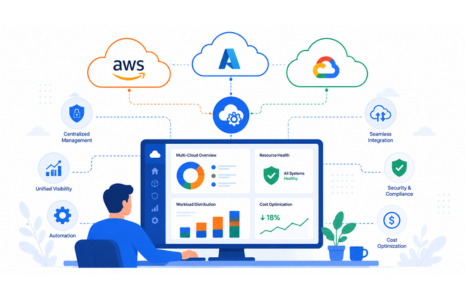
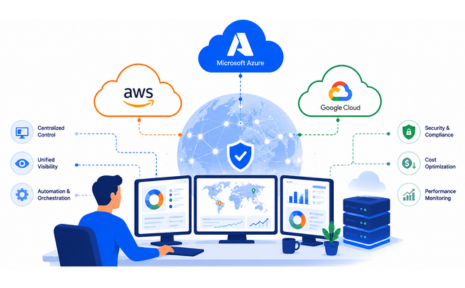
Most teams adopt a second or third cloud to avoid lock-in, then lose visibility and control in the process. Our certified engineers run your multi-cloud management services end-to-end: unified monitoring across every provider, 24/7 incident response, hardened security baselines, and monthly cost governance. You keep freedom of choice, plus full ownership of every account we manage.
Companies that chose us for their digital transformation



















Adding a second or third provider rarely fails on technology. It fails on operations: tooling that doesn’t talk to each other, spend nobody owns, and security standards applied unevenly. Our multi-cloud managed services fix that operating layer first. These are the four areas where clients see measurable change, along with the mechanism behind each one and who stays accountable.
One security baseline enforced across every account, with centralized identity, continuous threat monitoring, and audit evidence ready for SOC 2, HIPAA, or PCI reviews.

Consolidated cost reporting across providers, tagging enforced at deployment, and monthly FinOps reviews that convert waste into a prioritized action list with named owners.

We benchmark each workload against AWS, Azure, and Google Cloud on latency, cost, and compliance fit, then document the reasoning behind every placement decision.

Cross-cloud backup and failover are designed around your recovery targets and validated through scheduled recovery drills so your continuity plan is proven rather than assumed.
Multi-cloud service management breaks down into six disciplines. Most pages list them as labels. We’ve written what each one actually includes, what you receive as a deliverable, and where accountability sits, because scope ambiguity is the most common reason managed cloud engagements go wrong. Read this as the working definition of what you’d be buying, not a capabilities brochure.
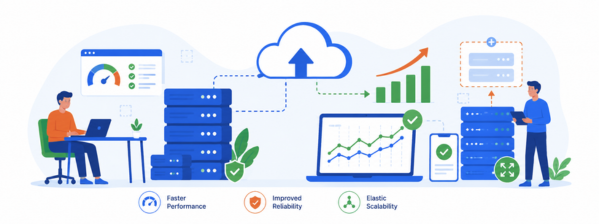
Before anything moves, we benchmark each workload for latency, data gravity, licensing, and compliance fit across AWS, Azure, and Google Cloud. Migration runs in waves with rollback paths defined upfront, so a failed cutover costs you an evening rather than a weekend. You receive a placement rationale document explaining why each system landed where it did, which matters when auditors or new engineers ask later.
Clouds that don’t talk to each other quietly become your most expensive problem. We design the interconnect layer, private links, transit routing, DNS, and identity-aware access, then map every cross-cloud data flow so egress charges stop appearing as surprises. Orchestration and event-driven automation keep workflows moving between providers without someone manually stitching systems together each time requirements change.
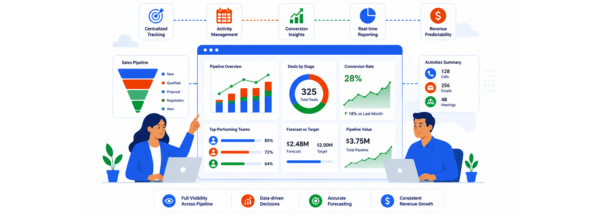
Three clouds mean three identity models, and that is where multi-cloud security usually breaks down. We federate identity into a single source of truth, enforce least-privilege roles, and apply one hardened baseline across all accounts through policy as code. Continuous posture monitoring flags drift the moment it happens, and we maintain the audit evidence your SOC 2, HIPAA, or PCI assessors will ask for.
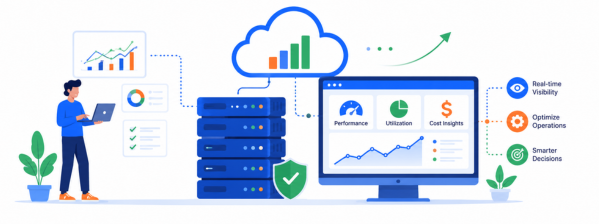
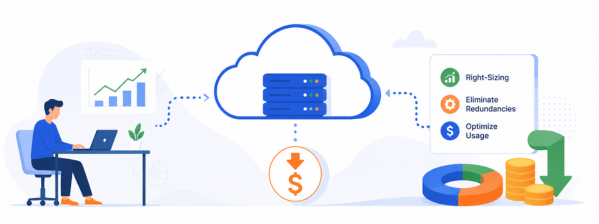
Cost control fails when nobody owns it. We enforce tagging at deployment so every dollar traces to a team, consolidate billing across providers into one report, and manage commitments, reserved capacity, and savings plans per platform. Each month you get a review with a ranked action list, expected savings, and an owner against every item, then we track what actually landed.
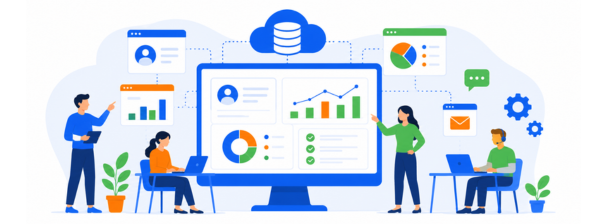
Alerts from three consoles reach one on-call team working from documented runbooks. We monitor availability, performance, and cost anomalies together, because a runaway job shows up in billing before it shows up in latency. Backup and failover are configured to your recovery targets and validated through scheduled drills, so continuity is something you have tested rather than something you assume.
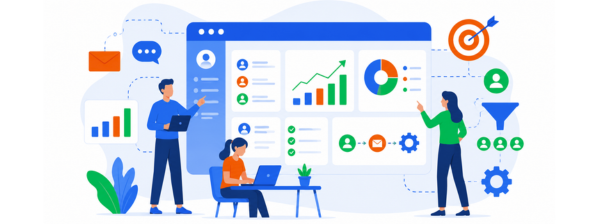
Every environment we run is defined in Terraform and version-controlled in your repository, so infrastructure is reviewable, repeatable, and never trapped in someone’s console history. Pipelines deploy consistently across providers, drift detection catches manual changes, and policy guardrails block non-compliant resources before they exist. When our engagement ends, your platform team inherits working code rather than undocumented configuration.
Get a free proposal with real numbers, honest timelines, and no lock-in. Judge us on that.
No estate gets rebuilt overnight, and any provider who promises that is guessing. We work in six defined steps, each with a timeline, a named deliverable, and a clear finish line. Most clients reach steady-state operations within eight to twelve weeks, with their existing environment running normally throughout the transition and your team involved only where decisions need them.

We audit every account across your providers for security posture, spend, architecture risk, and compliance gaps. You receive a written readiness report with prioritized findings, whether or not you continue with us.
We map target architecture, workload placement, identity model, network topology, and cost guardrails. You approve a documented design and migration plan before any change is made to a production system.
Landing zones, identity federation, monitoring, backup, and policy guardrails go in as Terraform code in your repository. Nothing is clicked together by hand, so every environment can be rebuilt on demand.

Workloads move in waves, lowest risk first, each with a tested rollback path and an agreed cutover window. Your current environment stays live until the replacement passes validation. A failed wave never becomes an outage.
Monitoring, patching, incident response, backup verification, and security posture reviews run continuously against agreed service levels. One on-call team covers all three providers, working from runbooks written for your environment.
Every month we review spend, performance, and security drift, then bring you a ranked action list with expected impact and an owner per item. Nothing changes without your sign-off.
Most multi-cloud proposals look identical on paper. The differences show up in the contract, the escalation path, and what happens when you want to leave. These are the six questions we get asked most in final-round conversations, answered here so you can compare us properly against anyone else on your shortlist.
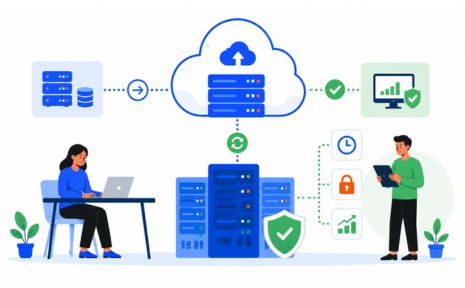
Our cloud team holds active certifications across AWS, Azure, and Google Cloud, and we staff engagements so no single platform depends on one person. That matters when an incident hits Azure at 2 a.m. and your AWS specialist is the only one awake. Depth across providers is the difference between real multi-cloud management and single-cloud management repeated three times.
You get a single point of contact and one on-call rotation covering every provider. There is no ticket bouncing between an AWS vendor, an Azure partner, and your internal team while an outage runs. We hold the runbooks, the escalation path, and the accountability, and we report on all three environments in one review rather than three separate updates.
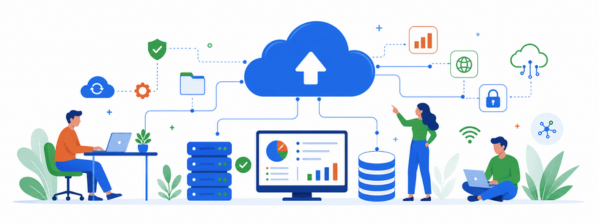
If your team runs ServiceNow, Jira, Slack, or Datadog, our engineers work there. Tickets, alerts, and change records land in the systems your people already check, with two-way sync so nothing lives only in our portal. You are not asked to adopt a proprietary platform, and nothing important disappears when the engagement ends. That single decision removes the most common source of friction in a managed services handover.
We do not design every landing zone from scratch. Our reference architectures for identity, networking, logging, backup, and cost guardrails are already built and tested, then adapted to your compliance requirements and existing estate. That is why build takes weeks rather than months, and why two engineers on our team configure an environment the same way, no matter who picks up the work.
You pay your providers directly at their rates. We charge a management fee for our work and take nothing from your consumption, which means every dollar we save you stays with you. It also removes the quiet conflict of interest that exists when a provider earns more as your infrastructure bill grows. Ask every provider on your shortlist how they are compensated. The answer explains the cost advice you get.

Every cloud account, credential, and Terraform repository sits in your name from day one. We work through federated access that you can revoke, and our runbooks and architecture documents live in your systems. If you leave, your platform team inherits a documented, code-defined environment in a week, not a rebuild project. Lock-in should be something we help you avoid, not something we create.
Multi-cloud managed services is a retention business. Anyone can win the first contract, but the providers who keep clients for years are running a discipline behind the scenes. Here is ours: the team you get, the reporting rhythm you can expect, and the environments we have already worked in, with the numbers behind each.
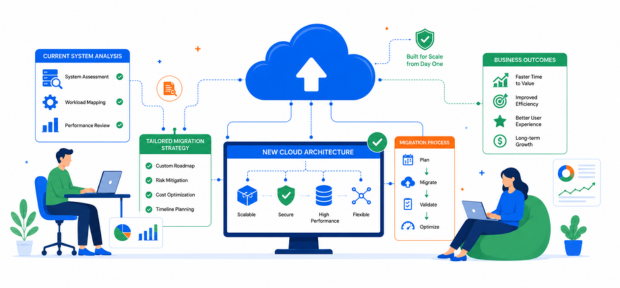
You get a named lead engineer and a named account contact, both of whom stay with you rather than rotating quarterly. Behind them sits a 25-person specialist team covering cloud, DevOps, security, and data. Our average client relationship runs 1.6 years, roughly two to three times the industry norm, which is the number we would look at first if we were buying this service.
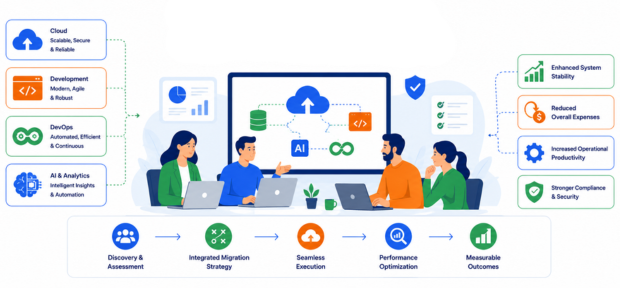
Every month, you receive a written review covering uptime, incidents and their root causes, security posture changes, and spending against forecast, with a ranked action list and an owner per item. Every quarter, we run a working session on architecture, risk, and the next two quarters of optimization. Nothing in either is generated automatically without an engineer reading it first.
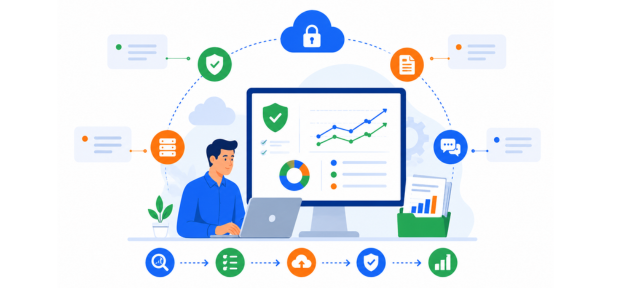
We work across SaaS platforms, ecommerce operations, and data-heavy products, drawing on more than 170 projects delivered since 2020. Industry context matters more than it sounds: a HIPAA workload and a PCI workload need different identity models, different logging retention, and different failover designs. Ask us about your compliance requirements early, and we will tell you honestly what we have handled before.
Very few clients need only one of these. A migration usually surfaces a cost problem, and a cost problem usually turns out to be a governance problem. These are the cloud services we most often run alongside multi-cloud management, and the order we would suggest depends entirely on where your estate is today.
Most conversations start with an assessment rather than a service. We audit what you have, tell you which of these would move the needle soonest, and put it in writing. You are free to act on that report with us or without us.
Move workloads to AWS, Azure, or Google Cloud in tested waves, with rollback paths defined before cutover and a placement rationale you can hand to auditors.
Find and remove waste across every provider bill, then keep it out with tagging enforcement, commitment management, and monthly reviews that carry named owners and expected savings.
One hardened baseline across all accounts, federated identity, continuous posture monitoring, and the audit evidence your SOC 2, HIPAA, or PCI assessors will ask for.
Run on-premise systems and public cloud as one environment, with consistent identity, unified monitoring, and network design that keeps latency and egress costs predictable.
Terraform-defined environments in your repository, CI/CD pipelines that deploy the same way on every provider, and policy guardrails that block non-compliant resources before they exist.
Independent assessment of your current estate, target architecture design, workload placement analysis, and a costed roadmap you own outright, whether or not we deliver it.
The first four questions below cover what multi-cloud management actually is. The rest cover what most buyers ask on a second call: cost, timelines, how we work with your existing team, and what happens if you leave. If yours isn’t here, ask us directly and we will answer it plainly.